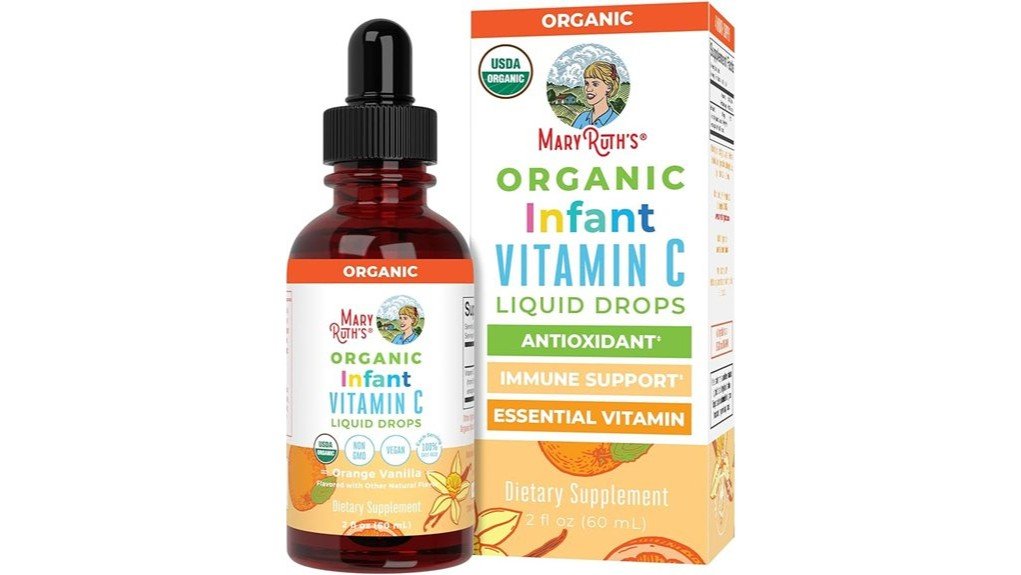
MARYRUTH’S Infant Vitamin C Supplement is presented as a USDA Organic liquid option for babies 6 to 12 months old. It uses acerola fruit extract, a source known for its vitamin C content, and is designed for simple mixing into food or formula. The appeal is clear, but parents still need to weigh ingredient quality, dosing, and pediatric guidance. The details matter more than the label, and a closer look raises a few practical questions.
Key Takeaways
- MaryRuth’s Infant Vitamin C is a USDA Organic liquid drop supplement for babies 6 to 12 months old.
- It uses organic acerola-derived vitamin C, offering antioxidant and immune support.
- The formula is clean-label, vegan, non-GMO, and free from common allergens and artificial colors.
- Up to 60 drops daily can be mixed into food or formula after shaking well.
- Parents should measure carefully, avoid direct mouth use, and check with a pediatrician if needed.
What Is MaryRuth’s Infant Vitamin C?
MaryRuth’s Infant & Baby Vitamin C Supplement is a USDA Organic liquid drop formula designed for infants aged 6 to 12 months.
It is presented as a measured option within infant nutrition, offering a simple daily liquid format that can be added to food or formula.
The product reflects the broader shift toward organic supplements that prioritize ingredient transparency and minimal processing.
Its liquid delivery may support caregivers seeking practical, age-appropriate supplementation.
The formula is also positioned for families who value clean-label standards, non-GMO sourcing, and freedom from common allergens and artificial additives.
Vitamin C Ingredients and Benefits
The formula centers on organic vitamin C from PurC Vitamin C, derived from organic acerola fruit extract, a source known for delivering higher vitamin C levels than many citrus fruits. Its natural sources align with organic certification, supporting parents seeking clean, accountable nutrition.
- Vitamin C offers antioxidant benefits by helping limit free-radical damage.
- It contributes to immune support, a key concern during infancy.
- It serves as a cofactor in collagen synthesis, which supports skin, blood vessels, and bones.
The profile is straightforward, evidence-based, and designed for families prioritizing informed, liberated choices in early nutrition.
How to Give the Drops Safely
Before administration, the bottle should be shaken well. Then, up to 60 drops, or about 2.5 pumps, can be added once daily to food or formula for infants 6 to 12 months old. This method supports dosage accuracy while reducing the chance of dosing errors.
For safety, the liquid should be mixed thoroughly and never squirted directly into the mouth.
Dropper hygiene matters: the dropper should not touch skin, saliva, or feeding surfaces, which helps limit contamination.
Caregivers should measure carefully, follow label directions, and keep the product out of reach between uses.
Why Parents Choose This Organic Supplement
Parents often gravitate toward this USDA Organic vitamin C supplement because it combines a simple ingredient profile with practical infant dosing.
It appeals to families seeking organic choices that align with a careful, freedom-minded approach to early nutrition. Evidence-based interest centers on three points: 1) organic acerola-derived vitamin C, 2) support for immune health, and 3) clean-label credentials that reduce unnecessary additives.
Its vegan, non-GMO formulation further reinforces confidence. For caregivers aiming to make deliberate, uncompromised decisions, the product offers a straightforward option that fits within a minimalist wellness routine for infants.
What to Know Before Buying It
A few practical details deserve attention before purchase: this supplement is intended for infants 6 to 12 months old, and its liquid-drop format requires careful measurement, with up to 60 drops mixed into food or formula once daily. Parents should review dosage guidelines and note safety concerns before use.
| Point | Note |
|---|---|
| Age range | 6–12 months |
| Form | Liquid drops |
| Daily amount | Up to 60 drops |
| Mixing | Food or formula |
| Composition | USDA Organic, vegan |
It is free from common allergens and artificial colors. Still, caregivers should confirm compatibility with a pediatrician, especially if dietary needs or medical conditions are present.
Frequently Asked Questions
Is This Supplement Suitable for Babies Younger Than Six Months?
No; dosage recommendations specify use only for infants 6 to 12 months, so younger babies are outside guidance. The health benefits are intended for that age range, and a pediatric clinician should advise alternatives.
How Long Does One 2-Ounce Bottle Typically Last?
A 2-ounce bottle typically lasts about 24 days at the maximum dosage, or longer if fewer drops are used. Actual duration depends on dosage recommendations and shelf life after opening, storage, and feeding habits.
Can These Drops Be Mixed With Breast Milk?
Yes; they may be mixed with breast milk if the infant receives the recommended dose and the liquid is used immediately. Dosage recommendations should be followed closely, with careful mixing options to avoid contamination.
Does This Product Need Refrigeration After Opening?
No refrigeration is indicated after opening; the serving size is 60 drops daily. Given the product ingredients and liquid format, storage should follow the label and remain tightly closed, away from heat, light, and moisture.
Are There Any Known Side Effects or Allergy Concerns?
Known side effects are generally mild—temporary stomach upset or loose stools—and allergy concerns appear low, though acerola sensitivity remains possible. Coincidentally, caution often arrives with awareness: follow dosage guidelines and consult a clinician if allergy testing is warranted.
Conclusion
To conclude, MaryRuth’s Infant Vitamin C Supplement offers a simple USDA Organic option for infants 6 to 12 months, with acerola-derived vitamin C that may support immune function and collagen production. Its dropper format and allergen-free profile make it appealing to many parents. Still, as with any supplement, a pediatrician’s guidance is essential before use. As the saying goes, “better safe than sorry,” especially when caring for an infant’s health and development.

