
Many new parents are unaware that lochia, the vaginal discharge following childbirth, undergoes distinct stages. Understanding these stages—Lochia Rubra, Lochia Serosa, and Lochia Alba—can greatly influence your postpartum recovery experience. Knowing how to manage discomfort and identify potential complications is vital during this time. So, what should you expect regarding treatment and relief options? Let’s explore the essential aspects of lochia management and how to guarantee a smoother recovery.
Understanding Lochia: What to Expect After Birth
After giving birth, you can expect to experience lochia, which is the vaginal discharge that follows childbirth. This postpartum discharge consists of blood, mucus, and uterine tissue, and it changes over time.
Initially, lochia is bright red and heavy, known as Lochia Rubra, lasting about four days. It then shifts to Lochia Serosa, a lighter pink or brown discharge for up to ten days.
Finally, Lochia Alba appears, lasting from ten days to six weeks, characterized by yellowish-white fluid consisting mainly of white blood cells and mucus. Understanding these stages is important for monitoring your recovery. Comprehensive care from ColumbiaDoctors can provide guidance during this period.
If you notice heavy vaginal bleeding, foul-smelling discharge, or dizziness, seek medical care immediately to rule out complications.
Stages of Lochia: From Lochia Rubra to Lochia Alba
Lochia progresses through distinct stages: Lochia Rubra, Lochia Serosa, and Lochia Alba, each characterized by specific colors and compositions.
Lochia Rubra, the initial stage, occurs from Days 1 to 4 and features bright red blood with small clots, resembling a heavy menstrual period. This stage is essential for postpartum care, as it signals your body’s recovery.
Following this, Lochia Serosa lasts from Days 4 to 10, where bleeding lightens in color, shifting from dark red to pink or brown and becoming more fluid.
Finally, Lochia Alba appears from Days 10 to 6 weeks postpartum, showing a light yellow or white discharge. It’s important to monitor these stages, as excessive or prolonged bleeding may indicate complications requiring medical attention.
Normal vs. Excessive Bleeding: How to Differentiate
After childbirth, understanding the differences between normal and excessive bleeding is essential for your recovery.
You should watch for signs of normal lochia, like the expected color changes from bright red to pink, while being aware that soaking a pad in less than an hour or passing large clots indicates a problem.
If you experience heavy bleeding alongside symptoms like dizziness or a rapid heartbeat, seek medical attention immediately.
Recognizing Normal Bleeding Signs
Recognizing the difference between normal and excessive bleeding during the postpartum period is essential for your health and recovery.
Lochia typically progresses through three stages: Lochia Rubra is bright red and heaviest in the first four days, followed by Lochia Serosa, which lightens to pink or brown from days four to ten, and finally Lochia Alba, a yellowish-white discharge lasting up to six weeks.
Normal bleeding gradually decreases, while excessive bleeding may involve soaking through a pad every hour or passing large clots.
If you notice bright red bleeding returning after it has tapered off, or experience foul-smelling discharge, seek medical attention.
Monitoring these signs is vital to prevent postpartum hemorrhage, which affects 5 to 15 out of every 100 births.
Identifying Excessive Bleeding Symptoms
Understanding the differences between normal and excessive bleeding during the postpartum period is essential for your recovery. Lochia typically starts with bright red blood in the Lochia Rubra stage, gradually changing color and volume. Normal bleeding happens when the flow decreases over time.
However, excessive bleeding may involve soaking through a pad in less than an hour or passing large clots larger than a golf ball. Be alert for sudden changes to bright red blood, resuming heavy bleeding after a pause, or foul-smelling discharge, which could indicate infection.
Additionally, monitor for dizziness, rapid heartbeat, or extreme fatigue, as these symptoms, alongside heavy bleeding, may signal a serious condition requiring immediate attention.
When to Seek Help
How can you tell if your postpartum bleeding is normal or a cause for concern?
Normal bleeding, or lochia, should shift from bright red lochia rubra in the first few days to pink or brown lochia serosa by days 4-10, eventually becoming light yellow or white lochia alba by six weeks.
If you soak through a pad in less than an hour, pass large clots, or notice foul-smelling discharge, seek medical attention immediately. These symptoms may indicate postpartum hemorrhage or infection.
Additionally, if you experience dizziness, rapid heartbeat, or extreme fatigue alongside heavy bleeding, don’t hesitate to consult a healthcare provider.
Symptoms Indicating Potential Complications

You should be aware of specific symptoms that signal potential complications after childbirth.
If you soak through a pad in less than an hour or pass large blood clots, particularly those larger than a golf ball, seek medical attention immediately.
Additionally, foul-smelling discharge or a sudden change to bright red blood warrants prompt evaluation by a healthcare provider.
Heavy Bleeding Alerts
What signs should prompt immediate medical attention during postpartum recovery?
If you experience heavy bleeding that soaks through a pad in less than an hour, it’s essential to seek help, as this could indicate postpartum hemorrhage.
Additionally, if you pass large blood clots bigger than a golf ball, consult your healthcare provider.
Sudden changes in your bleeding patterns, like a return to heavy bleeding after lighter discharge, also signal potential complications requiring urgent evaluation.
Pay attention to any foul-smelling discharge accompanying heavy bleeding, as this may suggest an infection.
Finally, symptoms like dizziness, rapid heartbeat, or extreme fatigue alongside heavy bleeding indicate significant blood loss and necessitate immediate emergency care.
Large Clots Warning
Following heavy bleeding alerts, it’s important to be aware of the significance of large blood clots during postpartum recovery. Clots larger than a golf ball may indicate excessive bleeding and require immediate medical attention.
While small clots can be a normal postpartum occurrence, you should monitor any persistent or increasing size closely.
- Soaking through a pad every hour or two indicates potential complications.
- Heavy bleeding that suddenly returns after decreasing may suggest postpartum hemorrhage.
- Symptoms like dizziness, rapid heartbeat, or extreme fatigue alongside large clots warrant urgent medical care.
Being vigilant about these signs can help guarantee your safety and well-being during this critical recovery period.
Don’t hesitate to seek help if you notice any concerning symptoms.
Foul Odor Signs
How can a foul odor in postpartum discharge signal potential complications? A strong, unpleasant smell from your lochia can indicate an infection, particularly if you also experience fever or worsening abdominal pain.
Normal postpartum discharge generally has a mild odor; however, a foul odor may suggest conditions like endometritis. If you notice a change in the discharge’s color to a foul-smelling bright red or dark brown, it’s vital to seek medical evaluation immediately.
Monitor for additional symptoms such as chills, excessive bleeding, or ongoing pain, as these may require urgent intervention. Prompt identification and treatment of any infection related to lochia are essential to prevent further complications and support your recovery during the postpartum period.
Treatment Options for Managing Lochia
While experiencing lochia is a normal part of the postpartum process, managing it effectively is important for your recovery. Here are some treatment options to reflect on:
- Hydration and Nutrition: Staying hydrated and maintaining a healthy diet can support your recovery during lochia stages.
- Medications: Over-the-counter pain relievers like ibuprofen or acetaminophen can help relieve discomfort associated with uterine contractions.
- Medical Intervention: For excessive lochia or postpartum hemorrhage, treatments may include IV fluids, uterine massage, or medications like oxytocin to reduce bleeding.
If your lochia persists beyond six weeks or becomes heavier suddenly, it’s imperative to seek medical attention to rule out complications such as retained placenta or infection. Additionally, understanding the importance of community involvement in maternal health can further enhance recovery and support systems during this phase.
Prioritizing your health is essential during this recovery phase.
Relief Strategies for Discomfort During Lochia
Experiencing discomfort during the lochia stages is common, but several strategies can help you find relief. Consider using ice packs on your perineal area to reduce pain and swelling in the initial days. Warm sitz baths can soothe soreness and can be taken multiple times daily. Over-the-counter pain relievers like ibuprofen or acetaminophen can effectively manage cramping associated with uterine contractions. Also, wearing loose-fitting clothing helps minimize irritation as lochia progresses. Finally, maintaining proper hydration and a balanced diet supports recovery and can ease discomfort.
| Relief Strategy | Benefits | Frequency |
|---|---|---|
| Ice Packs | Reduces pain and swelling | As needed |
| Warm Sitz Baths | Soothes perineal soreness | Several times a day |
| Over-the-Counter Pain Relievers | Manages cramping | As directed |
| Loose-Fitting Clothing | Minimizes irritation | Daily |
| Hydration | Supports recovery | Constantly |
Importance of Monitoring Lochia Color and Amount
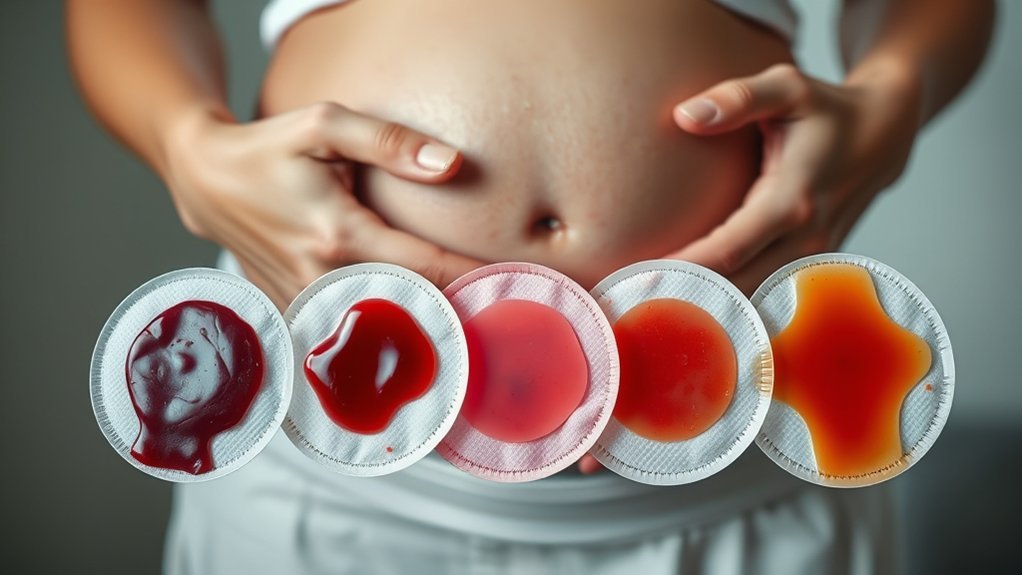
Monitoring the color and amount of lochia is essential for understanding your postpartum recovery.
Lochia changes from bright red (lochia rubra) in the first few days to pink or brown (lochia serosa) around days 4-10, and finally to yellow or white (lochia alba) up to 6 weeks postpartum. This evolution reflects your healing process.
- Soaking through a pad every hour may indicate excessive bleeding.
- A sudden return to bright red bleeding or foul-smelling discharge can signal complications, including infection.
- Being aware of these changes helps you recognize normal recovery and when to seek medical advice.
When to Seek Medical Attention for Postpartum Bleeding
How can you tell if your postpartum bleeding requires medical attention? It’s essential to monitor your bleeding closely. Seek immediate help if your bleeding soaks through a pad in less than one hour, as this may signal postpartum hemorrhage. Large clots, especially those larger than a golf ball, also need urgent evaluation to rule out complications. If your bleeding stops and then suddenly becomes heavy again, contact your healthcare provider without delay. Additionally, foul-smelling discharge may indicate an infection, and symptoms like dizziness, rapid heartbeat, or extreme fatigue warrant immediate medical consultation. It’s important to consider vaccination guidance during this time for overall maternal health.
| Symptoms/Signs | Action Required |
|---|---|
| Soaking a pad in <1 hour | Seek immediate medical attention |
| Large clots > golf ball | Urgent evaluation needed |
| Foul-smelling discharge | Report to a medical professional |
Resources for Postpartum Support and Care
Accessing postpartum support and care is essential for new parents maneuvering the challenges of recovery.
It’s vital to prioritize your postpartum health and seek help when needed. Resources are available to guide you through this period:
- Contact the Maternal Child Health service for nurse support via phone or video call, 7am to midnight (AET).
- If you’re experiencing excessive postpartum bleeding, don’t hesitate to seek medical evaluation for proper treatment.
- For mental health support, reach out to Beyond Blue at 1300 22 4636 or the PANDA helpline at 1300 726 306 for assistance with anxiety or depression. Additionally, consider downloading the PSI Connect app to access immediate support and resources tailored for postpartum mental health.
Frequently Asked Questions
Is Lochia Normal During Pregnancy?
Lochia isn’t normal during pregnancy; it occurs after childbirth as your body expels uterine materials. If you experience abnormal vaginal discharge during pregnancy, consult your healthcare provider to assess any potential issues or complications.
What Can I Do to Stop Lochia?
Stopping lochia’s like trying to halt a river’s flow; you can’t. Focus on good hygiene, stay hydrated, and engage in light activity. If symptoms worsen, consult a healthcare professional for guidance and support.
Can Pregnancy Occur During Lochia?
Pregnancy can occur during the lochia phase, though it’s uncommon. If you’re not breastfeeding, ovulation might resume as soon as three weeks postpartum, so consult your healthcare provider about contraception options to prevent unintended pregnancy.
How to Stop Bleeding During Pregnancy Naturally?
To stop bleeding during pregnancy naturally, stay hydrated, consume vitamin K-rich foods, practice gentle exercises like prenatal yoga, consider herbal remedies with your healthcare provider’s guidance, and use stress-reduction techniques to support hormonal balance.
Conclusion
In summary, understanding the stages of lochia can greatly enhance your postpartum experience. Think of it like a seasonal change—just as winter gives way to spring, your body shifts from Lochia Rubra to Lochia Alba, signaling recovery. Staying vigilant about changes in color and amount is essential; it’s your body’s way of communicating its needs. Don’t hesitate to seek medical attention if something feels off. Empower yourself with knowledge, and embrace this transformative journey.
