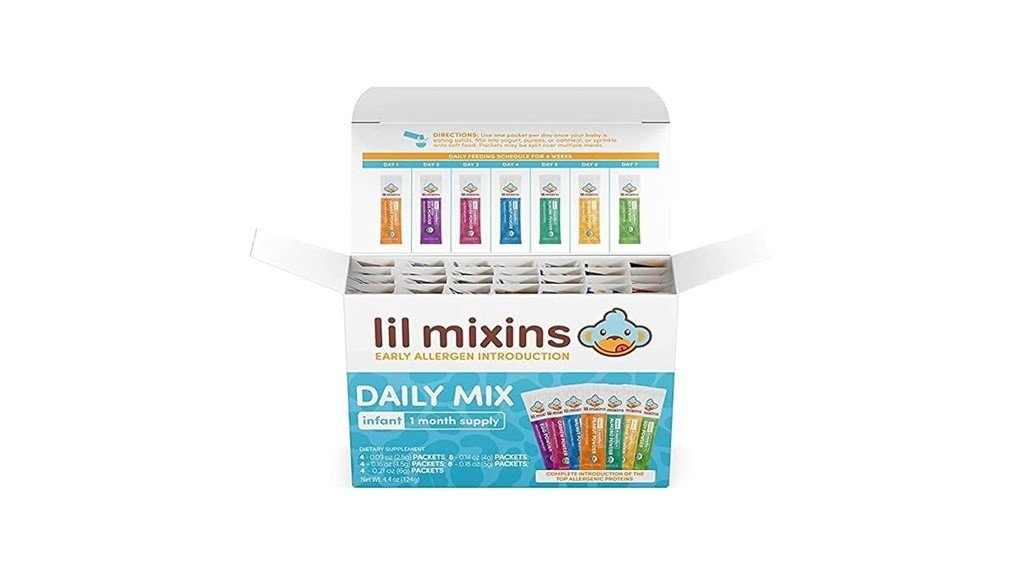
Lil Mixins is positioned as a structured aid for early allergen introduction in infants aged 4 to 12 months. The powders are designed to be mixed into foods, with one allergen introduced at a time for clarity. Its formulation is simple, and the approach aligns with current feeding guidance. Still, safety depends on the infant’s history, and some families may need a different plan. The practical question is whether the method offers enough value for routine use.
Key Takeaways
- Lil Mixins is designed for infants 4 to 12 months to support early exposure to common food allergens.
- The packets provide measured single-allergen powders, making introduction simple and consistent.
- Ingredients are straightforward, with no added sugar, coloring, or additives, and are non-GMO.
- Safety depends on proper allergen monitoring, and medical guidance is important for infants with eczema or known allergies.
- It may help families follow early allergen introduction strategies, but it can be expensive and is not for every baby.
What Lil Mixins Does
Lil Mixins Early Allergen Introduction Mix-ins are designed to help infants ages 4 to 12 months begin early exposure to common allergens, including peanut, egg, cashew, walnut, almond, soy, and sesame. The product supports allergen exposure by adding measured packets to familiar foods, making routine infant nutrition more structured and consistent. It is intended for repeated use, typically once or twice weekly, to integrate allergenic proteins during a developmental window when dietary diversity may be established. The formulation aims to simplify parent-led introduction while preserving autonomy in feeding decisions and supporting evidence-aligned practices without unnecessary complexity or delay.
Are the Ingredients Safe?
Yes—on paper, the ingredient profile appears straightforward. Lil Mixins lists allergen-specific powders without sweeteners, coloring, or additives, which supports a cleaner formulation.
Ingredient sourcing is presented as non-GMO, but public documentation is limited, so external verification remains prudent. Allergen testing is central to safety claims, yet exact protocols, thresholds, and batch frequency are not fully transparent.
Ingredient sourcing is presented as non-GMO, but verification and testing details remain limited publicly.
- Simple composition reduces unnecessary exposure
- Known allergen risk still applies to sensitive infants
- Clinical caution remains appropriate for families seeking autonomy
For children without diagnosed allergies, the profile is reasonable; for others, individualized medical guidance is essential.
How to Use Lil Mixins
Use follows a simple, structured routine: one packet is mixed daily into about 4 oz of a familiar food such as cereal, yogurt, puree, pouch, or homemade meal. This approach supports mix in recipes without altering routine feeding. Introduce one allergen at a time. The table below summarizes application:
| Food base | Packet use | Timing |
|---|---|---|
| Cereal | Stir thoroughly | Daily |
| Yogurt | Blend evenly | Daily |
| Puree | Mix until uniform | Daily |
Clinical guidance suggests consistency may support allergen benefits during early introduction. The method is designed for infants 4 to 12 months, with measured, controlled exposure and practical family autonomy.
Pros, Cons, and Value
From a practical and nutritional standpoint, Lil Mixins offers a structured early-allergen introduction method for infants 4 to 12 months, with the main advantages being standardized dosing, simple administration, and alignment with pediatric guidance.
A benefits analysis suggests convenience may support routine adherence.
- Non-GMO, no added sugar, and no coloring or additives.
- Single-allergen packets can reduce confusion during staged introduction.
- Pediatric endorsement may strengthen confidence in use.
Limitations include cost relative to basic foods and the need for careful monitoring of allergen concerns.
Value is highest when convenience, consistency, and evidence-informed feeding autonomy are priorities.
Is Lil Mixins Right for Your Baby?
Lil Mixins may be appropriate for infants between 4 and 12 months when caregivers want a structured method for early allergen introduction and the child has no known allergy to the specific ingredients.
It aligns with baby allergy prevention strategies by supporting regular, controlled exposure to peanut, egg, and selected tree nuts. The formulation may suit families seeking early exposure benefits without added sugar, coloring, or sweeteners.
It is less suitable for infants with diagnosed food allergies or when medical guidance recommends individualized introduction. A clinician should assess readiness, especially if eczema, prior reactions, or feeding concerns are present.
Frequently Asked Questions
Can Lil Mixins Help With Introducing Multiple Allergens at Once?
Lil Mixins may support allergen diversity, but feeding strategies should introduce one allergen at a time. This evidence-based approach improves safety, helps identify reactions, and aligns with pediatric guidance for infants beginning solids.
Does Lil Mixins Require a Pediatrician’s Approval Before Starting?
No pediatrician’s approval is required before starting, though pediatrician recommendations support use. The product emphasizes allergen safety and follows American Pediatric guidance. Caregivers should confirm suitability, especially if a known allergy already exists.
How Should Unopened Packets Be Stored for Best Freshness?
Like a sealed vault preserving potency, unopened packets should be stored in a cool, dry place away from heat, light, and moisture. These storage methods maximize packet lifespan, maintaining clinical freshness and nutritional integrity.
Can Lil Mixins Be Mixed With Breast Milk or Formula?
Yes—breast milk compatibility is generally plausible, and formula mixing should also be feasible if the packet is stirred into a small portion first. A clinician would advise confirming with a pediatrician, especially for high-risk infants.
What Signs Suggest a Baby May Be Reacting to an Allergen?
Signs may include allergy symptoms such as hives, vomiting, swelling, cough, wheeze, diarrhea, or lethargy. Infant reactions can appear within minutes to hours; medical evaluation is warranted if breathing changes, facial swelling, or repeated vomiting occurs.
Conclusion
In sum, Lil Mixins presents a highly structured, clinically neat strategy for early allergen introduction, turning a potentially anxiety-inducing process into something almost deceptively orderly. Its single-allergen powders, additive-free formulation, and pediatric backing make it an appealing option for families seeking controlled exposure during infancy. Still, this is not a one-size-fits-all solution. Infants with eczema, suspected allergies, or complex histories warrant medical guidance. Used appropriately, Lil Mixins may meaningfully support dietary diversity and allergen familiarity.

