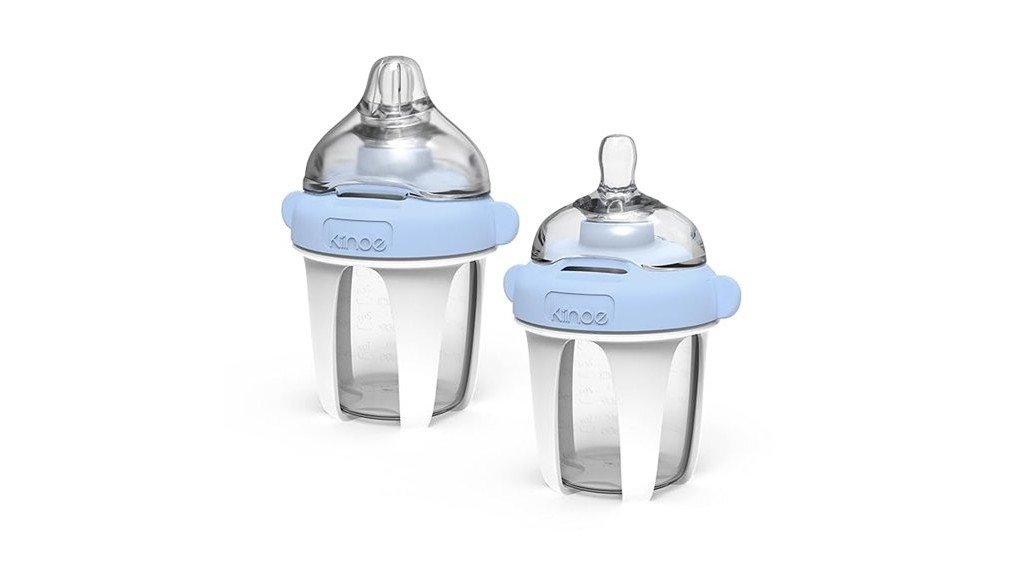
The Kiinde Active Latch Silicone Baby Bottle takes a practical approach to feeding with its collapsible silicone sleeve, which helps limit air intake and may ease discomfort for infants. Its 4-ounce size, medium-flow nipple, and simple flip-inside-out cleaning design make it appealing for everyday use. Still, the compact capacity may not suit every stage of growth. The real question is whether its thoughtful design outweighs those limits.
Key Takeaways
- The Kiinde Active Latch silicone bottle uses a collapsible inner sleeve to reduce air intake and help minimize gas.
- Its stripped-down design avoids straws, vents, and valves, making feeding and maintenance simpler.
- The 4-ounce blue silicone bottle is flexible, durable, and sold as a two-bottle set.
- Cleaning is easy: flip the sleeve inside out, then hand wash, dishwasher top rack wash, or sterilize by boiling, microwaving, or freezing.
- The medium-flow silicone nipple supports a natural latch, though the compact size and flexible sleeve may limit long-term use.
What Makes the Kiinde Active Latch Bottle Different?
The Kiinde Active Latch Bottle stands apart from many standard baby bottles because it uses a collapsible inner sleeve to reduce air intake, rather than relying on vents, valves, or straws.
This bottle design changes feeding mechanics in a practical way: milk flows while the sleeve contracts, helping limit swallowed air and supporting a calmer feed. The result is a simpler, more direct system that may feel less burdensome for caregivers seeking efficient, flexible feeding.
Its stripped-down structure also suggests easier handling and fewer failure points, giving families a more liberated option than bottles built around complex internal parts.
Kiinde Active Latch Bottle Features and Cleaning
Featuring a 4-ounce capacity and a two-bottle set, the Kiinde Active Latch Bottle keeps its design focused on usability rather than complication.
Its blue silicone build offers silicone benefits such as flexibility, durability, and a smooth feel, while the collapsible sleeve reduces trapped air for feeding ease.
Cleaning stays straightforward because there are no straws, vents, or valves to disassemble.
- Flip the reusable sleeve inside out.
- Wash by hand or place on the top rack.
- Sterilize, boil, microwave, or freeze as needed.
This practical setup supports a freer, less burdensome routine.
How the Nipple Supports Feeding
At the nipple, feeding support becomes more immediate: the included medium-flow design is intended to offer a steady, manageable milk release that suits many infants who are ready for a bit more pace. This nipple design aims to support a natural latch and reduce interruption, helping feeding comfort remain consistent.
| Feature | Effect | Evaluation |
|---|---|---|
| Medium flow | Steady release | Practical |
| Soft silicone | Gentle contact | Comfortable |
| Shape | Natural latch | Supportive |
| Compatibility | Smooth shift | Useful |
| Cover | Cleaner storage | Convenient |
For caregivers seeking freer, less fussy routines, this setup feels purposeful and well judged, not overcomplicated.
Kiinde Active Latch Bottle Pros and Cons
With the nipple offering a steady, manageable flow and a natural latch, attention shifts to the bottle’s broader strengths and tradeoffs.
Its main advantages are:
- gas reduction through the collapsible sleeve, which can ease air intake and support calmer feeds;
- straightforward cleaning, since no straws, vents, or valves complicate maintenance;
- practical versatility, with boiling, freezing, and dishwasher tolerance.
On the downside, the silicone sleeve may feel less rigid than a hard bottle, so bottle durability depends on careful handling.
It also comes as a compact 4-ounce set, which may limit use as feeding needs grow.
Who Should Buy the Kiinde Active Latch Bottle?
The Kiinde Active Latch Bottle is best suited for caregivers who want a simple, easy-to-clean option that may help reduce gas and support a more natural feeding rhythm. It suits new parents seeking practical bottle feeding without vents or valves.
| Best for | Why |
|---|---|
| Busy caregivers | Fast cleaning and sterilizing |
| Sensitive babies | Collapsible sleeve may reduce air |
| Breastfed infants | Smooth changeover with Active Latch nipples |
It is especially useful for families valuing independence from complicated parts. However, those needing larger volumes or a firmer bottle feel may prefer another system.
Frequently Asked Questions
Is the Bottle Compatible With Breast Pumps?
No, the bottle design is not described as directly compatible with breast pumps, though it supports feeding comfort and breast-to-bottle shift. Its Kiinde Active Latch nipples and collapsible sleeve focus on smoother, cleaner feeding rather than pumping integration.
Can I Buy Replacement Nipples Separately?
Yes—replacement nipples are typically sold separately, allowing tailored nipple types for different feeding preferences. Like spare keys for a trusted lock, this flexibility is practical, freeing, and supports easier bottle management.
What Ages Suit the Medium Flow Nipple?
The medium flow nipple usually suits older infants, around 3 to 6 months, though nipple sizes should match feeding preferences and readiness. It offers practical flexibility, while caregivers may evaluate flow, comfort, and paced feeding.
Does the Bottle Fit Standard Bottle Warmers?
Standard bottle warmers may fit this bottle design, but the collapsible silicone sleeve can affect stability and warmth retention. It is sensible to confirm warmer dimensions first, since compatibility may vary across models and brands.
Is It Safe for Premature Babies?
It cannot be assumed safe for premature babies without neonatal approval; roughly 10% of newborns are preterm. Premature safety depends on feeding challenges, latch strength, and weight. A pediatrician should evaluate nipple flow and individual readiness.
Conclusion
In the end, the Kiinde Active Latch Silicone Baby Bottle leaves a strong impression, but not an entirely final one. Its collapsible sleeve, easy-clean design, and medium-flow nipple suggest a bottle built for comfort and convenience, especially in the earliest feeding stages. Yet its 4-ounce size quietly hints at a limit that may soon matter. For caregivers weighing simplicity against growth, the real question remains: how long will this bottle stay the right fit?

