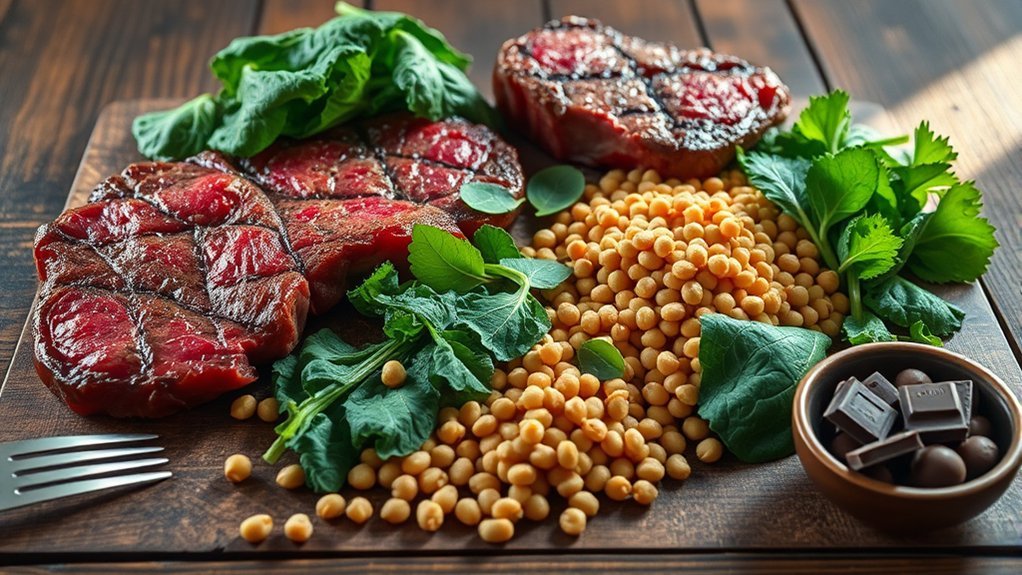
When it comes to iron sources, understanding the different types and their absorption rates is essential for maintaining your health. Whether you consume meat or follow a plant-based diet, knowing how to meet your iron needs can greatly impact your energy levels and overall well-being. But, what if you’re unsure about the best sources or how cooking may affect iron content? Let’s explore these questions further.
What Are the Best Animal Sources of Iron?
When it comes to boosting your iron intake, have you considered the best animal sources? Red meat, especially beef and lamb, tops the list, as it contains heme iron, which your body absorbs more efficiently than non-heme iron from plant sources. Liver is another powerhouse; just a small serving provides a significant amount of your daily iron needs. Poultry, such as chicken and turkey, also offers good levels of iron, particularly in dark meat. Fish, including tuna and salmon, can contribute well too. Including these foods in your diet not only helps meet your iron requirements but also supports overall health. Remember, pairing these iron-rich foods with vitamin C sources can further enhance absorption.
How Can Vegetarians and Vegans Get Enough Iron?
How can vegetarians and vegans guarantee they’re getting enough iron in their diets? It’s essential to include a variety of plant-based iron sources. Incorporating foods rich in non-heme iron, along with vitamin C to enhance absorption, can make a significant difference. Here are some tips to help you:
- Legumes: Beans, lentils, and chickpeas are excellent sources.
- Nuts and Seeds: Almonds, pumpkin seeds, and cashews can boost your intake.
- Whole Grains: Oats, quinoa, and brown rice provide iron as well.
- Dark Leafy Greens: Spinach, kale, and Swiss chard are nutrient-packed choices.
What Are the Signs of Iron Deficiency?
Signs of iron deficiency can often be subtle at first, but recognizing them early is important for maintaining your health. You might experience fatigue, weakness, or pale skin. Other signs include brittle nails, shortness of breath, and unusual cravings for non-food items like ice or dirt. If you notice these symptoms, it’s essential to consult a healthcare professional.
| Symptom | Description |
|---|---|
| Fatigue | Constant tiredness or exhaustion |
| Pale skin | Lighter than usual complexion |
| Brittle nails | Nails that break or chip easily |
Being aware of these signs helps you take proactive steps toward improving your iron levels and overall well-being.
How Does Cooking Affect Iron Content in Foods?
Cooking can greatly influence the iron content in foods, often enhancing or reducing its availability for absorption. Different cooking methods can greatly affect how much iron your body can actually utilize. Here are some key points to reflect on:
- Boiling: Can leach iron into the water, decreasing its content in the food.
- Sautéing: Often retains more iron, especially when using healthy fats.
- Steaming: Preserves nutrients well, including iron, making it a good cooking method.
- Fermentation: Can enhance iron absorption due to the breakdown of compounds that inhibit iron uptake.
What Are the Recommended Daily Allowances for Iron?
The recommended daily allowance (RDA) for iron varies based on age, sex, and life stage, ensuring that individuals meet their unique nutritional needs. For adult men, the RDA is 8 mg, while adult women require 18 mg due to menstruation. Pregnant women need even more—27 mg—to support fetal development. Children also have different needs: infants aged 7-12 months need 11 mg, while toddlers aged 1-3 require 7 mg. As you grow older, the requirements change again, with boys aged 14-18 needing 11 mg and girls in the same age group needing 15 mg. Knowing these recommendations helps you make informed dietary choices, ensuring you get enough iron for ideal health.
Frequently Asked Questions
Can Iron Supplements Cause Side Effects?
Yes, iron supplements can cause side effects like constipation, nausea, and stomach discomfort. It’s important to take them as directed and consult your healthcare provider if you experience any adverse reactions or have concerns.
How Does Age Affect Iron Requirements?
As you age, your iron requirements may change. Older adults often need less iron due to decreased muscle mass and lower metabolic rates, while women may require more during menstruation or pregnancy. Always consult a healthcare provider.
Are There Interactions Between Iron and Other Nutrients?
Yes, iron interacts with other nutrients. For instance, vitamin C enhances iron absorption, while calcium can inhibit it. Balancing your intake of these nutrients optimizes iron absorption and overall nutritional health.
What Is the Difference Between Heme and Non-Heme Iron?
Heme iron comes from animal sources and is absorbed more efficiently, while non-heme iron originates from plant sources and has lower absorption rates. Including vitamin C can enhance non-heme iron absorption in your diet.
How Can I Improve Iron Absorption From Food?
To boost iron absorption from food, pair it with vitamin C-rich foods like oranges. Avoid calcium-rich foods during iron meals, and consider cooking in cast iron for an extra iron boost. Your body will thank you!
Conclusion
Incorporating a variety of iron-rich foods into your diet can create a vibrant plate, bursting with textures and colors. Imagine juicy red meat, glistening fish, and lush green kale, all working together to fuel your body. Whether you’re a meat lover or a dedicated vegan, staying mindful of your iron intake is essential for maintaining energy and vigor. By pairing these foods with vitamin C sources, you’re ensuring your body absorbs every precious morsel of this important mineral.