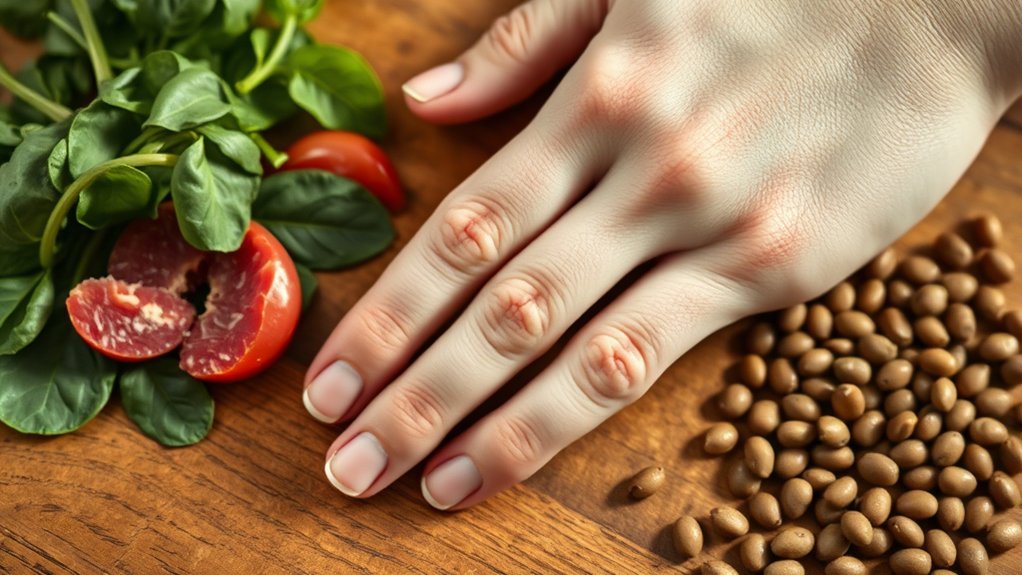
Iron intake is essential for your health, and recognizing the signs of deficiency can prevent serious issues. If you’re feeling unusually fatigued, experiencing shortness of breath, or noticing changes in your nails or hair, these might be signals your body is low on iron. Understanding the symptoms and risks associated with iron deficiency is important. So, what steps can you take to improve your iron intake effectively?
Understanding Iron Deficiency
When you don’t get enough iron, your body can’t produce enough hemoglobin, which is essential for transporting oxygen in your blood.
Iron deficiency occurs when your intake doesn’t meet your body’s needs, often due to inadequate dietary sources, blood loss, or increased demand during periods like pregnancy.
Vegetarians and vegans are particularly at risk, as plant-based iron is less bioavailable than the iron found in meat.
To prevent deficiency, include iron-rich foods like red meat, poultry, lentils, and fortified cereals in your diet.
Vitamin C can enhance iron absorption, so pair these foods with fruits or veggies high in this vitamin.
Regularly monitoring your iron levels through blood tests can help you catch any deficiencies early.
Common Symptoms of Low Iron Levels
If you’re experiencing fatigue, weakness, or pale skin, these could be signs of low iron levels in your body.
Other common symptoms include shortness of breath during physical activities, dizziness, or headaches. You might also notice brittle nails, unusual cravings for non-food items (a condition called pica), or restless legs syndrome.
Low iron can lead to anemia, where your body doesn’t produce enough healthy red blood cells. This can make everyday tasks feel more exhausting and affect your overall well-being.
It’s important to pay attention to these signs, especially if you’re at a higher risk for deficiency, such as pregnant women or those with heavy menstrual cycles.
Consider consulting a healthcare professional for proper diagnosis and treatment.
Risks Associated With Iron Deficiency
Iron deficiency poses several serious risks that can affect your overall health and quality of life. When you don’t get enough iron, you may face a range of complications, including:
- Fatigue and Weakness: Low iron levels can deplete your energy, making daily tasks feel exhausting.
- Impaired Immune Function: Insufficient iron can weaken your immune system, leaving you more susceptible to infections.
- Cognitive Issues: Iron deficiency may lead to difficulty concentrating and memory problems, impacting your productivity.
These risks highlight the importance of maintaining adequate iron levels.
Addressing this deficiency can improve your overall well-being and help you avoid complications that arise from neglecting your nutritional needs.
Prioritizing iron intake is essential for sustaining a healthy lifestyle.
Identifying Iron Deficiency in Your Body
Recognizing iron deficiency in your body is essential for maintaining ideal health. Common symptoms include fatigue, weakness, and pale skin.
You might also experience shortness of breath during routine activities or an increased heart rate. If you notice brittle nails or hair loss, these could be signs of low iron levels.
Additionally, some people develop cravings for non-food items, a condition known as pica. It’s vital to pay attention to these signals, as untreated iron deficiency can lead to anemia, which may cause more severe health issues.
If you suspect you’re iron deficient, consider consulting a healthcare professional for proper diagnosis and assessment. Early detection can help you manage your health more effectively.
Ways to Improve Your Iron Intake
To boost your iron intake effectively, focus on incorporating iron-rich foods into your diet. This can help prevent deficiency and support overall health.
Here are some practical ways to enhance your iron consumption:
- Include lean meats: Red meat, poultry, and fish are excellent sources of heme iron, which your body absorbs more efficiently.
- Add plant-based options: Beans, lentils, tofu, and spinach are great sources of non-heme iron. Pair them with vitamin C-rich foods like citrus fruits to enhance absorption.
- Consider fortified foods: Breakfast cereals and grains often come fortified with iron, making it easier to meet your daily needs.
Frequently Asked Questions
Can Iron Supplements Cause Side Effects?
Yes, iron supplements can cause side effects. You might experience gastrointestinal issues like nausea, constipation, or diarrhea. It’s essential to follow dosage recommendations and consult your healthcare provider if you encounter any adverse effects.
How Does Iron Deficiency Affect Athletic Performance?
Iron deficiency can considerably hinder your athletic performance. It reduces oxygen delivery to muscles, causing fatigue, decreased endurance, and impaired recovery. Ensuring adequate iron levels is essential for maintaining ideal physical performance and overall health.
Are Certain Foods Better for Iron Absorption?
Yes, certain foods enhance iron absorption. Pairing iron-rich foods with vitamin C sources, like citrus fruits or bell peppers, can greatly boost absorption. Avoiding calcium-rich foods during iron intake also helps maximize absorption efficiency.
Can Iron Levels Impact Mental Health?
Yes, low iron levels can impact mental health. You might experience fatigue, mood swings, and cognitive difficulties. Maintaining balanced iron levels supports overall brain function, enhances energy, and promotes emotional stability, benefiting your mental well-being.
What Tests Diagnose Iron Deficiency?
To diagnose iron deficiency, you’ll undergo blood tests like a complete blood count (CBC) and serum ferritin test. These tests measure your red blood cells and iron levels, helping determine if you’re deficient.
Conclusion
Inadequate iron intake can leave you feeling fatigued and weak, while sufficient levels can energize your body and enhance overall well-being. By recognizing the signs of deficiency early, you can take proactive steps to boost your iron levels and prevent health complications. Remember, it’s not just about preventing symptoms; it’s about empowering your body to function at its best. Prioritize your iron intake, and you’ll find yourself stronger, more vibrant, and ready to tackle life’s challenges.

