Choosing between an infant car seat and a convertible car seat can feel confusing, especially when both can protect a baby in different stages. The safest choice depends on your child’s age, height, weight, your vehicle, and how well the seat fits when installed. This guide explains the key differences, the do’s and don’ts, and the mistakes to avoid before you place your child on the road.
Quick Answer
An infant car seat is usually best for newborn convenience because it is rear-facing, portable, and often clicks into a base or stroller. A convertible car seat can also work for newborns if it fits correctly, but it is usually heavier and stays in the car. Keep children rear-facing as long as the seat allows.
Key Takeaways
- Infant seats are rear-facing only and are often easier for newborn travel, quick errands, and stroller use.
- Convertible seats last longer because many models move from rear-facing to forward-facing as your child grows.
- The best seat is the one that fits your child, fits your vehicle, and can be installed correctly every time.
- Never use an expired, recalled, damaged, or unknown-history car seat.
- Your child should stay rear-facing until reaching the rear-facing height or weight limit listed by the car seat manufacturer.
At a Glance
| Best For | Parents comparing infant and convertible car seats before buying or switching seats. |
| Difficulty | Moderate, because the right choice depends on your child, vehicle, and installation method. |
| Tools Needed | Car seat manual, vehicle owner’s manual, child’s current height and weight, and seat labels. |
| Safety Priority | Correct rear-facing use, snug harness fit, proper recline, and installation with less than 1 inch of movement at the belt path. |
Understanding Infant Car Seats
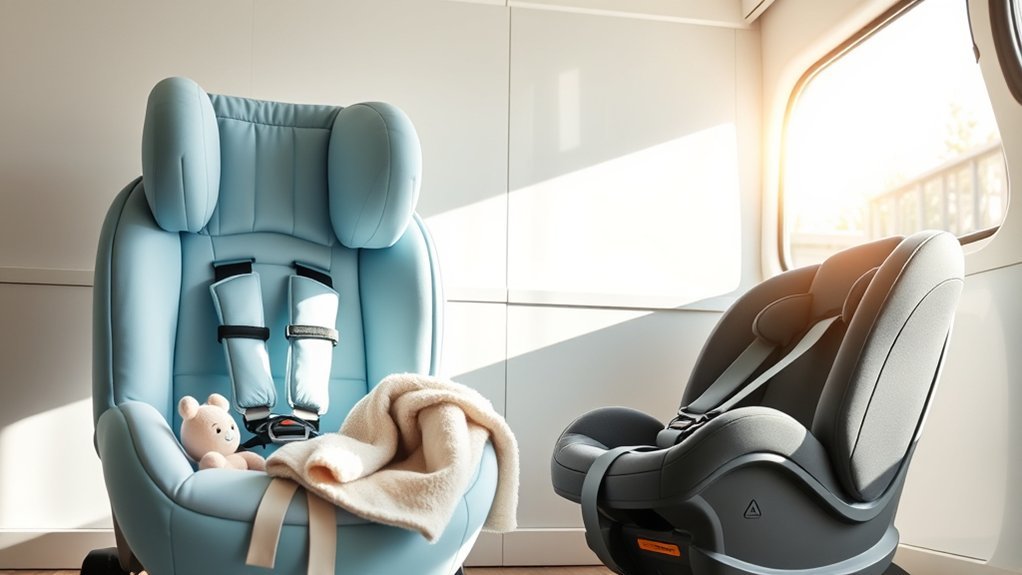
An infant car seat is a rear-facing-only seat designed mainly for newborns and young babies. It usually has a carrying handle and a removable base that stays installed in the vehicle. Many models can also click into a matching stroller, which makes short trips easier when your baby is sleeping.
The biggest benefit is convenience. You can install the base once, then click the seat in and out as needed. This can help during doctor visits, daycare drop-offs, quick errands, or travel with a very young baby.
Safety still depends on correct use. The seat must fit snugly in your vehicle and follow both the car seat manual and your vehicle owner’s manual. The harness system should lie flat against your baby’s body, and the chest clip should sit at armpit level. The harness should be snug enough that you cannot pinch extra webbing at the shoulder.
Keep your infant in the seat until they reach the height or weight limit listed by the manufacturer. Many infant seats have weight limits around 22 to 35 pounds, but the exact limit depends on the model. Also check the height rule, because a baby may outgrow the seat by height before reaching the weight limit.
Warning: Do not use an infant car seat as a routine sleep space outside the vehicle. If your baby falls asleep during a ride, move them to a firm, flat sleep surface as soon as practical after the trip.
Exploring Convertible Car Seats
While infant car seats are useful during the early months, convertible car seats offer a long-term solution as your child grows. A convertible seat can usually be used rear-facing first, then changed to forward-facing after your child meets the seat’s forward-facing requirements.
These versatile seats can shift from rear-facing to forward-facing, adapting to your child’s size and developmental needs. Some models also include higher rear-facing weight limits, which can help children stay rear-facing longer.
Convertible car seats are often the longer-lasting choice, but they are not automatically safer unless they fit your newborn well and are installed correctly.
Here are three key features to take into account:
- Longevity: Convertible seats can often accommodate children from infancy through toddler years, and many models support forward-facing use up to around 65 pounds.
- Safety: Many models include side-impact protection, multiple harness positions, adjustable recline settings, and higher rear-facing limits.
- Ease of Use: Some models offer clear level indicators, no-rethread harnesses, and installation aids that make adjustments easier as your child grows.
A convertible seat can be a smart choice if you want one seat to last longer. The trade-off is that it is usually heavier, less portable, and not designed to click in and out of a stroller like an infant seat.
Infant vs Convertible Car Seat Comparison
The right choice depends on how you use the seat every day. A newborn who rides in multiple vehicles or goes from car to stroller often may benefit from an infant seat. A family that wants a longer-use seat and does not need portability may prefer a convertible seat from the start.
| Feature | Infant Car Seat | Convertible Car Seat |
| Direction | Rear-facing only | Rear-facing, then forward-facing |
| Portability | Portable with handle and base | Usually stays installed in the vehicle |
| Newborn Fit | Often easier for small newborns | Can work if the seat supports newborn size and recline |
| Use Period | Shorter use period | Longer use period |
| Best For | Newborn convenience and travel systems | Long-term value and extended rear-facing use |
Do’s for Choosing the Right Car Seat
Choosing the right car seat is essential for your child’s safety and comfort. Start by selecting a car seat that matches your child’s age, weight, height, and stage of development.
For infants, look for rear-facing seats that provide a secure fit and the correct recline angle. If your child is older or you want a seat that lasts longer, consider a convertible seat that can grow with them.
Always check for safety certifications, such as a label stating that the seat meets Federal Motor Vehicle Safety Standard 213. Make sure the car seat fits securely in your vehicle; it should not move more than an inch side-to-side or front-to-back when pulled at the belt path.
Additionally, read the manufacturer’s instructions for installation, recline settings, harness height, lower anchor limits, and adjustments. Register your car seat with the manufacturer so you can receive recall notifications and safety updates.
Pro Tip: Before buying, test the seat in your vehicle if possible. A highly rated seat is not the best choice if it does not fit your back seat, blocks the front passenger too much, or cannot be tightened correctly.
Installation Basics for Both Seat Types
Correct installation matters as much as the seat you choose. You can usually install a car seat with either the vehicle seatbelt or the lower anchors, but you normally should not use both at the same time unless the car seat manual clearly allows it.
- Read both manuals first: Use the car seat manual and the vehicle owner’s manual together.
- Choose the correct seating position: The back seat is the safest place for children. Avoid placing a rear-facing seat in front of an active passenger air bag.
- Check the recline angle: Newborns need the correct recline to help keep the airway open. Use the seat’s recline indicator if it has one.
- Tighten at the belt path: Pull the seat at the belt path. It should move less than 1 inch side-to-side or front-to-back.
- Check the harness: Rear-facing harness straps should usually come from at or below the child’s shoulders, unless your manual says otherwise.
Note: LATCH has weight limits. As your child grows, you may need to switch from lower anchors to the vehicle seatbelt. Check the car seat label and manual for the exact limit.
Don’ts to Avoid When Selecting a Car Seat
Selecting a car seat requires careful consideration, and there are several pitfalls to avoid to protect your child.
Here are important don’ts:
- Don’t choose based on price alone: A cheaper seat may still meet safety standards, but it may not fit your child, your vehicle, or your daily needs. Choose based on fit, correct use, and features you can use properly.
- Don’t ignore the expiration date: Car seats have a lifespan. Using an expired seat can compromise safety because plastic, labels, parts, and instructions may no longer be reliable.
- Don’t skip the installation manual: Always read the manufacturer’s instructions. Incorrect installation can reduce protection during a crash.
- Don’t use a secondhand seat with unknown history: Avoid used seats if you do not know the crash history, expiration date, missing parts, or recall status.
- Don’t add unapproved accessories: Avoid aftermarket padding, strap covers, head inserts, or seat protectors unless the car seat manufacturer allows them.
- Don’t turn forward-facing too early: Keep your child rear-facing until they reach the rear-facing height or weight limit for that specific seat.
Transitioning Between Car Seat Types
Understanding the differences between infant and convertible seats is essential as your child grows. Shifting from an infant seat to a convertible seat typically occurs when your baby outgrows the weight or height limits of the infant seat.
Do not switch only because your baby reaches a certain age. Some babies outgrow an infant seat before their first birthday, while others may fit longer. The correct time to move depends on your child’s current height, weight, and the car seat’s limits.
When making the switch, verify the convertible seat is installed correctly, using either the LATCH system or seatbelt, and follow the instructions carefully. Check the recline angle, harness height, crotch buckle position, and whether any newborn insert should be removed as your child grows.
Your child should remain in a rear-facing position until they reach the seat’s specified rear-facing height or weight limit. Many convertible seats allow rear-facing use up to 40 pounds or more, but the exact limit depends on the model.
Finally, always keep your child secured with the harness, adjusting it as needed to fit snugly for maximum safety.
When an Infant Seat May Be Better
An infant seat may be the better first choice if you want a portable seat for a newborn, especially if you often move between the car, stroller, home, daycare, or doctor visits. It can also be easier to buckle a newborn indoors before clicking the seat into the base.
Choose an infant seat if you value:
- Easy carrying during the newborn stage
- Compatibility with a stroller travel system
- A base that stays installed in the vehicle
- A seat designed specifically for small babies
- Convenience for short errands and appointments
The main downside is that your child will outgrow it sooner than a convertible seat. You will eventually need another seat when your baby reaches the infant seat’s height or weight limit.
When a Convertible Seat May Be Better
A convertible seat may be better if you want a longer-lasting seat and do not need to carry the seat outside the vehicle. It can also be useful if your baby rides mainly in one car and you want to avoid buying a separate infant seat first.
Choose a convertible seat if you value:
- Longer use from infancy into toddler years
- Higher rear-facing limits on many models
- Fewer seat purchases over time
- A seat that stays installed in one vehicle
- More room for growth as your child gets taller or heavier
The main downside is convenience. Convertible seats are usually heavier, bulkier, and not designed to be carried with a baby inside.
Common Car Seat Fit Checks
After choosing a seat, check the fit before every ride. Small changes like a loosened harness, bulky clothing, or a recline setting that moved during cleaning can affect safety.
- Harness snugness: You should not be able to pinch extra harness webbing at your child’s shoulder.
- Chest clip: Place it at armpit level, not on the belly or neck.
- Harness height: For rear-facing use, the straps usually come from at or below the shoulders. For forward-facing use, they usually come from at or above the shoulders.
- Bulky coats: Avoid thick winter coats under the harness because they can create hidden slack.
- Seat movement: Test movement only at the belt path, not at the top of the seat.
Warning: Never place a rear-facing car seat in the front seat with an active passenger air bag. A deploying air bag can seriously injure a rear-facing child.
Frequently Asked Questions
How long can a child use an infant car seat?
A child can use an infant car seat until they reach the seat’s height or weight limit. Many infant seats have weight limits around 22 to 35 pounds, but the exact rule depends on the model. Also check the height rule and make sure the child’s head has enough clearance according to the manual.
Can I use a convertible seat for newborns?
Yes, you can use a convertible seat for a newborn if the seat is approved for your baby’s weight and height, gives a proper recline angle, and allows a snug harness fit. Some convertible seats fit small newborns better than others, so check the minimum weight, harness position, and insert instructions.
Are there weight limits for infant seats?
Yes, infant seats have specific weight limits. Many models range from about 22 to 35 pounds, but you must follow your exact car seat label and manual. Height can matter just as much as weight, so check both before continuing to use the seat.
What if my car doesn’t have a LATCH system?
If your car does not have a LATCH system, install the car seat with the vehicle seatbelt. A seatbelt installation is safe when done correctly. Follow the car seat manual and vehicle manual, lock the seatbelt as directed, and make sure the seat moves less than 1 inch at the belt path.
Can I install a car seat without a base?
Yes, many infant car seats can be installed without a base using the vehicle seatbelt. This is common for travel or rides in another car. Always follow the baseless installation instructions in the manual and check that the seat is tight and at the correct recline angle.
Is an infant car seat safer than a convertible car seat?
Not automatically. A correctly used rear-facing infant seat and a correctly used rear-facing convertible seat can both protect a baby. The safer option is the one that fits your child, fits your vehicle, and can be installed and harnessed correctly every ride.
When should my child turn forward-facing?
Turn your child forward-facing only after they reach the rear-facing height or weight limit of their car seat. Do not rush the switch based on age alone. Rear-facing use supports the head, neck, and spine better in many crashes.
Conclusion
In choosing the right car seat, prioritize safety above all, guarantee a proper fit for your child, and stay informed about recalls. Rear-facing infant seats are often convenient for newborns, while convertible seats can be a smart long-term choice for growing babies and toddlers.
Avoid shortcuts like expired seats, unknown secondhand seats, loose installation, early forward-facing, and unapproved accessories. Always read the installation manual, check your vehicle manual, and confirm that the harness fits snugly before every ride. By following these do’s and don’ts, you can make a safer, more confident car seat decision for your child now and as they grow.
Sources
- National Highway Traffic Safety Administration — car seat types, installation basics, recalls, and child passenger safety guidance.
- HealthyChildren.org from the American Academy of Pediatrics — car safety seat guidance for families.
- Safe Kids Worldwide — car seat installation tips and child passenger safety resources.
- U.S. Consumer Product Safety Commission — car seat recall and safety information.