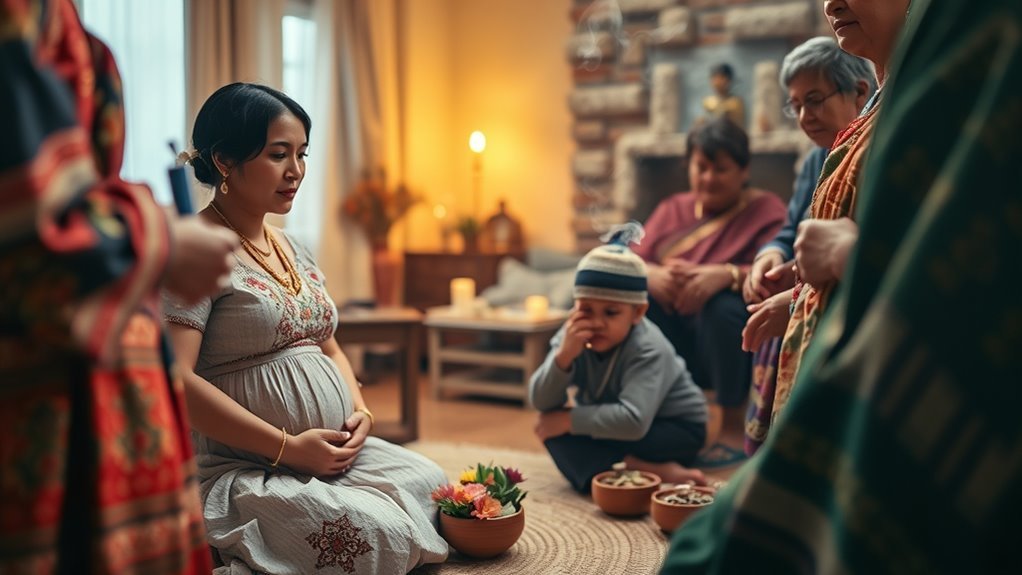
Religion and culture support your pregnancy by turning uncertainty into care through rituals, blessings, and shared traditions. You may see prayers, baby showers, naming ceremonies, or blessingways that ask for safety, health, and peace for both mother and child. These customs also spread support across family and community, easing stress and strengthening belonging. Across faiths, they blend spiritual reassurance with practical help, and the details often reveal even more about how families prepare.
Why Pregnancy Rituals Matter
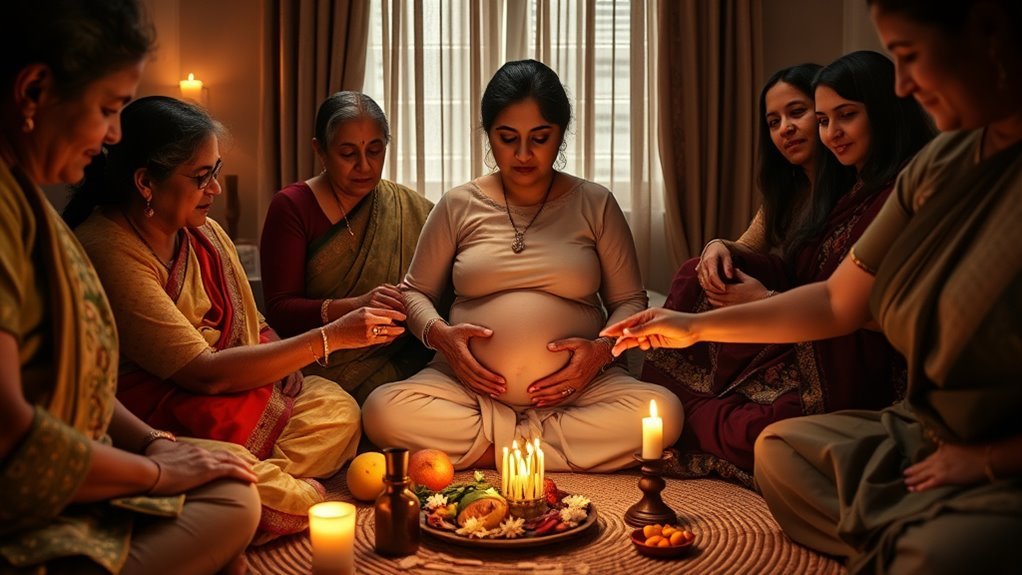
Pregnancy rituals matter because they do more than mark a milestone—they connect people, ease uncertainty, and express what a community values most. You can see this across cultures: about 80% of them shape pregnancy with distinct customs, from gatherings to offerings, and those pregnancy rituals turn private change into shared recognition.
They don’t just decorate the moment; they build community bonds by telling you that your experience isn’t isolated. When people gather around you, they often reinforce care, belonging, and mutual responsibility.
Many traditions also frame pregnancy as a physical and social shift worth protecting, which can help you feel steadier and less alone. Research links participation in these practices with lower stress and anxiety, so the effect isn’t symbolic only. It’s practical.
These rituals reveal how communities merge identity, spirituality, and hope while making room for your autonomy and the life you’re carrying.
Common Pregnancy Blessings and Prayers
You’ll notice that prenatal blessing rituals across cultures often pair gratitude with protection, whether through prayers, songs, or formal rites.
When you compare them, the shared aim is clear: you’re asking for a safe delivery and health for both mother and child.
You’ll also see that family support ceremonies don’t just honor the pregnancy—they strengthen the circle around it.
Prenatal Blessing Rituals
When you join prenatal blessing rituals, you see how religious beliefs shape support: Hindu Garbha Sanskar centers positive thoughts, Indigenous ceremonies use sacred herbs and songs, and Christian gatherings invite communal blessing.
Each tradition differs, yet each treats pregnancy as worthy of reverence, not silence. You may feel steadier as others name your hopes aloud and hold space for your changing body.
These practices don’t just express faith; they can also reduce anxiety and strengthen emotional well-being. In that way, blessing rituals give you spiritual affirmation and collective power.
Prayer For Safe Delivery
When delivery draws near, many families turn to prayers and blessings that ask for protection, calm, and a healthy birth. You may notice how a prayer for safe delivery shapes religious behavior differently across traditions.
In Christianity, you might hear God invoked for guidance through labor. In Hindu homes, Sankalpa asks deities for a safe, healthy birth. Indigenous Blessingway practices often center spiritual balance and the expectant mother’s freedom from fear.
Compared with medical routines, these acts don’t replace care; they add meaning, agency, and emotional support. Research suggests prayer can lower anxiety and help you feel less alone.
That matters because liberation also includes the right to enter childbirth with dignity, hope, and a sense of spiritual protection.
Family Support Ceremonies
- Native American blessingways gather loved ones to steady you emotionally.
- Jewish Simchat Bat prayers welcome the child and ask protection.
- Hindu Godh Bharai surrounds you with blessings, gifts, and food.
- Christian baby showers add prayers, practical help, and safety wishes.
Across African naming ceremonies, your child’s arrival becomes a communal claim of identity.
These rites don’t control you; they enlarge your circle. They show that liberation can include tenderness, collective power, and sacred support for your changing body and future.
Baby Showers, Naming Ceremonies, and Welcomes
You’ll notice baby showers often gather family and friends before birth, turning gifts and support into a shared expression of hope.
Naming day traditions work differently across cultures, since they may honor ancestry, invoke blessings, or formally welcome the child into a faith community.
When you compare these rituals, you can see how each one reflects both local identity and the wider value of communal care.
Baby Shower Rituals
- Before birth, friends bring gifts, games, and advice.
- After birth, a welcome-home gathering can steady exhausted parents.
- In some cultures, a sip and see lets you meet the baby casually.
- Research shows these rituals build belonging and ease the adjustment to parenthood.
Compared with private routines, these gatherings make care visible. They let you witness joy, receive help without shame, and build networks that honor your freedom to parent with support.
Naming Day Traditions
In some communities, a Brit Milah or baptism marks entry into sacred life; elsewhere, you’ll witness rituals that formally bestow a name and affirm values. These acts aren’t just symbolic. They invite community involvement, offer emotional support to parents, and signal that childrearing is shared, not isolated.
How Religions Support Expecting Parents
Religious traditions often give expecting parents a clear framework of support, meaning, and practical care during pregnancy. You can see how religious communities turn private waiting into shared responsibility.
Hindu and Buddhist rituals may bless your pregnancy, while Christian baptism later extends that welcome into a child’s wider faith community. In Islam, you’re encouraged to pray and invite family blessings, linking your body’s experience to collective care.
Jewish life also marks arrival through the Shalom Zachar, showing how support continues beyond birth.
- Rituals can reduce isolation.
- Blessings can affirm your agency.
- Community presence can distribute care.
- Shared faith can frame childbirth as communal, not just personal.
Across traditions, you’re offered structure without surrendering your dignity. These customs can protect space for hope, while also reminding you that expecting parents don’t have to navigate pregnancy alone.
[Products Worth Considering]

Sympathy Gift for Soul Healing: Thoughtful keepsake box with a single-sided frosted angel wing acrylic ornament for personal remembrance or offering solace; Includes "Sending...
Sacred Foods, Gifts, and Protective Traditions
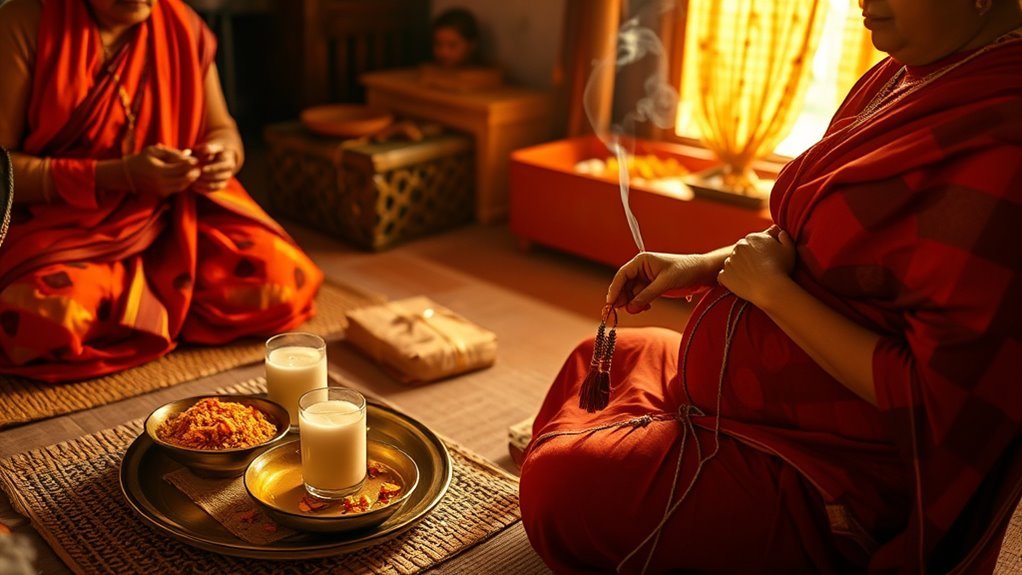
Across cultures, pregnancy is often marked not only by blessing but by what’s eaten, given, and worn for protection.
Pregnancy is often marked not only by blessing, but by what is eaten, gifted, and worn for protection.
You’ll see sacred foods doing more than feeding hunger: in Chinese traditions, confinement food is meant to nourish you and support recovery after birth, while some Indigenous pregnancy rituals use specific herbs and foods to protect you and support fetal health.
In Hindu Godh Bharai, people offer food and blessings, turning nourishment into public affirmation.
You may also receive handmade blankets or special clothing, gifts that signal care without controlling your body.
Protective traditions matter too: amulets and charms are worn to ward off harmful forces and affirm that your safety isn’t left to chance.
Read together, these practices show how communities make pregnancy visible, valued, and guarded—without reducing you to risk alone.
How Pregnancy Rituals Strengthen Family Bonds
Pregnancy rituals often do more than honor the expectant mother; they bring relatives into a shared role, creating unity through active care, advice, and celebration. You can see how these pregnancy rituals reshape family life: everyone contributes, and emotional bonds grow stronger.
- At a baby shower, you witness gifts, stories, and practical help turning anticipation into collective joy.
- In a blessingway, you notice relatives offering guidance and affirming your path into motherhood.
- During Godh Bharai, you compare formal honoring with lively participation, and both deepen connection.
- When elders share family histories, you gain continuity, belonging, and a clearer sense of where you come from.
Compared with private preparation, these gatherings distribute support across the family, so you’re not carrying change alone. That shared labor can ease stress and make room for confidence.
When tradition invites participation, you don’t just receive care; you help build a family culture that’s freer, closer, and more resilient.
Faith Practices for Modern Pregnancy
When faith enters pregnancy, it often does so through rituals that blend spiritual reassurance with practical support. You may see this in Hindu Godh Bharai, where blessings and gifts honor your changing body and ask for a safe delivery.
In Christian settings, baby showers can carry prayers and blessings, turning celebration into communal protection. African naming ceremonies extend that logic: they welcome the child while also calling for guidance over you and your family.
Buddhist faith practices often look inward, using meditation and chanting to steady your mind and soften stress. Indigenous ceremonies, like Navajo Blessingway, weave prayer, storytelling, and ritual into a shelter around you.
Compared side by side, these traditions show that modern pregnancy doesn’t need to separate spirituality from care. They can help you claim support, dignity, and freedom while you prepare for birth.
Frequently Asked Questions
How Did Religion Begin?
You’d see religion begin in ancient beliefs, as people shared stories, fears, and sacred rituals to explain life. You compare communities, and notice spiritual practice grew from social bonds, not fixed doctrines or separate institutions.
What Was Charlie Kirk’s Religious Affiliation?
Charlie Kirk’s religious affiliation is Christian, specifically evangelical. You can see how Kirk’s beliefs and faith influences shape his conservative politics, compared with secular figures, by framing morality, freedom, and social policy through religion.
Does Elon Musk Believe in God?
You’ll find Elon Musk doesn’t clearly believe in a traditional God; he’s said he’s more agnostic, open to a higher power. His personal beliefs reflect faith exploration, balancing skepticism, ethics, and curiosity beyond doctrine.
What Are the Six Ways to Be Religious?
You can be religious through belief, worship, prayer, ethical living, spiritual practices, and community support. You’ll notice traditions differ, but each path can deepen meaning, connect you with others, and help you choose freedom.
Conclusion
When you look at pregnancy rituals across religions and cultures, you can see the same need expressed in different ways: protection, gratitude, and belonging. A prayer circle, for example, may comfort one family as much as a baby shower does another. You don’t just prepare for a baby; you’re welcomed into a wider network of faith and care. These traditions remind you that pregnancy isn’t only personal—it’s also communal, symbolic, and deeply shared.
