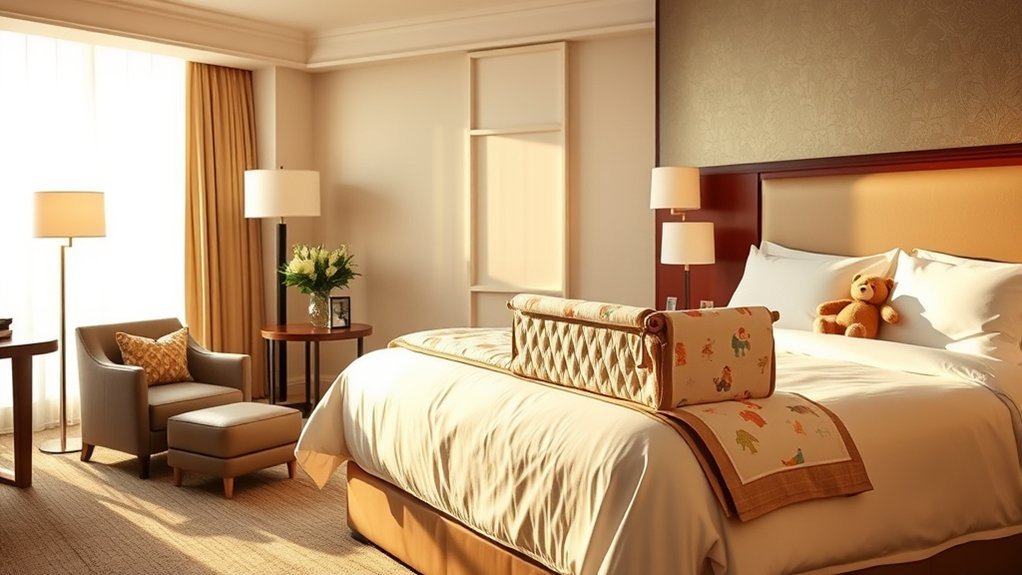
Arriving at a hotel with tired kids, bags, snacks, strollers, and bedtime routines can feel stressful when the room is too tight or poorly planned. The best family hotel room setup gives you enough floor space, safe sleep options, practical storage, easy meals, and quick access to the things parents need most.
Quick Answer
A good family hotel room setup should include enough space for luggage and movement, safe sleeping areas for each child, secure doors and windows, a clean bathroom, useful amenities like a mini-fridge, and easy access to elevators, dining, laundry, and parking.
Key Takeaways
- Choose a room type that fits your family’s sleep needs, not just the cheapest rate.
- Suites, connecting rooms, and extended-stay rooms usually work better than one standard room for longer trips.
- Ask about cribs, rollaway beds, sofa beds, and bedding before arrival so there are no surprises at check-in.
- Check safety basics such as door locks, window locks, balcony access, smoke alarms, sprinklers, and clear exit routes.
- A mini-fridge, microwave, laundry access, blackout curtains, and quiet room location can make family travel much easier.
Choose the Right Room Type for Your Family
The right hotel room setup starts with the room type. A standard room may work for one night, but it can feel cramped once you add luggage, a stroller, a crib, and kids who need space to move. For a smoother stay, compare the layout before you compare the price.
| Standard Room | Best for short stays, one child, or families who only need a place to sleep. |
| Suite | Best when parents need a separate sitting area after kids fall asleep. |
| Connecting Rooms | Best for older kids, larger families, or families who need two bathrooms. |
| Extended-Stay Room | Best for meals, bottles, snacks, and longer trips because these rooms often include a kitchenette. |
When booking, look for the listed square footage, bed types, sofa-bed details, and whether a crib or rollaway bed can fit without blocking the walkway. If the listing does not show the layout clearly, call the hotel and ask.
Pro Tip: Ask the hotel to note your bedding request on the reservation, then call again the day before arrival. Cribs, rollaway beds, and connecting rooms are often limited and may not be guaranteed unless confirmed by the property.
The Importance of Space for Family Comfort
Space affects almost every part of a family hotel stay. You need room for suitcases, shoes, diapers, snacks, toys, wet swimsuits, and bedtime routines. A cramped room can lead to frustration, especially when kids need to wind down after a long day.
Look for a layout with clear zones for sleeping, relaxing, eating, and storing belongings. A small seating area or separate living space can give parents a quiet place to sit after the kids fall asleep. If you are traveling with an infant or toddler, extra floor space for a portable crib or play area can make a major difference.
Choose a room that lets your family move around safely after the beds, bags, stroller, and crib are in place.
Storage matters too. A luggage rack, closet, shelves, hooks, or a bench can keep bags off the floor and reduce tripping hazards. If the room has no storage, unpack only the essentials and keep unused bags zipped and tucked against a wall.
Family Hotel Room Safety Checklist
Before you settle in, inspect the room from a child’s-eye view. Look for hazards that may not be obvious when you first walk in.
- Door locks: Check the deadbolt, latch, peephole cover, and any extra security chain.
- Windows and balconies: Make sure windows lock securely and balcony doors cannot be opened easily by young children.
- Fire safety: Look for smoke alarms, sprinklers, posted evacuation maps, and clear exit routes. You can also use the U.S. Fire Administration Hotel-Motel National Master List when checking fire-safe lodging for U.S. travel.
- Carbon monoxide safety: Ask whether CO alarms are installed where required or where fuel-burning appliances are present.
- Electrical outlets: Move chargers and cords out of reach and bring outlet covers if you use them at home.
- Furniture stability: Keep toddlers from climbing dressers, TV stands, luggage racks, and window ledges.
- Bathroom hazards: Check hot water, slippery floors, low toilets, glass shower doors, and reachable toiletries.
Warning: Do not assume a hotel room is childproof. Keep balcony doors locked, move cleaning products and toiletries out of reach, and never place a crib or toddler bed near a window, cord, heater, or heavy furniture.
Safe Sleep Setup for Babies, Toddlers, and Kids
A good family room setup supports sleep for every age. Babies, toddlers, and older kids need different arrangements, so confirm the sleep plan before you book.
For infants, ask whether the hotel provides a crib or portable crib that meets current safety standards. Follow safe-sleep guidance: babies should sleep on their backs on a firm, flat surface with no pillows, blankets, stuffed toys, or loose bedding in the sleep space. The Safe to Sleep campaign explains that a clear, firm sleep environment helps reduce sleep-related risks.
For toddlers, ask about bed rails, low beds, or a sofa bed if your child no longer uses a crib. For older kids, confirm whether the sofa bed, bunk bed, or rollaway has enough bedding and does not block the bathroom path at night.
- Pack a small night-light for bathroom trips.
- Bring familiar comfort items for older children, such as a blanket or stuffed toy.
- Use white noise or a phone-based sound machine if hallway noise wakes your child.
- Request a room away from elevators, ice machines, event spaces, and street noise.
- Check whether blackout curtains fully close before bedtime.
Kid-Friendly Amenities and Activities
Kid-friendly amenities can turn a difficult trip into an easier one, but not every “family-friendly” listing offers the same value. Focus on amenities that reduce stress for parents and keep children safely occupied.
Useful features include a pool, splash area, playground, game room, kids’ club, stroller-friendly paths, and simple dining options. For babies and toddlers, ask about cribs, high chairs, bottle warmers, baby bathtubs, and whether the hotel can provide a mini-fridge for milk or medication.
Dining can also shape the stay. A child-friendly menu, early breakfast hours, in-room dining, or a nearby grocery store can make meals easier. If your child has allergies or dietary restrictions, contact the hotel restaurant before arrival and ask how they handle special requests.
Accessibility and Convenience for Parents
Accessibility is not only about wheelchair access. For families, it also means easy movement with strollers, luggage, tired kids, and caregivers who may need step-free routes. The ADA guidance for places of lodging explains that hotels, motels, and other lodging facilities must provide guests with disabilities equal opportunity to use services and facilities.
| Accessibility Features | Convenience Features |
| Wheelchair-friendly or step-free room access | On-site dining or nearby grocery options |
| Close proximity to elevators | 24-hour front desk support |
| Accessible parking spaces | In-room mini-fridge and microwave |
| Wide bathroom entry and grab bars if needed | Laundry facilities or same-day laundry service |
When the hotel checks these boxes, you can spend less time solving logistics and more time enjoying the trip. Parents with strollers may also want to request a room on a lower floor, close to an elevator, or near parking if the property is spread out.
Kitchenette and Meal Setup for Families
A kitchenette can save money and reduce mealtime stress, especially with babies, picky eaters, or children with food allergies. Before booking, check whether the room includes a mini-fridge, microwave, sink, cooktop, dishware, and a table large enough for snacks or simple meals.
If the room only has a mini-fridge, plan easy foods such as yogurt, fruit, sandwiches, milk, and pre-packed snacks. If it has a full kitchenette, you can prepare simple breakfasts and avoid restaurant meals when kids are tired.
Note: If you need a refrigerator for breast milk, formula, medication, or allergy-safe foods, tell the hotel before arrival and confirm whether the fridge is in the room or available by request.
The Role of Cleanliness and Hygiene Standards
Cleanliness matters more when kids crawl, touch surfaces, and snack often. Before booking, read recent reviews that mention room cleanliness, bathroom condition, linens, carpets, and common areas. A hotel with consistent cleanliness complaints is usually not worth the savings.
At check-in, do a quick inspection. Check the bathroom, sheets, mattress edges, floors, vents, and high-touch surfaces such as remote controls, light switches, door handles, faucets, and thermostat buttons. If something looks dirty or unsafe, ask for a different room right away.
If you wipe surfaces yourself, use disinfecting wipes safely and follow the product label. EPA’s List N disinfectant guidance explains that listed products are for surfaces, not people, and children should not use them.
Questions to Ask Before Booking
A short call or message before arrival can prevent most family hotel room problems. Ask these questions before you book or at least before check-in:
- How many square feet is the room?
- Can a crib or rollaway bed fit without blocking the walkway?
- Are connecting rooms guaranteed or only requested?
- Is the sofa bed full-size, queen-size, or twin-size?
- Does the room have a bathtub or only a shower?
- Is there a mini-fridge, microwave, or kitchenette?
- Can you place us away from elevators, ice machines, bars, or event rooms?
- Are cribs, high chairs, and bed rails available?
- Do windows and balcony doors have child-resistant locks?
- Where are the nearest laundry facilities, elevators, exits, and parking areas?
Frequently Asked Questions
What are the best hotel room types for families?
Suites, connecting rooms, and extended-stay rooms usually work best for families because they offer more sleeping space, better storage, and more privacy. A standard room can work for one night, but longer stays are easier when parents and children have separate zones.
How can I help my child sleep well in a hotel room?
Keep bedtime as close to normal as possible. Bring pajamas, a sound machine, a night-light, and familiar comfort items for older children. For infants, use a safe crib or portable crib with a firm, flat surface and no loose bedding, pillows, or stuffed toys.
Are there hotels with kitchenettes for family meals?
Yes. Extended-stay hotels, aparthotels, and some suite-style properties often offer kitchenettes with a fridge, microwave, sink, and basic dishware. Always check the room details because “kitchenette” can mean anything from a mini-fridge and microwave to a small cooking area.
What is a good hotel room size for a family?
Many standard hotel rooms feel tight for families once luggage, a stroller, and an extra bed are added. Instead of relying only on an average, check the listed square footage and layout. For longer stays, a suite or room with separate sitting space is usually more comfortable.
Can I request additional bedding for my kids in advance?
Yes. Most hotels let you request extra bedding, cribs, rollaway beds, or sofa-bed sheets before arrival. Add the request during booking, call the hotel directly, and confirm again before check-in because extra bedding and baby equipment may be limited.
Should I book one large room or two connecting rooms?
Choose one large room or suite if your children are young and need close supervision. Choose connecting rooms if you have older kids, need two bathrooms, or want more privacy. Confirm whether connecting rooms are guaranteed, because some hotels treat them as requests only.
Conclusion
The right family hotel room setup can make your trip calmer, safer, and more comfortable. Look beyond the room photo and check the layout, sleep options, safety features, storage, bathroom setup, meal options, and cleaning standards before you book. When the room supports your family’s real routine, everyone has a better chance of resting well and enjoying the trip.
Sources
- ADA.gov: Guide for Places of Lodging — supports accessibility and equal-use guidance for hotel guests.
- U.S. EPA: About List N Disinfectants — supports disinfectant-use and child-safety language.
- U.S. Fire Administration Hotel-Motel National Master List — supports checking fire-safe lodging for U.S. travel.
- Safe to Sleep: Safe Sleep Environment — supports infant sleep safety guidance.
- U.S. Consumer Product Safety Commission: Crib Safety — supports crib and infant sleep product safety checks.

