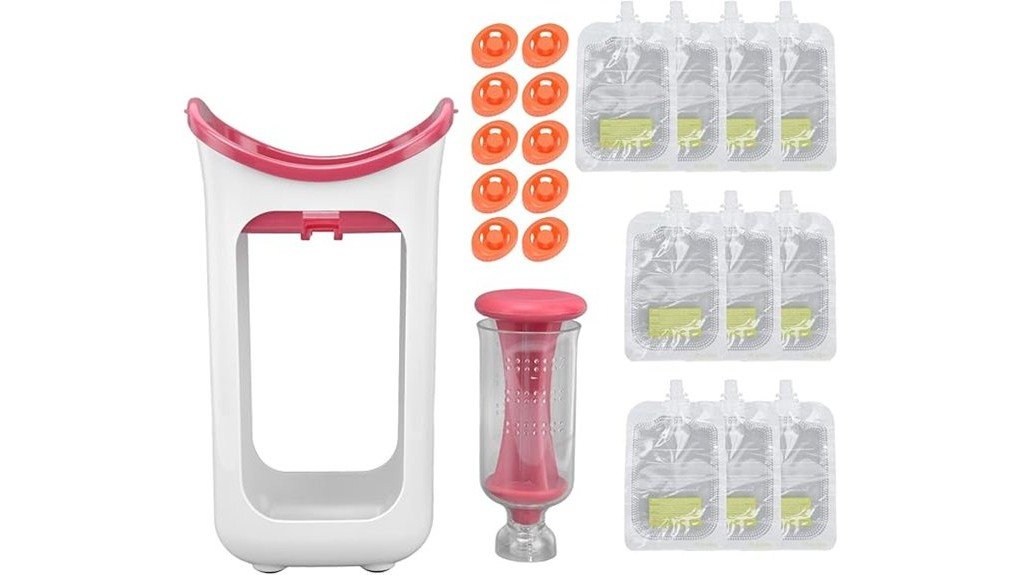
A homemade infant fruit food maker gives parents a simple way to prepare purees with more control over ingredients, texture, and portion size. BPA-free squeeze stations and reusable pouches may support safer, more practical feeding at home or on the go. Cleaning and storage are usually straightforward, but safety and hygiene still matter. The real question is whether the convenience justifies the setup for infant feeding needs.
Key Takeaways
- A homemade infant fruit food maker helps prepare smooth purées and reusable pouches for convenient, portioned feeding.
- BPA-free, food-grade materials are preferred because they support safer infant food storage and reduce exposure concerns.
- It works best with ripe fruits like pear, apple, banana, or peach blended into a thin but smooth consistency.
- Reusable pouches are practical for portable feeding, but they must be cleaned promptly and dried completely after use.
- Safety depends on proper use, smooth purées, hygiene, and checking parts for damage or trapped residue before feeding.
What Is a Homemade Infant Fruit Food Maker?
A homemade infant fruit food maker is a squeeze station with storage bags designed to help prepare and store infant-friendly foods at home.
It typically includes a puree maker and reusable pouches, enabling caregivers to blend fruits or vegetables into smooth textures suited to early feeding. Evidence-based feeding practice supports age-appropriate consistency and ingredient control, which can aid customized nutrition.
The compact format also supports portable feeding, helping families carry prepared portions beyond the kitchen.
Portable feeding helps families carry prepared portions beyond the kitchen, making infant meals more convenient.
For households seeking autonomy over infant meals, this tool offers a practical, flexible way to portion, store, and serve simple homemade purées.
Why Choose a BPA-Free Squeeze Station?
Choosing a BPA-free squeeze station can support safer everyday feeding by reducing exposure to materials that many caregivers prefer to avoid in infant food storage and prep. Evidence-based BPA free benefits include added peace of mind and a material choice aligned with infant health priorities.
Squeeze station advantages also matter for practical family routines:
- Food-grade construction supports cautious feeding
- Reusable pouches reduce disposable waste
- Compact design suits busy, mobile households
- Easy cleaning helps maintain hygienic use
For families seeking more freedom in how infant food is prepared and stored, a BPA-free option offers a sensible, child-centered, and portable solution.
How to Make Baby Fruit Pouches
Once ripe fruit is washed, peeled, and cut into small pieces, it can be blended into a smooth puree that is suitable for baby fruit pouches.
For infant feeding, the puree should be thin enough to squeeze easily yet thick enough to hold shape. Evidence-based baby food recipes often begin with single fruits such as pear, apple, banana, or peach, then expand to mixed fruit puree options as tolerance is observed.
A clean spoon or funnel can transfer the puree into a BPA-free pouch with minimal mess. This supports practical, independent feeding while keeping preparation simple and intentional for caregivers.
How to Clean and Store the Pouches
After each use, the pouches should be emptied promptly and washed with warm, soapy water, or placed in the dishwasher if the product design allows it, to reduce residue buildup and support safe infant feeding.
Routine pouch maintenance helps preserve function and keeps feeding simple for caregivers seeking practical freedom.
Routine pouch maintenance keeps feeding simple, preserving function and offering caregivers practical freedom.
- Rinse immediately after use.
- Check seams and caps for trapped puree.
- Air-dry fully before reassembly.
- Use storage tips: keep clean pouches sealed in a dry, compact space or refrigerate filled pouches briefly.
Evidence-based handling reduces contamination risk and supports fresh, ready-to-use infant portions without excess hassle.
Is a Fruit Food Maker Safe for Infants?
A fruit food maker can be safe for infants when it is used as intended and made from food-grade, BPA-free materials.
For infant safety, caregivers should check that all parts are intact, cleaned thoroughly, and assembled correctly before each use. Purées should be smooth enough to reduce choking risk. New foods should be introduced one at a time to monitor food allergies and reactions.
The device supports home preparation, giving families more control over ingredients and sugar levels. Safe use also depends on supervision, age-appropriate textures, and prompt cleaning after feeding to limit contamination.
Frequently Asked Questions
How Many Pouches Come With the Food Maker?
It includes reusable food pouches, though the exact count is not specified. Their pouch durability and pouch capacity support practical infant feeding, with food-grade, BPA-free materials, dishwasher-safe cleaning, and fresh storage for homemade purées.
Can It Store Homemade Yogurt or Applesauce?
Yes, it can store homemade yogurt or applesauce if packed into the reusable pouches. Yogurt storage and applesauce consistency should be thick enough to avoid leaks, and refrigeration helps keep infant portions fresh and safe.
What Age Range Is Best for Using This Station?
It is best for infants starting solids, typically around 6 months, once feeding milestones and infant nutrition readiness are met. A caregiver should confirm head control, sitting support, and pediatric guidance before using the station.
Are Replacement Pouches Available Separately?
Replacement pouches may be available separately, like spare sails for a small feeding ship. Availability depends on seller listings, while pouch materials and pouch sizes should match the original system for safe, practical infant use.
Does It Fit in a Diaper Bag Easily?
Yes, it appears to fit a diaper bag easily, thanks to its compact diaper bag size and strong portability features. Evidence suggests it suits infant feeding on the go, with practical storage and easy transport.
Conclusion
In the end, the homemade infant fruit food maker stands out for its BPA-free materials, reusable pouches, and simple squeeze station design. It lets caregivers prepare smooth purees with control over ingredients, texture, and portion size, which matters for infants’ changing needs. Cleaning is straightforward, storage is compact, and waste is reduced. By coincidence, a tool built for convenience also supports healthier habits, making everyday feeding feel more intentional, safer, and more manageable.

