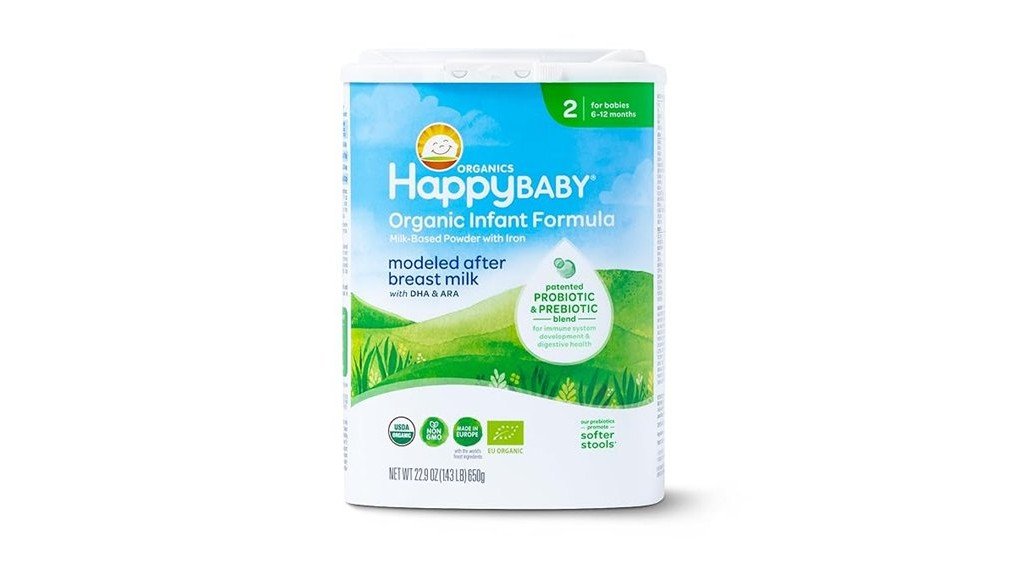
Happy Baby Organics Stage 2 Formula is designed for infants aged 6 to 12 months, with a milk-based organic profile intended to support growth during a key developmental stage. It includes DHA, probiotics, and prebiotics, which are often associated with brain and digestive support. Its USDA and EU certifications may also reassure caregivers about ingredient standards. The main question is whether these features justify its premium price.
Key Takeaways
- Happy Baby Organics Stage 2 is an organic milk-based formula for babies 6–12 months during complementary feeding.
- It uses lactose as the main carbohydrate and includes DHA, iron, calcium, and other age-appropriate nutrients.
- Probiotics and prebiotics are included to support digestion, gut health, and softer, more regular stools.
- USDA, EU organic, and Clean Label Project certifications suggest strong sourcing standards and contaminant screening.
- Its premium price is tied to verified organic quality, nutrient profile, and easier digestion rather than branding alone.
What Is Happy Baby Stage 2 Formula?
Happy Baby Organics Stage 2 Formula is a milk-based organic infant formula designed for babies 6 to 12 months old. It serves as a developmental option in infant feeding, intended to support growing nutritional needs during complementary feeding.
In formula comparison, it is positioned as an organic Stage 2 product with USDA and EU certifications, offering parents a regulated choice. The formulation is designed for easy digestion and age-appropriate nutrient adjustment.
Its purpose is practical: to provide reliable nourishment while families make feeding decisions with greater autonomy, confidence, and evidence-informed flexibility.
Happy Baby Stage 2 Ingredients and Nutritional Profile
The ingredient profile of Happy Baby Organics Stage 2 Formula is built around a milk-based organic powder with lactose as the primary carbohydrate, reflecting the composition of breast milk more closely than formulas centered on added sugars.
The ingredient profile centers on organic milk-based powder with lactose as the primary carbohydrate, closely reflecting breast milk.
Ingredient sourcing emphasizes organic milk from grass-fed cows, supporting a transparent supply chain.
The nutritional benefits include higher levels of calcium, iron, phosphorus, iodine, selenium, and key vitamins that aid growth and immune development.
Its protein blend is calibrated for infant needs, with DHA included to support normal brain and eye development.
How Probiotics and Prebiotics Help Digestion
Probiotics and prebiotics work together to support infant digestion by helping establish a more balanced gut environment.
In this formula, they may encourage beneficial bacteria that assist gut health and improve the breakdown of nutrients.
For some infants, this can translate into gentler infant digestion and softer, more regular stools, which may reduce discomfort and support feeding confidence.
The approach is designed to align with the digestive pattern of breastfed infants, offering a clinically grounded option for families seeking more freedom in feeding choices while maintaining a reassuring, developmentally appropriate nutritional foundation.
Organic Standards, Safety, and Certifications
Certified organic standards and safety features are central to this formula’s positioning, with USDA and EU organic certification supporting a more rigorous approach to ingredient sourcing and manufacturing.
Such oversight signals disciplined organic sourcing, traceable inputs, and ingredient transparency that can help caregivers make informed choices with less uncertainty.
Clean Label Project certification adds another layer of screening for contaminant concerns, while European production standards further reinforce quality control.
Clean Label Project certification adds an extra layer of contaminant screening, while European standards reinforce quality control.
The overall framework suggests a product built for families seeking nourishment with fewer ambiguities, offering a measured sense of confidence grounded in documented compliance rather than marketing language or vague assurances.
Is Happy Baby Stage 2 Worth the Price?
Price becomes a more nuanced question once the formula’s certification, sourcing, and nutritional profile are considered together. For families seeking liberation from doubt, the pricing justification rests on organic milk, probiotic support, and nutrient density.
| Factor | Observation | Implication |
|---|---|---|
| Organic certification | USDA, EU, Clean Label Project | Higher assurance |
| Nutrition | Iron, calcium, DHA, prebiotics | Developmental support |
| Digestibility | Whey-forward, lactose-based | Gentler feeding |
In value comparison with standard formulas, the premium appears tied to verified quality rather than branding alone. For caregivers prioritizing safety, traceability, and stool regularity, the cost can be clinically defensible, though not universally necessary.
Frequently Asked Questions
Is Happy Baby Stage 2 Suitable for Babies With Lactose Sensitivity?
No; it is not ideal for babies with lactose sensitivity because it is lactose-based. If lactose intolerance symptoms appear, a pediatric clinician may suggest alternative formulas, including lactose-free or extensively hydrolyzed options.
How Should Happy Baby Stage 2 Be Stored After Opening?
Like a sealed vault preserving nourishment, it should be stored tightly closed in a cool, dry place, away from heat and moisture; these storage tips help maintain formula freshness and support safe feeding.
Can Happy Baby Stage 2 Be Used Alongside Breastfeeding?
Yes, it can be used alongside breastfeeding. Clinically, this supports breastfeeding benefits while easing a gradual formula shift. The approach is generally reassuring, flexible, and compatible with responsive feeding when guidance from a clinician is available.
What Is the Shelf Life of an Unopened Happy Baby Stage 2 Container?
An unopened container typically has a shelf life until the formula expiration date printed on the package, usually about 12 months from manufacture. Proper storage in a cool, dry place helps preserve quality and safety.
Does Happy Baby Stage 2 Have a Return Policy if My Baby Dislikes It?
Return policies depend on the retailer, not the formula maker. If the infant dislikes it, customers should check the seller’s rules for baby formula preferences and customer satisfaction; unopened containers are often returnable with receipt.
Conclusion
Happy Baby Organics Stage 2 Formula appears to be a clinically sound option for infants 6 to 12 months, combining organic milk-based ingredients with DHA, probiotics, and prebiotics. Its nutritional profile is designed to support growth, digestion, and early brain development. USDA and EU certifications add reassurance regarding ingredient quality and safety. While price may be higher than standard formulas, the product functions like a well-built bridge, linking nutritional needs with caregiver confidence and infant support.

