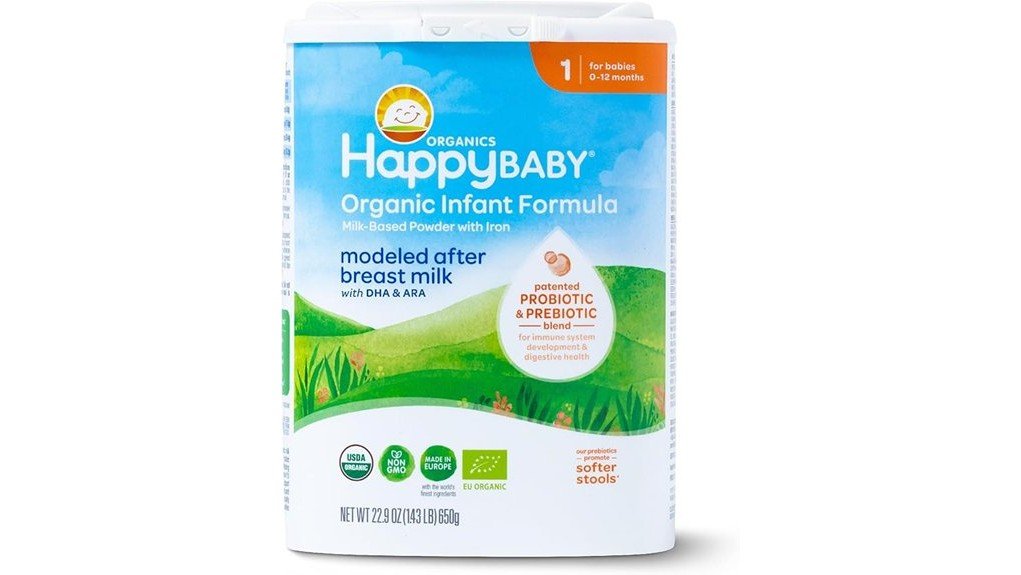
Happy Baby Organics Formula is often seen as a premium choice for parents who want organic, non-GMO infant nutrition. It includes ingredients such as iron, DHA, probiotics, and prebiotics, which are intended to support growth and digestion. The formula also carries USDA and EU certifications, but its higher price may change the value equation for some families. Whether those features justify the cost is less clear at first glance.
Key Takeaways
- Happy Baby Organics is a milk-based organic formula for infants 0–12 months, designed to supplement or replace breastfeeding when needed.
- It includes iron, DHA, probiotics, and prebiotics, aiming to support nutrition and digestive health.
- USDA and EU organic certifications, plus non-GMO ingredients, make it appealing for parents seeking a cleaner label.
- It may be worth it for families prioritizing organic ingredients and gut-support features, but benefits vary by baby.
- The premium price is the main drawback, so value depends on your budget and your baby’s tolerance.
What Is Happy Baby Organics Formula?
Happy Baby Organics Formula is a milk-based organic infant formula powder designed for babies from 0 to 12 months old.
Happy Baby Organics Formula is a milk-based organic powder for infants from 0 to 12 months.
It is positioned as a milk-based option made with organic ingredients, intended to support infant nutrition when breastfeeding is unavailable or supplemented.
The formula reflects a broader push toward cleaner-label feeding, offering parents a regulated product that aims to balance convenience with transparency.
Its design is informed by research on early feeding, though individual tolerance and needs can vary.
Caregivers may view it as one option within a range of infant nutrition choices, rather than a universal answer.
What’s in Happy Baby Organics Formula?
The ingredient profile centers on a milk-based organic powder for infants 0 to 12 months, with added iron, probiotics, and prebiotics.
This ingredients breakdown also includes DHA, chosen to reflect levels seen in breast milk, plus a nutrient mix adjusted for early growth.
The formula is non-GMO and avoids added corn syrup, artificial growth hormones, antibiotics, and prohibited pesticides.
Its organic benefits come from USDA and EU certification, which may appeal to caregivers seeking stricter standards.
Evidence suggests careful manufacturing and contaminant testing, though individual tolerance can vary.
How Does Happy Baby Organics Formula Support Digestion?
A key part of the formula’s digestive support comes from its patented blend of probiotics and prebiotics, which is intended to help promote a gut environment more similar to that of breastfed infants.
This combination may offer probiotic benefits by encouraging a more balanced intestinal microbiome, while prebiotics serve as nourishment for those bacteria. Such support is relevant to digestive health during early feeding, when the gut is still developing.
The formula also includes iron and tailored nutrients, but evidence suggests individual tolerance can vary. Its benefits should be viewed as supportive, not guaranteed, and assessed in the context of each infant’s needs.
Is Happy Baby Organics Formula Safe?
Safety claims for Happy Baby Organics Formula are supported by several quality and compliance measures, including USDA and EU organic certification, Clean Label Project certification, and production in an FDA-registered European facility with testing for hundreds of contaminants.
These markers strengthen organic safety, though no formula can be considered risk free. Ingredient sourcing appears tightly controlled, with non-GMO inputs and avoidance of antibiotics, added corn syrup, artificial growth hormones, and prohibited pesticides.
For families seeking more autonomy over feeding choices, such oversight may matter. Still, safe use depends on age-appropriate preparation, storage, and guidance from a qualified pediatric professional.
Is Happy Baby Organics Formula Worth the Cost?
Whether Happy Baby Organics Formula is worth the cost depends largely on what families value most in an infant formula.
A careful price comparison shows it often sits above standard formulas, reflecting its USDA and EU organic certification, clean-label testing, and added probiotics, prebiotics, and DHA. For some caregivers, those features justify the premium; for others, budget may remain the decisive factor.
Customer testimonials frequently praise digestion and ingredient transparency, yet such reports are anecdotal and should not replace evidence.
Customer testimonials often praise digestion and ingredient transparency, but anecdotal reports should never replace evidence.
In liberation-centered parenting, value may mean supporting health, trust, and choice, but affordability still matters.
Frequently Asked Questions
Can This Formula Be Used for Babies With Lactose Sensitivity?
No; this formula contains milk-based lactose and is not suitable for babies with lactose intolerance symptoms. A pediatrician may suggest alternative formulas, including lactose-free or hydrolyzed options, depending on severity and infant tolerance.
How Should Happy Baby Organics Formula Be Prepared Safely?
Preparation tips: he or she should wash hands, sterilize bottles, and use boiled, cooled water. Safety guidelines require following package ratios exactly, discarding leftovers after feeding, and verifying temperature before offering the formula.
Does It Come in Different Stages or Sizes?
It comes in stage variations, including Stage 1 for 0–12 months. Size options may vary by retailer, typically offering different container amounts. Availability should be verified locally, as formulations and package sizes can change.
Is It Compatible With Breastfeeding or Combination Feeding?
Yes—its gentle, nutrient-dense composition can complement breastfeeding benefits and suit combination feeding. The formula may serve as a steady companion for families traversing both paths, though a clinician should guide changes and monitor infant tolerance.
Where Can Happy Baby Organics Formula Be Purchased?
It can be purchased through online retailers and select store availability at major baby and grocery chains. Availability varies by region, so checking retailer listings and local inventories is prudent before relying on any single source.
Conclusion
Happy Baby Organics Formula stands out for parents who want an organic, milk-based option with added iron, DHA, probiotics, and prebiotics. In one kitchen-table comparison, a parent might see it as the “small-batch” pick beside a standard formula: thoughtful, transparent, but pricier. Its USDA and EU certifications add confidence, and its digestive-support ingredients are a plus. Still, whether it is worth it depends on budget, tolerance, and feeding goals, not branding alone.

