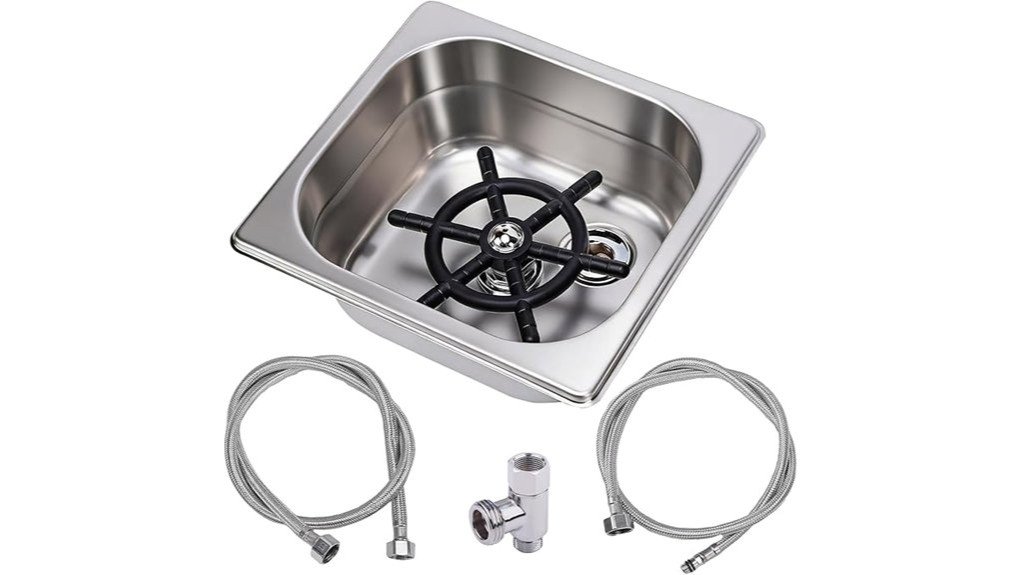
A glass rinser promises a simpler way to clean drinkware, but its value depends on more than convenience. Its one-press, pressure-driven spray is designed to remove residue quickly, while the stainless steel build suggests lasting use. It also claims broad compatibility, from wine glasses to baby bottles. Still, questions remain about real-world performance, durability, and installation. Those points determine whether it is a practical upgrade or just another kitchen accessory.
Key Takeaways
- A glass rinser saves time and reduces sink clutter, especially for frequent cup and bottle washing.
- Its pressure-driven 360° spray cleans drinkware instantly with minimal manual scrubbing.
- It works well with wine glasses, flutes, barware, and narrow baby bottles.
- Stainless steel construction and durable nozzle parts support reliable daily use.
- Installation is quick, often under 10 minutes, with standard US sink connections.
Is a Glass Rinser Worth It?
Whether a glass rinser is worth it depends largely on how often cups, glasses, and bottles need to be washed throughout the day.
For homes, cafés, and bars, the value rests on time saved, reduced sink clutter, and less manual scrubbing. A cost comparison against repeated labor, water use, and breakage often favors the unit after steady use.
User testimonials commonly highlight convenience, especially for narrow bottles and delicate glassware. For those seeking freedom from repetitive cleaning, the device can justify its price when daily volume is high and installation is simple.
How the Glass Rinser Cleans Fast
The speed of a glass rinser comes from its simple pressure-driven design, which cleans a cup or bottle the moment it is pressed down onto the rinser base. High-pressure jets strike the interior from multiple angles, creating rapid coverage and strong cleaning efficiency.
- One-press activation removes the need for buttons or cords.
- A 360° spray pattern reaches residue quickly.
- Fast drainage reduces standing water and keeps the sink area clear.
This streamlined process improves user experience by limiting manual scrubbing and restoring drinkware in seconds, supporting a more autonomous kitchen routine.
What Drinkware Can It Handle?
From compact coffee mugs to narrow-neck bottles, the glass rinser is built to accommodate a wide range of drinkware. Its drinkware types include wine glasses, champagne flutes, barware, baby bottles, and standard cups, reflecting broad practical coverage.
Compatibility features support varied shapes by directing high-pressure spray into interiors without requiring manual scrubbing. The recessed rinse zone helps stabilize items during activation, making alignment straightforward for different rim diameters.
Such adaptability suits households and bars seeking efficient handling of fragile or awkward vessels. The design prioritizes access and flexibility, reducing dependence on separate washing methods and supporting a more independent cleaning routine.
Is the Glass Rinser Durable for Daily Use?
Built for routine kitchen and bar use, the glass rinser relies on food-grade 304 stainless steel for its main structure, giving it strong resistance to rust, corrosion, and everyday wear. Independent durability tests suggest reliable performance under repeated pressure and frequent rinsing.
Built for routine kitchen and bar use, with 304 stainless steel resisting rust, corrosion, and daily wear.
- Stainless steel body supports long service life.
- Brass and ABS nozzle parts add functional resilience.
- Simple daily maintenance helps preserve spray consistency and surface integrity.
Its compact form reduces strain from constant handling, while drainage design limits residue buildup.
For users seeking practical autonomy, the build appears suited to demanding daily use without unnecessary fragility or dependence.
How to Install a Glass Rinser in Minutes
Installation is straightforward, with the glass rinser designed to fit standard US sink connections and requiring no plumber for setup. The included tee adapter, inlet pipe, and outlet pipe support a quick under-10-minute process.
Installation tips emphasize measuring sink space first, then securing the rinser to a countertop opening before connecting water lines.
Once fitted, the unit operates independently, freeing users from cords and manual scrubbing. User experiences often note the value of one-press activation and 360° spray coverage after setup.
The result is an efficient, self-contained cleaning station that restores control to the sink area.
Frequently Asked Questions
Does It Use a Lot of Water per Rinse?
No, it typically uses little water per rinse; water efficiency is aided by brief rinse duration and targeted jets. The system quickly clears residues, supporting economical use while maintaining thorough cleaning across varied drinkware.
Can It Be Used With Hard Water?
Yes, it can be used with hard water, though hard water may cause mineral buildup over time. Periodic descaling and wiping the nozzles help preserve spray performance, efficiency, and hygiene in demanding environments.
Is It Safe for Delicate Crystal Glasses?
Likely, yes—if the crystal has sufficient crystal durability. Could a gentle, high-pressure rinse still protect fragile stems? Its rinse effectiveness is strong, yet delicate etched or thin crystal deserves cautious handling and brief contact only.
Does It Reduce Water Splashing Around the Sink?
Yes, it reduces splashing through splash control and an efficient sink design. The rinse action directs water downward, while quick drainage limits spread, keeping surrounding surfaces cleaner and supporting a more liberated, low-mess washing routine.
Can the Rinser Be Removed Easily When Moving?
Yes, it can be removed fairly easily when moving, since installation is simple and plumber-free. With basic installation tips and modest portability features, the rinser’s connected pipes and tee adapter should detach without major difficulty.
Conclusion
In the small theater of the kitchen, the glass rinser plays the silent attendant, answering with one press and a ring of water that sweeps away the day’s residue. It proves worthy by saving time, easing labor, and serving many forms of drinkware with steady precision. Built of stainless steel, it appears prepared for long service. Like a well-tuned hinge, it turns routine cleanup from a burden into a swift, measured gesture.

