Disclosure: As an Amazon Associate, we earn from qualifying purchases. If you buy through links on this page, we may earn a small commission at no extra cost to you.
Reviewed by: Editorial Team | Updated: October 9, 2026 | Research-based review, not hands-on testing
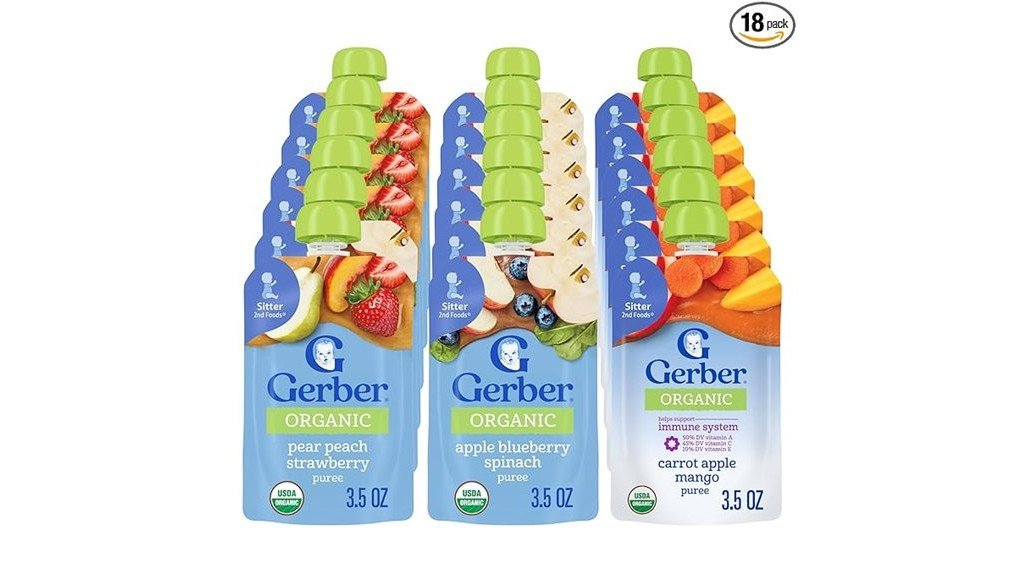
Gerber Organic Baby Food Pouches offer a convenient way to introduce fruit and vegetable blends to babies ready for Stage 2 foods. The Fruit & Veggie Favorites variety pack includes flavors such as Apple Blueberry Spinach, Pear Peach Strawberry, and Carrot Apple Mango. These organic purees come in portable 3.5-ounce pouches with no added sweeteners or artificial colors.
For busy families, the main appeal is simple preparation and flavor variety. However, these pouches are best used alongside other age-appropriate foods, not as a complete nutritional solution. Understanding their ingredients, feeding instructions, and limitations will help you decide whether they belong in your baby’s routine.
Quick Verdict: Gerber Organic Baby Food Pouches
Editorial Rating: 8/10
Research-based assessment of ingredients, convenience, feeding suitability, and limitations. Not a consumer star rating or hands-on product test.
Best for: Families needing convenient organic purees for babies ready to eat from a spoon.
Skip if: You need iron-rich meals, substantial protein, or foods that develop chewing skills on their own.
Bottom line: A practical choice for variety and convenience, provided you serve it safely and offer other food textures.
Before You Buy: Four Things to Know
- Confirm the flavors: Different Gerber variety packs can contain different recipes.
- Check the quantity: Retailers offer several package sizes, so compare the actual pouch count.
- Use a spoon for infants: Gerber recommends that babies under 12 months not feed directly from the pouch.
- Plan other foods: Smooth fruit-and-vegetable purees do not replace iron-rich foods or practice with thicker textures.
Article Contents
Key Takeaways
- Gerber Organic Baby Food Pouches offer smooth Stage 2 fruit and vegetable purees in portable packages.
- The reviewed variety includes Apple Blueberry Spinach, Pear Peach Strawberry, and Carrot Apple Mango.
- The recipes use organic produce and contain no added sweeteners or artificial colors.
- Vitamin C is included in the listed recipes, but nutrient percentages should be checked on the specific package.
- Unopened pouches are shelf-stable. Opened pouches must be refrigerated promptly and used within 24 hours if the remaining food has not been contaminated.
- These purees are convenient additions to a varied diet but do not replace foods that help develop chewing and self-feeding skills.
Are Gerber Organic Baby Food Pouches Worth It?
Yes, Gerber Organic Baby Food Pouches can be worth buying if convenience and ingredient simplicity matter to you. They let you offer several flavors without washing, peeling, cooking, and blending each ingredient separately.
Each recipe combines familiar fruit flavors with other produce. This can help you offer different tastes, although acceptance varies by child. The portioned packaging also makes it easier to prepare a small serving when you are away from home.
The main drawback is nutritional variety. These are primarily fruit-and-vegetable purees, not complete meals. Babies also need appropriate sources of iron, protein, healthy fats, and different textures as their feeding skills develop.
For everyday feeding, think of the pouches as a useful addition rather than the foundation of every meal. Homemade purees and other prepared baby foods can serve the same purpose when handled safely.
What’s Inside These Stage 2 Pouches?
The reviewed Gerber Organic variety pack contains three combinations of fruit and vegetables. Each is prepared as a smooth puree intended for babies who have reached the appropriate feeding milestone.
According to the published ingredient lists, the recipes are straightforward:
- Apple Blueberry Spinach: Organic apples, organic blueberries, organic spinach, and vitamin C (ascorbic acid).
- Pear Peach Strawberry: Organic pears, organic peaches, organic strawberries, and vitamin C (ascorbic acid).
- Carrot Apple Mango: Organic carrots, organic apples, organic mangoes, water, organic lemon juice concentrate, and vitamin C (ascorbic acid).
The recipes are described as unsweetened and unsalted, with no added starch or artificial flavors or colors. These statements do not mean the purees are sugar-free. Fruits contain naturally occurring sugars.
Gerber Organic Pouch Specifications
| Product | Gerber Organic 2nd Foods Fruit & Veggie Favorites Variety Pack |
|---|---|
| Feeding stage | Stage 2 / Sitter |
| Typical readiness | Around 6 months, depending on developmental readiness |
| Pouch size | 3.5 oz (99 g) |
| Texture | Smooth puree |
| Ingredient standard | USDA organic |
| Preparation | Ready to serve |
| Storage | Room temperature before opening; refrigerate after opening |
| Pack quantity | Varies by retail configuration |
What’s in the Box?
The purchase includes multiple sealed baby food pouches in the selected variety-pack configuration. You do not need a blender or other preparation equipment, although a clean spoon and serving bowl are recommended when feeding infants.
Check the product image and selected package quantity carefully. Some Gerber variety packs contain different flavor combinations, including recipes with zucchini or additional fruit blends.
Gerber Organic Baby Food Pouches Nutrition Facts
Gerber Organic Baby Food Pouches provide nutrients from fruit and vegetable ingredients, including vitamin C in the listed recipes. However, the nutrient amounts and percentages can differ between flavors and packaging versions.
These purees should be evaluated as one part of a balanced feeding routine rather than as complete nutrition on their own.
| Pouch | Notable ingredients | Nutrition consideration |
|---|---|---|
| Apple Blueberry Spinach | Apple, blueberry, spinach, vitamin C | Contains fruit and leafy greens; check the current vitamin C value |
| Pear Peach Strawberry | Pear, peach, strawberry, vitamin C | Fruit-focused recipe; check total and added sugars separately |
| Carrot Apple Mango | Carrot, apple, mango, vitamin C | Contains carrots and fruit; verify potassium and vitamin values on the label |
The recipes include vitamin C, but a specific percentage of Daily Value should not be assumed without checking the matching Nutrition Facts panel. Percentage values apply to the labeled serving and nutrient reference standards.
Are These Pouches a Complete Meal?
No. The reviewed recipes focus on fruits and vegetables. They are not designed to provide every nutrient needed for infant growth.
During the transition to solid foods, offer suitable iron-rich foods such as iron-fortified infant cereal, beans, or appropriately prepared meats, along with other foods your baby can safely eat.
The CDC recommends a variety of food groups beginning around 6 months, alongside continued breast milk or formula feeding.
Does Organic Mean More Nutritious?
Not necessarily. USDA organic certification describes how food ingredients are produced and processed. It does not establish that a particular puree supplies more vitamins or minerals than a conventional equivalent.
The better comparison is between the actual ingredients, nutrient values, your baby’s feeding needs, and the cost per pouch.
Flavor Breakdown: Apple, Peach, Pear, and Veggie Blends
One of the strongest reasons to choose this variety pack is the combination of familiar fruits with less familiar vegetable flavors. Each blend offers a different ingredient mix, although all three maintain a smooth puree texture.
Apple Blueberry Spinach
This recipe combines apple and blueberry with spinach. The fruits provide a naturally sweet base, while spinach introduces a leafy vegetable ingredient.
It may appeal to families who want to introduce a mixed fruit-and-greens flavor. However, accepting spinach in a sweet blend does not mean a baby will automatically accept plain spinach later.
Pear Peach Strawberry
This is the fruit-focused option. Pear, peach, and strawberry create a blend without a vegetable ingredient listed in the recipe.
It may be useful when you want to introduce several fruit flavors in one feeding. If your priority is offering vegetables, another recipe in the pack may better meet that goal.
Carrot Apple Mango
Carrot Apple Mango blends a root vegetable with apple and mango. It introduces a different vegetable ingredient while maintaining the smooth texture found across the pack.
For variety, rotate this blend with the spinach recipe and separate servings of plain or lightly mashed vegetables.
Do Stage 2 Pouches Help Babies Learn Different Textures?
They can introduce mixed flavors, but smooth Stage 2 purees do not provide the same practice as mashed, lumpy, or soft finger foods.
According to the CDC guidance on tastes and textures, babies should gradually experience textures appropriate to their developing feeding skills.
Continue offering age-appropriate foods with different consistencies as your baby becomes ready. Do not rely on the Stage 2 label alone to determine developmental readiness.
Why Parents Choose Gerber Organic Pouches
Parents often choose Gerber Organic Baby Food Pouches for their portability, ready-to-serve format, and familiar ingredient combinations. They are especially useful when preparing homemade puree is inconvenient.
The sealed packaging also means unopened pouches can be stored in a pantry instead of taking up refrigerator space. This makes it practical to keep a small supply available for travel or busy days.
What Owners Report Liking
Public retailer feedback for Gerber organic fruit-and-vegetable variety packs includes several recurring positive experiences:
- Flavor acceptance: Some caregivers report that their babies enjoy all three combinations.
- Convenience: Parents describe the pouches as useful for travel, errands, and quick feeding.
- Easy storage: Some buyers appreciate the ability to store unopened multipacks together in a cabinet.
- Ingredient selection: Shoppers mention choosing the blends specifically because they contain vegetables as well as fruit.
Common Watch-Outs in Owner Feedback
Owner comments also point to practical limitations:
- Some buyers report receiving a different flavor assortment from the one shown in the listing.
- Individual babies may like one blend and refuse another.
- The small individual portions may not satisfy every child at every meal.
- Organic varieties may be less appealing to families comparing cost per ounce.
These are examples from public retailer feedback, not results of controlled product testing. Experiences can also differ between packaging versions and sellers.
You can review customer experiences on the retail variety-pack listing.
Who Should Buy Gerber Organic Baby Food Pouches?
These pouches make the most sense for caregivers who value convenience but still want to pay attention to ingredients and feeding development.
Best For
- Parents introducing multiple fruit and vegetable flavors to a baby ready for Stage 2 foods.
- Families needing shelf-stable, portioned purees for travel or daycare.
- Caregivers looking for organic baby food without added sweeteners.
- Households that want prepared purees available alongside homemade meals.
Who Should Skip Them?
- Families who need a complete meal containing substantial protein and iron.
- Caregivers who prefer reusable containers or home-prepared foods.
- Parents looking specifically for thicker, mashed, or finger-food textures.
- Babies with a known allergy to an ingredient in the chosen recipe.
Gerber Organic Baby Food Pouches: Pros and Cons
Pros
- Three distinct fruit and vegetable flavors.
- Organic ingredients without added sweeteners.
- Portable, ready-to-serve packaging.
- No refrigeration needed before opening.
- Simple ingredient lists for the reviewed recipes.
Cons
- Not a complete meal or meaningful replacement for iron-rich foods.
- Smooth texture provides limited chewing practice.
- Single-use packaging creates waste.
- Flavor combinations and quantities can vary between packs.
- Organic convenience may cost more than homemade puree.
Best Uses for Gerber Organic Baby Food Pouches
The pouches work best as a flexible part of feeding rather than as a solution for every meal.
At-Home Spoon Feeding
Squeeze a small amount into a clean bowl and offer it with an infant spoon. This gives you control over how much you serve and lets your baby practice accepting food from a spoon.
Daycare and Travel
Unopened pouches are convenient to carry in a diaper bag. Pack a clean spoon and bowl, and supervise feeding while your baby sits upright.
Introducing Mixed Flavors
Use the different recipes to offer a range of ingredient combinations. You can also serve individual vegetables separately, so your baby experiences their distinct tastes.
How to Serve Gerber Organic Baby Food Pouches Safely
Gerber recommends spoon-feeding its pouch purees to infants under 12 months. The sealed pouch is convenient for storage, but the feeding method matters.
- Check the pouch. Confirm the expiration date and inspect the seal. Do not use a pouch that is swollen, leaking, or damaged.
- Wash your hands. Use a clean serving bowl and spoon.
- Open carefully. Remove the cap and immediately keep it away from your baby.
- Serve a small portion. Squeeze puree onto the spoon or into the bowl rather than feeding an infant directly from the spout.
- Position your baby safely. Feed only while your baby is seated upright and supervised.
- Store unused food promptly. If the remaining pouch contents have not been exposed to saliva or a used spoon, replace the cap, refrigerate within one hour, and use within 24 hours.
- Discard contaminated leftovers. Do not save food that has been fed directly from the pouch or otherwise contaminated during feeding.
Safety reminder: Do not microwave the pouch. If warming is desired, transfer a portion to a microwave-safe dish, warm gently, stir thoroughly, and test the temperature before serving. Keep the cap out of children’s reach.
The manufacturer’s official feeding and storage instructions provide additional guidance for handling opened baby food.
Gerber Organic Pouches vs. Other Baby Food Options
Gerber is not the only option for prepared organic baby food. Other products may be better if you prefer a vegetable-forward recipe, refrigerated puree, or glass packaging.
| Product | Size | Main difference | Best for |
|---|---|---|---|
| Gerber Organic Fruit & Veggie Favorites | 3.5 oz | Shelf-stable fruit and vegetable variety | Convenience and flavor rotation |
| Happy Baby Green Beans, Pears & Spinach | 4 oz | Green vegetables with pear | A vegetable-forward option |
| Happy Baby Squash, Chickpeas & Spinach | 4 oz | Includes legumes and avocado oil | More savory ingredients |
| Once Upon a Farm Apple, Carrot, Beet & Ginger | 3.2 oz | Refrigerated puree with beet and ginger | Families who prefer refrigerated blends |
Happy Baby Green Beans, Pears & Spinach
This 4-ounce organic pouch combines green beans, pears, and spinach. It is an alternative if you prefer a recipe that highlights green vegetables. The manufacturer identifies it as suitable for babies aged 6 months and older who are ready for solids.
Happy Baby Squash, Chickpeas & Spinach
This 4-ounce organic blend uses squash, chickpeas, spinach, avocado oil, and sage. It offers a more savory ingredient combination and includes some protein and fat, unlike many fruit-dominant purees.
Once Upon a Farm Apple, Carrot, Beet & Ginger
This organic baby food uses apple, carrot, beet, ginger, and flax seed. It comes in a refrigerated pouch, making it less convenient for long periods without cooling but appealing to families looking for different ingredients and processing methods.
Which is better? Choose Gerber for shelf-stable variety and easy storage, Happy Baby for particular vegetable or savory blends, and Once Upon a Farm if refrigerated puree fits your routine.
Is Gerber Organic Baby Food Worth the Price?
Gerber Organic Baby Food Pouches can offer good value when the convenience saves meaningful preparation time. But the best purchase depends on the price per pouch and the specific pack you receive.
For an accurate comparison, divide the total package cost by the number of pouches. Also compare the cost per ounce, especially when considering different brands or pack sizes.
There are reasons to pay extra for the convenience, including travel, daycare, and keeping ready-to-serve food available. Families who prepare large batches of puree at home may spend less per serving.
Before ordering, check that the retailer’s flavor list matches the recipe combination you want. A pack that contains mostly fruit-only options may be less useful if your goal is offering more vegetable blends.
How We Evaluated Gerber Organic Baby Food Pouches
We evaluated this product through published ingredient lists, manufacturer instructions, retailer product information, publicly available customer feedback, and infant-feeding guidance from the CDC.
Our assessment focused on ingredient transparency, nutritional role, flavor variety, feeding safety, storage requirements, and convenience.
We did not conduct a hands-on taste test, laboratory nutrient analysis, packaging durability test, or controlled feeding trial. The editorial rating reflects the product’s documented strengths and limitations, not measured performance.
Frequently Asked Questions
Are These Pouches Suitable for Babies With Food Allergies?
Not automatically. Check the complete ingredient and allergen information for each recipe before feeding it to a baby with known allergies. Different Gerber products contain different ingredients, so do not assume one pouch is safe because another was tolerated. Ask your pediatrician or allergist for individual guidance when needed.
Can the Pouches Be Served Warm or Only Cold?
Gerber baby food purees can be served chilled, at room temperature, or gently warmed. Do not microwave the sealed pouch. Instead, transfer the desired portion into a microwave-safe dish if heating is needed. Stir thoroughly and test the temperature before serving to prevent burns from uneven heating.
Do the Pouches Need Refrigeration Before Opening?
No. Unopened Gerber baby food pouches are shelf-stable and can be stored at room temperature according to the package instructions. Keep them in a suitable dry storage area and avoid damaged or swollen packages. Once a pouch is opened, different storage rules apply to any food that remains unused.
How Long Do Opened Pouches Stay Fresh?
Gerber instructs caregivers to replace the cap, refrigerate opened pouches within one hour, and serve the remaining food within 24 hours. This applies to unused food that has not been contaminated during feeding. Discard leftovers if the child ate directly from the pouch or food became contaminated.
Are These Pouches Recyclable or Reusable?
Do not assume the empty pouches are accepted by household recycling programs. Recycling options depend on the material and your local collection rules. These are disposable food packages, not containers designed for repeated home refilling. If packaging waste matters to you, consider prepared food in reusable containers or suitable recyclable packaging.
What Age Can Babies Start Eating Gerber Organic Stage 2 Pouches?
Stage 2 foods are commonly intended for babies around 6 months and older who show readiness for solid foods. Your baby should have adequate head control, be able to sit with support, and swallow puree safely. Developmental readiness matters more than age alone. Follow the package guidance and ask your pediatrician when unsure.
Can Babies Eat Directly From Gerber Food Pouches?
Gerber recommends that infants under 12 months be spoon-fed rather than eating directly from the pouch. Squeeze the food onto a clean spoon or into a bowl. For toddlers over 12 months, direct pouch feeding may be appropriate while seated and supervised. Always keep the detachable cap away from children.
Do Gerber Organic Baby Food Pouches Contain Added Sugar?
The reviewed fruit-and-vegetable recipes are described as having no added sweeteners. However, the fruit ingredients naturally contain sugars, so the pouches are not sugar-free. Check the Nutrition Facts panel for total sugars and added sugars. Offer plain vegetables and other foods as well to build a varied diet.
Can Gerber Pouches Replace Homemade Baby Food?
They can replace an occasional homemade fruit or vegetable puree serving, but they should not replace a balanced feeding routine. Babies need different nutrients and food textures as they develop. Combine prepared purees with appropriate iron-rich foods, other ingredients, and textures that match your baby’s chewing and swallowing abilities.
Conclusion: Should You Buy Gerber Organic Baby Food Pouches?
Gerber Organic Baby Food Pouches are a practical choice for families who want convenient, simple fruit-and-vegetable purees. The three-flavor combination gives caregivers options for introducing mixed tastes without preparing every serving from scratch.
The strongest reasons to buy are portability, shelf-stable storage, and organic ingredients. The limitations are equally clear: these smooth purees are not complete meals, cannot replace texture development, and create disposable packaging waste.
For a baby ready for Stage 2 foods, they can fit into a varied feeding routine. Before purchasing, confirm the flavors, package quantity, and current ingredient labels.
Ready to Compare Gerber Organic Baby Food Pouches?
Review the current pack contents, delivery options, and return policy before ordering.