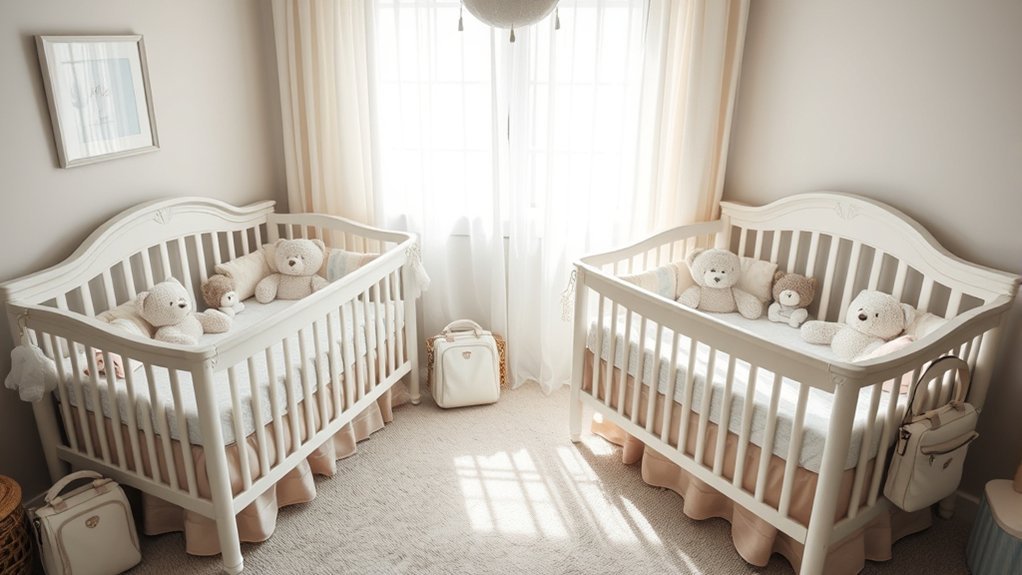
Preparing for twins can feel exciting and overwhelming at the same time. You are not just buying two of everything. You are choosing gear that helps you feed, change, soothe, move, and safely sleep two babies without making your home feel impossible to manage. From double strollers and cribs to diapers, wipes, monitors, carriers, and nursery storage, the right setup can make daily twin care much easier.
Quick Answer
For twins, focus first on safe sleep spaces, a practical double stroller, plenty of diapers and wipes, a monitor that can cover both babies, and organized nursery storage. You may not need two of every baby item, but each baby should have a safe, separate sleep space as they grow.
Key Takeaways
- A double stroller is usually one of the most useful purchases for twin parents.
- Separate cribs are often the safest long-term sleep setup for twins.
- Newborn twins may use about 20 to 24 diapers per day combined.
- A split-screen or dual-camera baby monitor can make checking both babies easier.
- Twin-specific carriers exist, but comfort, support, and safe positioning matter most.
- Good nursery organization can save time during late-night feedings and diaper changes.
What Type of Stroller Is Best for Twins?
When you’re steering through the world of twin parenting, you might wonder, “What’s the best stroller for my little duo?” Choosing the right stroller can make all the difference in your daily outings because it needs to hold both children safely while still being easy enough for you to push, fold, lift, and store.
For most families, a double stroller designed for twins is the most practical choice. These strollers usually come in two main styles: side-by-side and tandem seating. Side-by-side strollers give both babies a similar view and can feel balanced when pushing. Tandem strollers place one seat in front of the other, which may work better in narrow doorways, store aisles, elevators, or busy sidewalks.
Think about how you will actually use the stroller. If you live in a city, a narrower tandem stroller may feel easier. If you walk outdoors often, a side-by-side stroller with larger wheels may feel smoother. If you drive often, pay close attention to folded size and trunk fit. A stroller that looks perfect online can become frustrating if it is too heavy or hard to fold while holding two babies.
- For newborn twins: Look for bassinets, full recline seats, or infant car seat compatibility.
- For small spaces: A tandem stroller may be easier to move through doors and aisles.
- For long walks: Larger wheels, good suspension, and padded seats matter more.
- For travel: Check folded weight, lock system, and whether it fits in your car.
- For everyday errands: Storage basket size can make a big difference.
Pro Tip: Before buying a twin stroller, measure your front door, car trunk, and the narrowest hallway or elevator you use often. A stroller that fits your real life is better than one with extra features you rarely use.
[Products Worth Considering]

This parent-focused guide explains how babies and toddlers learn cause and effect through everyday play, routines, and simple experiments. It covers age-by-age milestones from early sensory responses to predicting outcomes and understanding rules. You’ll also find kid-friendly activity ideas and practical strategies that support cognitive growth, early language skills, and emotional regulation.

This parent-focused guide explains how babies and toddlers learn cause and effect through everyday play, routines, and simple experiments. It covers age-by-age milestones from early sensory responses to predicting outcomes and understanding rules. You’ll also find kid-friendly activity ideas and practical strategies that support cognitive growth, early language skills, and emotional regulation.

This parent-focused guide explains how babies and toddlers learn cause and effect through everyday play, routines, and simple experiments. It covers age-by-age milestones from early sensory responses to predicting outcomes and understanding rules. You’ll also find kid-friendly activity ideas and practical strategies that support cognitive growth, early language skills, and emotional regulation.
Do I Need Two Cribs for My Twins?
Choosing the right gear for your twins goes beyond strollers; it also includes deciding on their sleeping arrangements. You might wonder if you need two cribs for your little ones. While some parents use one sleep space briefly when babies are very small, many families find that separate cribs provide a safer and more comfortable long-term sleep environment for each baby.
Separate sleep spaces can help reduce crowding, rolling into each other, overheating, and one baby waking the other. They also make it easier to follow safe sleep habits: place each baby on their back, on a firm flat mattress, with no loose blankets, pillows, toys, or padded bumpers in the crib.
Here’s a quick comparison to help you decide:
| Option | Pros | Cons |
|---|---|---|
| Two Cribs | Individual space, safer for rolling, easier as babies grow | Requires more space and costs more upfront |
| Shared Crib | Saves space at first and may feel convenient in the newborn stage | Can become crowded quickly and may increase wake-ups |
| Co-Sleeper | Easy access for nighttime feeding | Limited use as they grow and may not work for both babies long term |
Ultimately, the choice depends on your space, budget, and parenting style. Still, if you can make room for two safe sleep spaces, that setup usually works better as twins get bigger and more mobile.
Warning: Avoid loose blankets, pillows, stuffed animals, sleep positioners, and padded crib bumpers in your babies’ sleep area. A bare crib with a firm mattress and fitted sheet is the safest setup.
How Many Diapers and Wipes Should I Stock Up On?
When you’re preparing for twins, figuring out how many diapers and wipes to stock up on can feel overwhelming. Twins can go through supplies fast, especially in the newborn stage. The goal is to have enough on hand to avoid constant store runs without overbuying one size your babies may outgrow quickly.
Diaper Count Per Day
As you prepare for the arrival of your twins, it’s essential to think about how many diapers and wipes you’ll need each day. On average, newborns often go through about 10 to 12 diapers daily. For twins, that means you may use around 20 to 24 diapers a day.
It’s a good idea to stock up for at least a week. That means you’ll want around 140 to 168 diapers available. If you want a larger cushion, keeping 200 to 300 diapers in mixed newborn and size 1 options can help. Just be careful not to buy too many newborn diapers before you know your babies’ birth weights and growth pace.
Wipes are just as important; having a couple of packs on hand will make your life easier. Don’t forget to keep some in the diaper bag, too. With this prep, you’ll feel more confident tackling those busy days with your little ones.
Wipe Usage Guidelines
To make sure you’re fully prepared for your twins, knowing how many wipes you’ll need is just as important as stocking up on diapers. The number can vary depending on the type of diaper change. A wet diaper may need only one or two wipes, while a messy diaper may need several.
On average, you might use around 5 to 8 wipes per diaper change, though messy newborn changes can use more. If you’re changing diapers about 10 times a day for each baby, that adds up quickly.
Here’s a rough guideline to help you stock up:
- Daily Use: Expect to use around 80 to 100 wipes daily during heavy newborn days.
- Weekly Needs: Stock for at least 560 to 700 wipes each week.
- Monthly Supply: Aim for a minimum of 2,400 to 3,000 wipes monthly if you want a larger supply.
- Emergency Reserve: Keep an extra pack handy for blowouts, travel, and unexpected messes.
Planning ahead helps make sure you won’t run out during those chaotic moments.
Stockpiling Tips for Twins
Stocking up for twins can feel overwhelming, but a little planning can make all the difference. You’ll want to estimate about 10 to 12 diapers per baby each day, so that’s 20 to 24 diapers daily for both babies. A good rule is to keep a stash of 200 to 300 diapers on hand to avoid last-minute runs to the store.
As for wipes, consider roughly 5 to 8 wipes per diaper change. Stocking around 800 to 1,000 wipes can give you a strong starting supply. If your budget allows, buying wipes in bulk is often easier than buying too many diapers in one size.
- Buy mixed sizes: Keep some newborn diapers, but also have size 1 ready.
- Save receipts: Some stores allow unopened diaper exchanges if your babies size up quickly.
- Use older stock first: Rotate your stock so opened packs and older supplies get used first.
- Create diaper stations: Keep diapers, wipes, cream, and extra clothes in more than one room.
- Track usage for one week: After your babies arrive, write down how many diapers and wipes you really use.
You’ll thank yourself when those late-night changes roll around.
Note: Diaper needs can change fast. Premature or smaller twins may stay in newborn sizes longer, while larger babies may move into size 1 sooner than expected.
What Baby Monitors Are Recommended for Twins?
Finding the right baby monitor for twins can feel like a challenging task, but it doesn’t have to be. You’ll want a monitor that keeps you connected to both babies and gives you peace of mind while they sleep.
For twins, the best baby monitor setup usually depends on whether the babies sleep in the same room or separate rooms. If they share a nursery with two cribs, a split-screen video monitor with two cameras can make it easier to check both babies at once. If they sleep in different rooms later, a dual-camera system becomes even more useful.
Here are some top features to consider:
- Dual-Channel Monitors: Allows you to hear both babies or switch between rooms.
- Video Monitors with Split Screen: Lets you visually check both cribs at once.
- Smartphone-Compatible Monitors: Provides alerts and live feeds directly to your phone.
- Long Battery Life: Helps reduce constant recharging, especially with two little ones.
- Temperature Display: Helps you keep the nursery comfortable.
- Night Vision: Makes overnight checks easier without turning on lights.
- Two-Way Talk: Lets you soothe a baby with your voice before entering the room.
If you choose a Wi-Fi monitor, use a strong password and update the app when needed. If you prefer a simpler setup, a non-Wi-Fi video monitor can still work well and may feel more private for some families.
Are Twin-specific Baby Carriers Available?
When it comes to managing twins, having the right gear can make a world of difference, especially when you’re on the go. You’ll be happy to know there are twin-specific baby carriers available. These specially designed carriers allow you to safely hold both babies while keeping your hands free.
Some twin carriers let you carry one baby on your front and one on your back once both babies are old enough and have the required head and neck control. Other parents prefer using two single carriers with help from another adult. In the newborn stage, many families find that soft wraps or structured carriers can help, but fit and positioning must be correct.
Look for features like adjustable straps, proper lumbar support, breathable fabric, secure buckles, and safe baby positioning. Each baby’s airway should stay clear, with the chin off the chest and the face visible. You should also feel balanced and supported. If the carrier causes back pain, shoulder strain, or makes it hard to move safely, it may not be the right option.
- For newborns: Choose a carrier that supports small babies safely.
- For longer wear: Prioritize waist support and padded shoulder straps.
- For warm climates: Breathable mesh fabric may help reduce overheating.
- For solo outings: Practice at home before using a twin carrier outside.
- For safety: Follow the carrier’s weight limits and positioning instructions.
It’s all about finding a carrier that fits your lifestyle and makes outings easier. A good twin carrier can be a game-changer, but it should never feel unsafe, unstable, or painful to wear.
What Essentials Should I Include in My Twin Nursery?
Setting up a nursery for twins can feel overwhelming, but it doesn’t have to be. You’ll want to focus on essentials like cribs and bedding that keep both little ones safe and comfortable. You’ll also need diapering and storage solutions that help you stay organized during busy days and long nights.
The best twin nursery is not always the biggest or most expensive. It is the one that makes repeated tasks easier. Think about where you will feed the babies, change diapers, store clothes, keep burp cloths, and place laundry. With twins, small organization choices can save a lot of time.
Cribs and Bedding
Creating a cozy and functional nursery for twins can feel like a delightful challenge, especially when it comes to choosing cribs and bedding. You’ll want to make sure that both cribs are safe, practical, and easy to access.
Here are some essentials you shouldn’t overlook:
- Convertible cribs: These can shift from crib to toddler bed, growing with your little ones.
- Firm crib mattresses: Choose firm, properly fitted mattresses designed for infant sleep.
- Fitted crib sheets: Keep several extras because twins can double the laundry.
- Wearable blankets: Sleep sacks can replace loose blankets when used correctly.
- No padded crib bumpers: Keep the crib clear to reduce sleep hazards.
With these essentials, you’ll create a nurturing environment for your twins to rest safely and comfortably.
Diapering and Storage Solutions
While diapering twins might seem challenging, having the right storage solutions can make the process smoother and more efficient. Start by investing in a sturdy changing table or changing pad area with nearby storage. This allows you to keep all your essentials, including diapers, wipes, creams, burp cloths, and extra outfits, within arm’s reach.
Consider using storage bins or baskets to organize supplies, labeling them for quick access. A diaper caddy is also a lifesaver for on-the-go changes around the house. You can keep one in the nursery and another in the living room so you are not running back and forth with two babies needing attention.
Don’t forget a good stock of cloth or disposable diapers, as twins can go through them quickly. Keep a small covered trash bin or diaper pail nearby for easy disposal. Also, make room for laundry baskets because twin laundry can pile up fast.
- Top drawer: Diapers, wipes, diaper cream, and hand sanitizer.
- Middle drawer: Onesies, sleepers, burp cloths, and bibs.
- Basket nearby: Extra swaddles, sleep sacks, and receiving blankets.
- Diaper caddy: Portable supplies for quick changes outside the nursery.
- Backup shelf: Unopened diapers, wipes, and larger-size clothing.
With these essentials, diapering your twins will feel way more manageable.
What Can I Buy One of Instead of Two?
One of the biggest twin-parenting questions is whether you need two of everything. The honest answer is no. Some items should be separate for safety and comfort, but many baby products can be shared. This can save space and money, especially if your nursery is small.
You will usually want separate cribs, car seats, pacifiers, bottles, and personal hygiene items. But you may be able to share one changing table, one diaper pail, one baby bathtub, one sound machine, one dresser, one bottle sterilizer, and one play mat at first.
| Usually Buy Two | Usually One Is Enough |
|---|---|
| Car seats | Changing table or changing pad station |
| Safe sleep spaces | Diaper pail |
| Bottles or feeding supplies for each baby | Baby bathtub |
| Pacifiers if used | Sound machine |
| High chairs once both babies start solids | Bottle warmer or sterilizer |
When in doubt, start with the basics and buy more later only if you truly need it. Twins already require a lot of gear, so avoiding duplicate clutter can make your home easier to manage.
Frequently Asked Questions
How do I manage sleep schedules for twins effectively?
To manage sleep schedules for your twins effectively, try synchronizing their naps and bedtime routines when possible. A simple routine can help: dim lights, change diapers, feed, burp, cuddle, and place each baby down safely. Consistency is key, but stay flexible because growth spurts, illness, and feeding changes can affect sleep.
What feeding strategies work best for twins?
Synchronized feeding can save time, especially during the newborn stage. You can use a double nursing pillow if breastfeeding, prepare bottles in batches if bottle-feeding, or combine breast and bottle feeding if that works better for your family. Keep burp cloths, water, snacks, and your phone nearby before each feeding session.
Should I dress twins in matching outfits or coordinating styles?
You can dress your twins in matching outfits or coordinating styles. Matching can be adorable for photos, while coordinating colors lets each baby have a little individual expression. For everyday use, comfort and easy diaper access matter more than perfect matching.
How can I save money on twin-related expenses?
You can save money on twin-related expenses by buying diapers and wipes in bulk, accepting hand-me-downs, shopping seasonal sales, joining local parent groups, and buying only the gear you know you will use. Avoid buying two of every item right away. Some shared items work fine with one.
What are the best activities for bonding with twins?
Simple activities are often best for bonding with twins. Try storytime, tummy time, stroller walks, music, soft sensory play, and one-on-one cuddles with each baby. As they grow, arts and crafts, family hikes, and shared playtime can create fun memories and strong sibling connections.
Do twins need separate car seats?
Yes. Each baby needs their own properly installed car seat that fits their age, weight, and height. Twins cannot share a car seat. If you are using infant car seats with a stroller, check that your double stroller accepts two compatible seats safely.
Is it better to put twins in the same nursery?
Many families keep twins in the same nursery because it simplifies feeding, diapering, and monitoring. If one baby wakes the other often, you can adjust white noise, crib placement, or nap routines. Some families separate them later if their sleep needs become very different.

