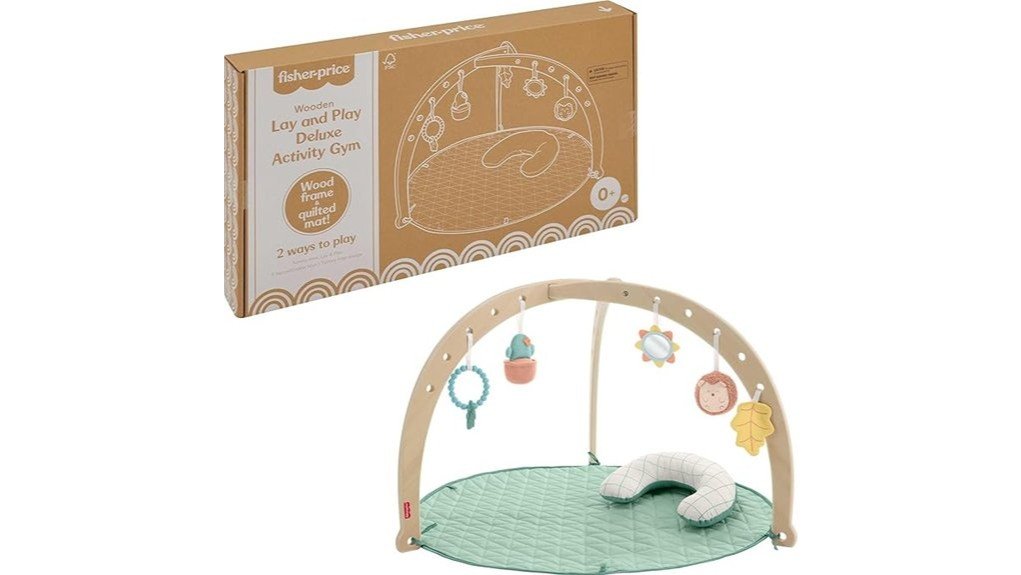
The Fisher-Price Wood Baby Playmat presents a structured environment conducive to infant exploration and development. Its varied toys and supportive design promote sensory interaction and motor skill enhancement. Additionally, the eco-friendly materials reflect a growing trend towards sustainability in baby products. Understanding how these features impact early development may influence a parent’s decision. What specific aspects make this playmat a compelling option among other choices on the market?
Key Features of the Fisher-Price Wood Baby Playmat That Enhance Baby’s Development
While exploring early childhood development tools, the Fisher-Price Wood Baby Playmat stands out due to its thoughtfully designed features that promote essential skills in infants.
This playmat facilitates sensory exploration through its diverse array of repositionable toys, including a hedgehog squeaker and crinkle leaf, enriching tactile experiences.
The sturdy wooden frame supports activities that enhance motor skills, particularly during tummy time, fostering neck and core strength.
The robust wooden frame encourages motor skill development during tummy time, promoting essential neck and core strength.
The inclusion of a supportive wedge further encourages infants to engage physically, cultivating both fine and gross motor skills.
Top Reasons to Choose the Fisher-Price Wood Baby Playmat for Your Baby
Choosing the Fisher-Price Wood Baby Playmat offers parents a well-rounded approach to fostering their baby’s early developmental milestones.
This playmat adheres to rigorous safety standards, ensuring a secure environment for exploration. Its sturdy wooden frame, crafted from eco-friendly materials, reflects a commitment to sustainability while promoting healthy play.
The inclusion of diverse sensory toys encourages fine and gross motor skills, aiding cognitive development during essential growth phases.
Setting Up and Using the Fisher-Price Activity Gym
Setting up the Fisher-Price Wood Baby Playmat is a straightforward process that prioritizes both functionality and safety.
Careful attention to assembly tips guarantees a secure structure, allowing caregivers to focus on their child’s developmental play. The wooden frame easily connects, while the soft, machine-washable playmat provides comfort and hygiene.
Careful assembly ensures a secure play area, allowing caregivers to prioritize their child’s developmental play with comfort and hygiene.
Maintenance of the playmat is essential; regular washing keeps it fresh and safe for infants.
Repositionable toys enhance sensory engagement, promoting fine and gross motor skills. This thoughtful design supports a child’s growth, allowing parents to create a nurturing environment where freedom of exploration is encouraged.
What Real Parents Think: Reviews of the Fisher-Price Playmat
Parents have praised the Fisher-Price Wood Baby Playmat for its thoughtful design and developmental benefits.
Parent testimonials highlight the mat’s supportive wedge, enhancing tummy time comfort and encouraging core strength. Many appreciate the repositionable toys, which stimulate sensory skills and fine motor development.
Design feedback indicates that the eco-friendly materials are a significant plus, aligning with parents’ values for sustainability. Additionally, the machine-washable fabric eases maintenance, an essential factor for busy families.
Comparing the Fisher-Price Playmat to Other Baby Activity Gyms
How does the Fisher-Price Wood Baby Playmat stack up against other baby activity gyms on the market? Its use of sustainable playmat materials sets it apart, ensuring both safety and environmental consciousness.
Compared to competitors, it excels in sensory engagement through diverse toys that promote developmental skills.
- Sturdy wooden frame vs. plastic alternatives
- Machine-washable playmat for easy maintenance
- Multiple play configurations for varied experiences
- Focus on early childhood development through interactive features
Ultimately, this playmat offers a holistic approach to infant play and growth, appealing to conscious parents seeking quality and sustainability.
Frequently Asked Questions
Is the Playmat Suitable for Older Infants or Toddlers?
The playmat primarily targets newborns, but older infants may still benefit from its developmental features. However, as children grow, their playtime engagement may require more stimulating activities and diverse toys to maintain interest.
How Do You Clean the Wooden Frame?
Caring for the wooden frame requires careful cleaning techniques. Maintenance advice includes using a damp cloth for gentle wiping, ensuring the surface remains safe and sanitized for children, promoting a healthy play environment and longevity.
What Materials Are Used in the Playmat?
The playmat incorporates soft fabric and a sturdy wooden frame, adhering to safety standards. Its design features promote sensory engagement and comfort, fostering early developmental skills while ensuring a safe, nurturing environment for infants.
Are Replacement Toys Available for Purchase?
In a world of endless options, replacement toys are indeed available for the Fisher-Price playmat. These replacement options guarantee toy compatibility, enhancing developmental play experiences while fostering sensory and motor skill growth in young children.
Does It Come With a Warranty?
The product includes warranty details specifying a duration of one year, which covers manufacturing defects. This provides parents assurance regarding quality, supporting the developmental needs of their children during vital early stages of growth.
Conclusion
In conclusion, the Fisher-Price Wood Baby Playmat stands out as a thoughtfully designed tool for early childhood development. Research indicates that active play during infancy can enhance cognitive skills by up to 30%, underscoring the importance of quality play environments. With its eco-friendly materials and versatile features, this playmat not only fosters sensory engagement and motor skills but also aligns with modern parenting values, making it an excellent investment for nurturing a child’s growth in their formative months.