Disclosure: As an Amazon Associate, we earn from qualifying purchases. If you click a link on this page and make a purchase, we may receive a small commission at no extra cost to you.
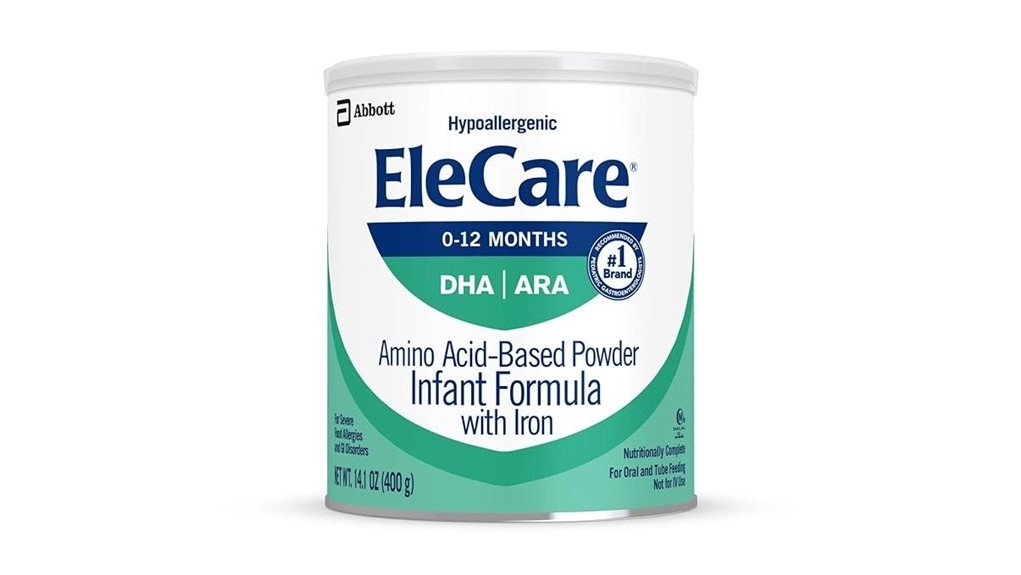
Choosing a formula for a baby with severe feeding intolerance can feel stressful, especially when standard or extensively hydrolyzed formulas do not work well. EleCare Hypoallergenic Formula is an amino acid-based option made for infants who need a highly specialized nutrition source under medical guidance. It may help reduce exposure to intact or hydrolyzed proteins while still providing complete nutrition, including DHA and ARA. The main tradeoffs are clear: it is more specialized, often more expensive, and some babies may need time to accept the taste.
Quick Verdict
Rating: Recommended with medical guidance
Best For: Infants with severe food allergies, cow’s milk protein allergy, malabsorption, or other medically managed feeding concerns.
Bottom Line: EleCare makes the most sense when your baby needs an amino acid-based formula rather than a standard or hydrolyzed formula. It offers a highly specialized nutrition profile, but cost, taste, and feeding adjustment can be real barriers.
Key Takeaways
- EleCare is an amino acid-based hypoallergenic formula for infants with severe food allergies or gastrointestinal conditions.
- It uses 100% free amino acids as the protein source, which avoids intact and hydrolyzed proteins.
- It is often considered for cow’s milk protein allergy, malabsorption, short bowel syndrome, and other medically managed feeding concerns.
- DHA and ARA are included to support brain and eye development as part of complete infant nutrition.
- The biggest drawbacks are high cost, limited palatability, and possible feeding adjustment challenges.
- Medical supervision is strongly recommended because this is a specialized formula, not a casual formula swap.
EleCare Specifications at a Glance
| Specification | Detail |
|---|---|
| Product name | EleCare Hypoallergenic Formula |
| Product type | Amino acid-based hypoallergenic infant formula |
| Protein source | 100% free amino acids |
| Designed for | Infants who cannot tolerate intact or hydrolyzed proteins |
| Common clinical use cases | Cow’s milk protein allergy, severe food allergies, malabsorption, and short bowel syndrome when medically indicated |
| Added nutrients mentioned | DHA and ARA |
| Nutrition role | Designed to provide complete infant nutrition when used as directed |
| Package note | Standard can size mentioned in the article: 14.1 oz |
| Safety note | Use under pediatric or clinician guidance, especially for infants with allergies, malabsorption, or complex gastrointestinal needs. |
Before You Buy: EleCare is a specialized medical nutrition product. It should not be used as a casual formula change without guidance from your baby’s pediatrician or feeding specialist.
What Is EleCare Formula?
EleCare formula is an amino acid-based, hypoallergenic infant formula designed for infants with food allergies and certain gastrointestinal conditions. It is made for situations where intact proteins or even hydrolyzed proteins may still be hard for a baby to tolerate.
Unlike standard milk-based formulas, EleCare uses 100% free amino acids as the protein source. This matters because amino acids are the building blocks of protein, so the formula avoids common protein structures that may trigger reactions in some medically complex infants.
EleCare is often considered when a baby has severe food allergies, cow’s milk protein allergy, malabsorption, short bowel syndrome, or other feeding concerns that need professional oversight. It can be a strong option, but it works best when the feeding plan is based on diagnosis, growth needs, hydration, and tolerance.
What’s in EleCare Formula?
At its core, EleCare contains 100% free amino acids as the protein source. This makes it different from formulas that use intact milk protein or extensively hydrolyzed protein.
The article-supported formula profile centers on a medically targeted blend that aims to reduce antigen exposure while still delivering essential nutrition. This is why EleCare is often discussed for infants who need a more specialized option than standard or hydrolyzed formulas.
A medically targeted blend centered on amino acids, designed to minimize antigen exposure while delivering essential nutrition.
The formula also includes carbohydrate and fat sources, plus DHA and ARA for neurological and visual development. These nutrients help support the broader goal of complete infant nutrition when EleCare is used as directed by a clinician.
Who EleCare Is Designed For
This amino acid-based formula is designed for infants with food allergies and gastrointestinal conditions that require a highly specialized nutrition source. Its target audience includes babies who cannot tolerate intact or hydrolyzed proteins.
Common use cases include documented cow’s milk protein allergy, malabsorption, short bowel syndrome, or other medically managed feeding concerns. In these cases, the goal is not simply switching brands. The goal is finding a formula structure that supports growth while reducing exposure to protein forms that may be poorly tolerated.
Clinical use is best guided by pediatric specialists when conventional formulas are not appropriate. This is especially important if your baby has poor weight gain, vomiting, diarrhea, blood in stool, dehydration concerns, or signs of ongoing feeding distress.
Who Should Buy It?
Best For
- Parents whose baby has been advised to use an amino acid-based formula.
- Infants who cannot tolerate intact or hydrolyzed proteins.
- Babies with severe food allergies, malabsorption, or short bowel syndrome under medical care.
Skip If
- Your baby is doing well on a standard formula and has no medical reason to switch.
- You need a lower-cost everyday formula and your pediatrician has not recommended a specialized option.
- Your baby needs a feeding plan for symptoms that have not been evaluated by a clinician.
How EleCare Supports Growth and Digestion
Formulated with 100% free amino acids, EleCare is designed to reduce exposure to intact or hydrolyzed proteins that can be difficult for some infants to tolerate. This structure may support digestion in cases of food allergy, malabsorption, and other gastrointestinal conditions when the formula is medically appropriate.
The formula is intended to promote digestive tolerance by minimizing antigenic burden and helping deliver nutrients in a form that does not rely on protein breakdown. When used as a primary nutrition source, it can support growth optimization through complete, balanced delivery of essential nutrients.
DHA and ARA contribute to neurodevelopmental and visual support. The amino acid profile also allows nourishment without relying on intact milk proteins, which is the main reason EleCare is considered for more complex feeding situations.
Protein Design and Hypoallergenic Role
The most important feature of EleCare is its amino acid-based design. Instead of using whole protein or partially broken-down protein, it uses free amino acids. This is useful for infants whose symptoms continue even with formulas that are marketed as gentle or extensively hydrolyzed.
For parents, the key benefit is targeted nutrition without common intact protein structures. The limitation is that this level of specialization usually comes with higher cost and a taste profile that may be less familiar to babies who have used other formulas.
DHA, ARA, and Complete Infant Nutrition
EleCare includes DHA and ARA, nutrients commonly associated with brain and eye development in infant nutrition. Their presence helps make the formula more complete rather than simply being a protein workaround.
This matters if EleCare becomes your baby’s main source of nutrition. A formula used in that role must provide more than basic calories. It needs to support growth, hydration, fat intake, carbohydrate intake, and key developmental nutrition needs when prepared and used correctly.
Feeding Tolerance and Taste
Feeding tolerance is one of the biggest real-world concerns with EleCare. Some infants may accept it quickly, while others may need time because amino acid-based formulas can taste different from standard formulas.
This does not mean the formula is wrong for your baby. It means the transition may need patience, professional guidance, and careful monitoring. Watch for intake, wet diapers, stool changes, comfort after feeds, and growth trends as directed by your baby’s clinician.
Pro Tip: Before switching, ask your pediatrician how to monitor feeding tolerance during the first few days, including intake, diapers, stool changes, and signs that your baby needs a follow-up.
How It Performs in Real Use
For Severe Food Allergy Feeding Plans
EleCare is most useful when a baby needs to avoid intact or hydrolyzed proteins. In this use case, the amino acid-based protein source is the main reason parents and clinicians consider it.
For Malabsorption or GI Conditions
For babies with malabsorption or short bowel syndrome, formula choice can be more complex than taste or convenience. EleCare may be used as part of a medically managed nutrition plan because it is designed for easier protein-source tolerance.
For Sole-Source Feeding
EleCare can be used as a sole source of nutrition when medically indicated and prepared as directed. In this situation, your baby’s growth, hydration, and feeding response should be followed closely by a healthcare professional.
For Transitioning From Another Formula
The transition may be simple for some babies and slower for others. Taste differences, feeding aversion, or oral sensitivity can affect acceptance, so it helps to follow the transition plan your clinician recommends.
How to Use EleCare Safely
EleCare should be prepared exactly as directed on the product label. Use clean hands, properly washed or sterilized feeding equipment, and safe water according to your local health guidance and your clinician’s advice.
Do not change the powder-to-water ratio to make the formula thicker, thinner, stronger, or weaker unless a healthcare professional gives you specific instructions. Incorrect mixing can affect hydration and nutrient intake.
Prepared formula should be handled carefully. Discard leftovers after feeding as directed, and do not keep mixed formula at room temperature longer than recommended on the label.
Baby Safety Notes
Because EleCare is often used for babies with significant feeding or gastrointestinal concerns, safety depends on more than the formula itself. Your baby’s diagnosis, age, growth pattern, symptoms, and medical history all matter.
Contact your pediatrician if your baby has worsening vomiting, signs of dehydration, poor weight gain, blood in stool, breathing trouble, swelling, rash, or a severe reaction. Formula choice can support feeding, but it should not replace medical evaluation when symptoms are serious.
Parents should also avoid using EleCare to self-diagnose a food allergy. A clinician can help decide whether symptoms suggest cow’s milk protein allergy, another food allergy, reflux, infection, intolerance, or another issue.
EleCare Pros, Cons, and Use Cases
Clinical utility is a primary strength of EleCare. Its amino acid-based formulation may benefit infants with food allergies, malabsorption, short bowel syndrome, and other gastrointestinal conditions that limit tolerance of intact or hydrolyzed protein.
It is commonly selected when standard formulas fail, and its DHA and ARA content supports neurodevelopment. The formula may also simplify feeding plans for families who need a protein source that avoids intact and hydrolyzed protein structures.
Limitations include cost, restricted palatability, and taste preferences that may complicate acceptance. Feeding challenges can arise during adaptation, especially in infants with strong aversion or oral sensitivity.
Pros and Cons
Pros
- Uses 100% free amino acids as the protein source.
- Designed for infants who cannot tolerate intact or hydrolyzed proteins.
- Suitable for medically guided use in severe food allergies and certain GI conditions.
- Includes DHA and ARA for brain and eye development support.
- Can serve as a complete infant nutrition source when medically indicated.
Cons
- Usually costs more than standard infant formulas.
- Taste may be harder for some babies to accept at first.
- Should be used with professional guidance, especially for complex symptoms.
- Not necessary for babies who tolerate standard formula well.
Is It Worth the Price?
EleCare is best viewed as a premium, specialized formula rather than a budget everyday formula. Its value is strongest when your baby truly needs an amino acid-based option and other formulas are not tolerated.
For the right infant, the value comes from its targeted protein design, complete nutrition role, and suitability for medically complex feeding needs. For babies without a clear medical need, the higher cost may not make sense.
The smartest approach is to compare the price against your baby’s actual diagnosis and feeding plan. If your pediatrician recommends EleCare, it may be worth considering because the formula is built for a specific clinical purpose.
How It Compares to Alternatives
Compared with standard infant formulas, EleCare is much more specialized because it avoids intact milk proteins and uses free amino acids. Compared with extensively hydrolyzed formulas, it goes one step further by removing hydrolyzed protein as the protein source.
If your baby tolerates a standard or extensively hydrolyzed formula, that option may be simpler and more affordable. EleCare makes the most sense when your baby needs the amino acid-based approach and a clinician agrees that the added specialization is appropriate.
Common Mistakes to Avoid
One common mistake is switching to EleCare without a clear feeding reason. Because it is a specialized formula, it should fit your baby’s medical needs rather than being used only because of general fussiness.
Another mistake is judging the formula after only one difficult feeding. Some babies need time to adjust to the taste and texture. That said, poor intake, dehydration signs, or worsening symptoms should be discussed with your pediatrician promptly.
Parents should also avoid changing mixing instructions to improve taste or thickness. Follow the label and your clinician’s guidance to protect your baby’s nutrition and hydration.
Frequently Asked Questions
Is EleCare suitable for infants with severe milk protein allergy?
Yes, EleCare may be suitable for infants with severe milk protein allergy when a clinician recommends an amino acid-based formula. Its protein source avoids intact milk proteins and hydrolyzed proteins.
Can EleCare be used as a sole source of nutrition?
Yes, it can serve as a sole source of nutrition when medically indicated and used as directed. Your baby’s growth, hydration, and tolerance should still be monitored by a healthcare professional.
Does EleCare require a prescription or medical supervision?
A prescription may not always be required to buy it, but medical supervision is strongly advised. This is especially true for infants with allergies, malabsorption, poor growth, or complex gastrointestinal symptoms.
How should EleCare be prepared and stored safely?
Prepare EleCare exactly as directed on the label, using clean equipment and safe water. Store unopened cans in a cool, dry place, and follow the label instructions for mixed formula storage and leftover disposal.
Is EleCare available in flavors or larger can sizes?
The article notes that EleCare is generally sold without taste options and is commonly associated with standard packaging such as a 14.1-oz can. Availability and packaging can vary by seller, so check the product details before buying.
What should you do if your baby refuses EleCare?
Some babies need time to adjust because amino acid-based formulas can taste different. If your baby refuses feeds, takes much less than usual, or shows signs of dehydration, contact your pediatrician.
Is EleCare the same as an extensively hydrolyzed formula?
No. Extensively hydrolyzed formulas use proteins that are broken down into smaller pieces, while EleCare uses 100% free amino acids as the protein source. This makes EleCare a more specialized option.
Who should not switch to EleCare without asking a doctor?
Parents should avoid switching without medical advice if the baby has unexplained symptoms, poor weight gain, ongoing vomiting, blood in stool, or dehydration concerns. A clinician can help decide if EleCare fits the real cause of the feeding problem.
The Bottom Line
EleCare stands out as a highly specialized amino acid-based formula for infants who cannot tolerate standard or hydrolyzed proteins. It is best for medically guided use in severe allergy, malabsorption, short bowel syndrome, or complex feeding needs, but it is not the best fit for families who only need a routine formula.
Its biggest strength is the 100% free amino acid protein source. Its biggest limitation is that cost, taste, and feeding adjustment can make it harder to use without a clear plan.

