Disclosure: As an Amazon Associate, we earn from qualifying purchases. If you buy through links on this page, we may earn a small commission at no extra cost to you.
By Editorial Team | Updated October 8, 2026
Eco by Naty baby diapers appeal to parents who want plant-based materials against their baby’s skin without switching to reusable cloth diapers. The brand, now marketed as Naty, has upgraded its original range into BioEmbrace, with improved fit features, independently tested materials, and an absorbent disposable design.
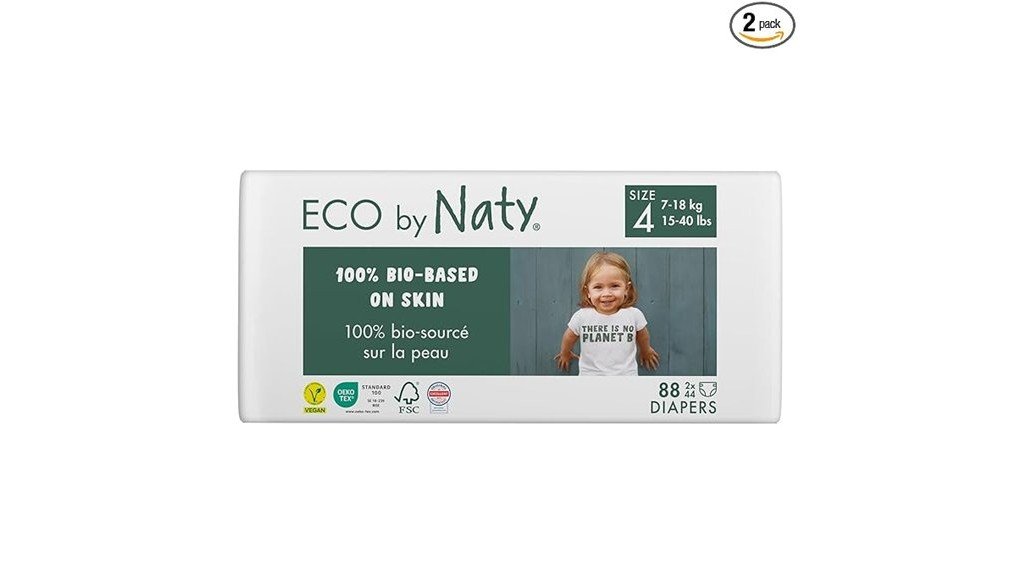
This review focuses on the Amazon-linked Naty Baby Diapers Size 4, 88 Count, listed for babies weighing 15–40 pounds. The main advantages are certified plant-based skin-contact layers and thoughtful material choices. The main trade-offs are premium cost, mixed reports about leakage, and environmental claims that need careful interpretation.
Quick Verdict: Are Eco by Naty Baby Diapers Worth Buying?
Naty Baby Diapers: Our Editorial Verdict
Best for: Parents who prioritize plant-derived skin-contact materials and independent material testing.
Skip if: You need the least expensive disposable diapers, guaranteed overnight performance, or a fully compostable product.
Bottom line: Naty is a reasonable premium option for families who value its material standards. However, fit matters more than marketing claims when preventing leaks. The diapers are not entirely plant-based, and the whole used diaper should not be treated as compostable.
Rating: No numerical score assigned because independent hands-on testing was not provided.
Before You Buy: Four Things to Check
- Check the version: Original Eco by Naty diapers and newer BioEmbrace diapers may differ in softness, tabs, and wetness indicators.
- Check the weight range: The linked Size 4 listing specifies 15–40 lb, but a good fit depends on body shape as well as weight.
- Do not assume compostability: Plant-derived plastic and certified compostable material are not interchangeable terms.
- Try a smaller quantity first: Test fit, leg seals, skin response, and overnight performance before buying multiple large packages.
Review Contents
Key Takeaways
- Eco by Naty baby diapers use renewable materials in layers that touch the skin, but the entire diaper is not made from plants.
- The linked Amazon product is listed as Naty Size 4, 88 Count, for 15–40 lb.
- Naty’s upgraded BioEmbrace range uses plant-based polyethylene, FSC-certified pulp, and superabsorbent materials.
- Certifications address material content, sourcing, and skin compatibility. They do not automatically certify the complete diaper as compostable.
- Absorption and leakage performance vary by baby’s body shape, diaper size, and how long the diaper is worn.
- The higher cost may be worthwhile for parents who specifically value plant-based skin-contact materials.
Naty Baby Diaper Specifications
The Amazon listing linked in this review identifies a Size 4 pack containing 88 diapers. The current Naty BioEmbrace product information provides additional details about the upgraded design, although individual package versions should be checked before buying.
| Product | Naty Baby Diapers |
|---|---|
| Original branding | Eco by Naty |
| Current range | Naty BioEmbrace |
| Linked size | Size 4 |
| Weight range | 15–40 lb (approximately 7–18 kg) |
| Amazon pack count | 88 diapers |
| Skin-contact layers | Plant-based materials, according to current brand specifications |
| Absorbent core | FSC-certified cellulose and superabsorbent polymer |
| Skin testing | OEKO-TEX Standard 100 and Dermatest, as specified for the current range |
| Amazon ASIN | B07G9M9DLC |
What’s in the Box?
The linked Amazon package is listed as containing 88 disposable Size 4 diapers. The exact packaging configuration and product revision should be confirmed from the selected listing. Wipes, diaper cream, and other changing supplies should not be assumed to be included.
Who Should Buy Eco by Naty Diapers?
These diapers suit families who want disposable convenience alongside more attention to skin-contact materials and independent testing.
- Environmentally conscious households: Parents who prefer renewable material inputs over conventional fossil-derived materials in selected diaper components.
- Families managing skin sensitivity: Those who want a fragrance-free, dermatologically tested option, while recognizing that no diaper prevents every rash.
- Parents seeking disposable convenience: Those who prefer not to wash and dry reusable cloth diapers.
They may be less suitable for households where minimum cost, unusually heavy overnight wetting, or fully reusable diapering is the top priority.
What Makes Eco by Naty Diapers Eco-Friendly?
The main environmental distinction is the use of renewable plant-based material in key layers instead of relying entirely on conventional fossil-derived plastic. Naty also uses certified forest-sourced pulp in its absorbent core.
The current BioEmbrace range uses plant-based polyethylene in skin-contact layers. Naty states that its materials are tested for specific properties, including renewable content and responsible sourcing.
However, plant-based does not mean plastic-free. Bio-based polyethylene is still a type of plastic, and the diaper contains additional absorbent and structural materials.
The current product design also uses an absorbent core containing superabsorbent polymer, commonly called SAP. This material helps hold liquid inside the diaper but prevents the complete product from being accurately described as entirely plant-based.
Are the Environmental Claims Meaningful?
They are meaningful when they describe specific materials or independent certifications. However, claims that the complete diaper has a lower environmental footprint require evidence covering manufacturing, materials, transport, and disposal.
The FTC Green Guides explain why broad environmental claims, including biodegradable and compostable, need clear evidence and limitations.
For parents, the practical benefit is a choice with more plant-derived skin-contact materials. It should not be understood as a waste-free disposable diaper.
How Comfortable and Absorbent Are They?
Naty diapers are designed to combine breathable, flexible outer materials with an absorbent inner core. Their comfort depends on how well the diaper fits around the waist, thighs, and bottom.
The manufacturer’s upgraded BioEmbrace design includes softer materials, improved fastening tabs, and a wetness indicator. Those are useful improvements, but parents should confirm the features on the exact package they receive.
Absorbency During the Day
The absorbent core combines cellulose fibers with superabsorbent material that helps retain urine. This is a conventional and effective approach to disposable diaper absorption.
However, absorbency alone cannot prevent every leak. A diaper can absorb liquid well but still leak through an incorrectly positioned leg cuff or loose waist opening.
Independent product testing of an earlier Eco by Naty diaper gave stronger results for liquid absorption than for comfort and overall durability. Because Naty has updated its products, those older findings should not be treated as direct test results for the current BioEmbrace version.
Overnight Absorbency
Naty markets the current BioEmbrace range with up to 12 hours of leak protection, based on an in-home consumer test involving Size 4 diapers.
That figure is a manufacturer performance claim, not a guarantee for every baby. Heavy wetters, loose leg openings, and prolonged wear can still cause leaks.
If nighttime leakage is frequent, compare the diaper’s fit and consider a dedicated overnight diaper instead of relying on the advertised maximum wear time.
Fit for Active Babies
A properly fitted diaper should stay secure when your baby crawls, stands, or walks. The tabs need to fasten without pulling the waistband excessively tight.
Check that the leg cuffs face outward and that the diaper covers the bottom completely. Gaps around the thighs can lead to leakage, while deep red marks suggest the fit may be too tight.
Are Eco by Naty Diapers Safe for Sensitive Skin?
Eco by Naty diapers can be a reasonable choice for sensitive skin because the current Naty range emphasizes skin-compatible materials and independent testing. However, no disposable diaper can guarantee freedom from irritation.
The newer BioEmbrace range is advertised as free from added fragrance, lotion, and latex, and has undergone Dermatest sensitive-skin assessments.
These measures provide useful information about material compatibility. They do not mean every baby will tolerate the diaper equally well.
What About Diaper Rash?
Diaper rash commonly develops when the skin remains in contact with moisture, urine, or stool. Friction and individual skin reactions can also contribute.
According to the American Academy of Pediatrics, frequent diaper changes, gentle cleaning, and protecting irritated skin are important parts of diaper-rash prevention and care.
If your baby already has a rash, clean the area gently, allow the skin to dry, and use an appropriate barrier ointment when needed.
Speak with your child’s healthcare professional if the rash is severe, worsening, accompanied by fever or sores, or does not improve with basic care.
What Materials and Certifications Do They Have?
Naty uses a combination of plant-derived materials and conventional absorbent technology. Its certifications are useful, but each applies to a particular property, material, or product rather than every environmental claim.
Plant-Based Materials
The current BioEmbrace product specification identifies plant-based polyethylene in the liner, outer layers, and fabric covering certain elastic components.
Inside the diaper, the absorbent core includes FSC-certified cellulose and superabsorbent polymer. The distribution layer also uses other synthetic materials.
Therefore, the statement 100% plant-based on skin should not be interpreted as meaning the entire diaper is 100% plant-based.
Independent Certifications Explained
| Certification | What It Helps Verify |
|---|---|
| OEKO-TEX Standard 100 | Testing for specified potentially harmful substances in textile materials. |
| Dermatest | Dermatological compatibility and sensitive-skin testing. |
| DIN CERTCO Biobased | Bio-based content of specified materials. |
| FSC | Responsible sourcing requirements for certified forest-based materials. |
Naty provides further explanations on its official certifications page.
Some other Naty products, including selected wipes and bags, hold compostability certifications. Those certifications should not be applied automatically to the diapers themselves.
Eco by Naty Diapers: Pros and Cons
Pros
- Plant-based materials in skin-contact layers
- OEKO-TEX Standard 100 and Dermatest checks on current range
- FSC-certified wood pulp in absorbent core
Cons
- Not a fully plant-based or compostable diaper
- Fit and leakage reports are mixed
- Premium cost may be hard to justify
Best Uses for Naty Baby Diapers
Daily Wear
Routine daytime diaper changes are a practical starting point for trying Naty. You can assess comfort, fastening reliability, and leakage before using the same diapers for longer periods.
Outings and Travel
Disposable diapers can be convenient for travel because they do not need washing after use. Pack spare diapers, wipes, a changing mat, and a bag for used supplies.
Nighttime Use
Naty may work overnight if its fit and capacity match your baby’s needs. Check the results over several nights rather than assuming the advertised protection period applies to every child.
How to Get the Best Fit and Leak Protection
- Select the correct size: Start with the weight guidance, then assess your baby’s waist and thigh fit.
- Position the diaper: Slide the back under your baby’s bottom and pull the front upward.
- Fasten both tabs: Secure the waist evenly without leaving large gaps or pulling too tightly.
- Check the leg cuffs: Make sure the inner barriers and outer cuffs sit correctly around both thighs.
- Replace the diaper regularly: Change promptly after bowel movements and frequently when wet.
- Watch for fit changes: If leaks or pressure marks become common, reassess the size and fit.
Always use a safe changing surface, keep supplies within reach, and never leave your baby unattended on an elevated changing table.
What Do Parents Report About Eco by Naty Diapers?
Independent parent experiences are mixed. Some families praise the material feel, skin comfort, and overall absorbency. Others report leaking, fastening problems, or difficulty finding a consistent fit.
Feedback published on ProductReview.com.au and Trustpilot includes experiences with older Eco by Naty designs as well as newer versions, so it should not be treated as a controlled comparison of the current Amazon-linked package.
Owner Feedback Summary
Frequently praised: Plant-based material approach, skin comfort, and satisfactory absorption for some families.
Common concerns: Occasional leaks, fastener reliability, sizing differences, and the added cost.
This variation is a reason to prioritize fit testing. A diaper that works well for one baby’s body shape may be unsuitable for another, even when both babies fall within the manufacturer’s weight range.
Are Eco by Naty Diapers Worth the Price?
Eco by Naty diapers are generally positioned as a premium disposable option. Their value depends on whether you prioritize certified materials and skin-contact composition enough to pay more than you might for mainstream alternatives.
The most useful comparison is cost per diaper, not only the package price. Different pack sizes can make large boxes look more economical even when the total checkout amount is higher.
Compare the actual number of diapers, size range, and performance your baby needs. An expensive diaper that leaks frequently may be a worse value than a less expensive diaper with a consistently secure fit.
Our assessment: Naty is worth considering if plant-derived materials and independent testing are important priorities. It is harder to recommend purely for leak protection without verified comparative testing of the exact current product.
Eco by Naty vs. Other Disposable Diapers
Several alternatives emphasize sensitive-skin materials or plant-derived components. The main differences are how each brand describes its materials, what skin-contact layers contain, and the features offered for fit and absorbency.
| Diaper | Material Focus | Best Reason to Consider |
|---|---|---|
| Naty BioEmbrace | Certified plant-based skin-contact layers | Plant-derived surface materials and independent skin testing |
| Naty Bamboo Diapers | Bamboo viscose backsheet and enhanced liner | Alternative fabric feel within the Naty range |
| Honest Clean Conscious Diapers | Plant-based inner-liner approach and FSC-certified pulp | Stage-specific fit features and flexible sides |
| Pampers Pure Protection | Liner enriched with plant-based ingredients | Mainstream absorbency-focused option with sensitive-skin positioning |
Naty BioEmbrace vs. Naty Bamboo
Naty BioEmbrace emphasizes certified plant-based polyethylene against the skin. Naty Bamboo uses bamboo viscose in its backsheet and a bamboo-enhanced liner. Neither material description alone establishes superior absorbency or environmental performance.
Naty BioEmbrace vs. Honest Clean Conscious
Honest Clean Conscious also features plant-based materials and FSC-certified pulp. Its redesigned diapers include stage-specific features, such as flexible sides for older babies. Choose based on the actual fit and the type of material information you prefer.
Naty BioEmbrace vs. Pampers Pure Protection
Pampers Pure Protection uses a liner enriched with plant-based ingredients and focuses on moisture control and sensitive-skin comfort. Naty places stronger emphasis on the plant-derived composition of multiple skin-contact layers.
How We Evaluated Eco by Naty Diapers
We assessed the product using the linked Amazon listing, Naty’s published specifications and certification information, independent consumer feedback, and established guidance on diaper rash and environmental marketing.
- Product identification: Checked the ASIN, named size, quantity, and current product description.
- Materials: Distinguished certified skin-contact materials from the complete absorbent diaper structure.
- Comfort and performance: Reviewed manufacturer claims separately from older independent tests and owner experiences.
- Skin safety: Evaluated certification descriptions against established pediatric guidance.
- Environmental impact: Assessed whether disposal claims accurately describe the complete product.
This is a research-based editorial review, not a hands-on laboratory test. We have not independently measured absorption capacity, leak rates, skin reactions, or decomposition.
Frequently Asked Questions
Can Eco by Naty Diapers Fit Overnight Use?
Yes, they may work overnight for babies whose wetting needs match the diaper’s capacity. The current BioEmbrace range advertises up to 12 hours of leak protection, based on a manufacturer consumer test of Size 4. Heavier wetters may need more frequent changes or a dedicated overnight diaper.
Do They Run True to Size for Active Babies?
Not consistently for every baby. The linked Size 4 product covers 15–40 pounds, but body shape affects fit. Check the waist, leg cuffs, and overall coverage. If the diaper repeatedly leaks or leaves deep pressure marks, reassess the size instead of relying only on the weight chart.
How Do They Compare With Cloth Diapers?
Eco by Naty diapers provide disposable convenience, while cloth diapers are designed for repeated washing and reuse. Cloth can reduce disposable waste, but its environmental impact also depends on manufacturing, washing, drying, and lifespan. Naty avoids the laundry requirement but still creates waste after every diaper change.
Are the Diapers Easy to Dispose of Responsibly?
Used Naty diapers should generally go into the appropriate household waste stream. Do not place them in food-waste or compost collections unless a local facility explicitly accepts that exact diaper product. Plant-based components do not mean the complete diaper is compostable, and human waste creates additional handling concerns.
Where Can I Buy Eco by Naty Diapers Locally?
Local availability depends on your country and retailer. Naty products may be offered through baby-product retailers and online marketplaces, but stores do not necessarily carry every size or product generation. Confirm the package’s size, quantity, and branding before purchasing, especially if you previously used the older Eco by Naty range.
Are Naty Diapers 100% Plant-Based?
No, the entire diaper is not 100% plant-based. Naty’s certification claim refers to materials used in skin-contact layers of its current BioEmbrace range. The absorbent core also contains superabsorbent polymer, and other structural materials are present. The distinction matters because a plant-based surface does not make the complete diaper plastic-free.
Are Eco by Naty Diapers Biodegradable or Compostable?
Do not assume that the complete diapers are biodegradable or compostable. Their plant-derived components and sourcing certifications do not establish how the whole used diaper breaks down after disposal. Naty offers compost-certified products in other categories, but those certifications should not be transferred automatically to its disposable baby diapers.
Do Naty Diapers Have a Wetness Indicator?
The newer BioEmbrace range includes a wetness indicator according to Naty’s product information. However, older Eco by Naty packages may not have the same features. Check the exact package or listing images before buying. A wetness indicator is a convenience feature, not a replacement for regular diaper checks.
Conclusion
Eco by Naty baby diapers offer a distinctive combination of plant-based skin-contact materials, independently assessed material properties, and disposable convenience. The upgraded Naty BioEmbrace range adds useful fit and comfort features, although the exact package version matters.
They are worth considering if skin-contact materials and certification transparency are priorities. However, the diapers are not fully compostable, and no material choice can guarantee perfect leakage protection or freedom from diaper rash.
Final recommendation: Start by checking the linked Size 4 product details and confirming the correct fit for your baby. If the diapers perform well during daily use, their material standards may justify the premium for your family.
Considering Naty Baby Diapers?
Compare the listed size, package quantity, and current product details before making your choice.