Quick Answer
Notice your child’s repeated body cues, name what is happening, and calmly offer the potty. Look for broader readiness too, such as staying dry longer, following simple directions, getting to the bathroom, helping with clothing, and showing interest. Avoid pressure, shame, punishment, or turning accidents into a power struggle.
Recognizing Common Early Potty Signals
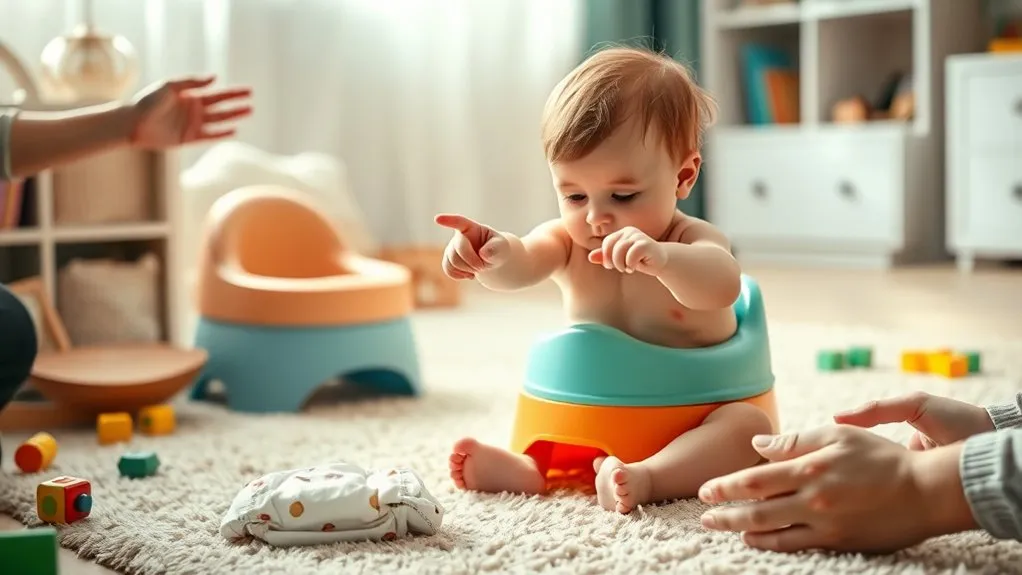
Common early potty signals include sudden stillness, squatting, grunting, hiding, pacing, dancing, crossing the legs, holding the genital area, or tugging at pants. The most useful signal is one your child repeats before peeing or pooping, because children do not all show the same cue.
The American Academy of Pediatrics lists signs such as grunting, freezing, and squatting, while Mayo Clinic also notes pacing, dancing, crossing the legs, and tugging at clothing. When you notice a pattern, use simple language such as “Your body looks like it needs to pee” and offer the potty without forcing the issue.
It also helps to separate an immediate potty cue from a readiness sign. An immediate cue means your child may need the toilet now. Readiness signs show that your child is developing the physical, language, thinking, and emotional skills needed to take part in toilet training.
According to the American Academy of Pediatrics potty-training guidance, broader readiness signs can include staying dry for at least two hours, being dry after naps, following simple instructions, walking to the bathroom, helping with clothing, disliking a wet diaper, or asking to use the toilet.
A repeated behavior before peeing or pooping is more useful than any one “universal” potty cue.
Do’s: Encouraging Your Child’s Awareness
Encourage awareness by helping your child connect body sensations with simple words and predictable bathroom routines. Your goal is not to make them perform on command; it is to help them notice the urge, communicate it, and practice what to do next.
- Name the signal. If your child freezes, squats, or starts a familiar “potty dance,” calmly point it out and offer the potty.
- Use predictable opportunities. Offer the potty at natural transition points, such as after waking, before leaving home, or when you see a clear cue. Keep the invitation brief and low-pressure.
- Make clothing easy. Pants that your child can pull down and up with minimal help make it easier to act on an urge.
- Praise communication and effort. Notice when your child tells you they need to go, sits on the potty, or tries the routine. AAP guidance on keeping potty training positive emphasizes specific praise and avoiding punishment.
- Teach hygiene as part of the routine. Include wiping as appropriate and handwashing after toilet use. The CDC recommends teaching children to wash their hands after using the bathroom.
Rewards are optional. If a sticker chart or small privilege helps your child stay engaged, keep it simple and temporary. Praise, comfort, and a sense of mastery should remain the main focus rather than making a treat the only reason to use the potty.
Don’ts: Avoiding Common Pitfalls
The biggest mistakes are pushing before your child is ready, shaming accidents, creating a battle over the toilet, or ignoring signs that stool is painful to pass. Pressure can make a child more resistant, while calm repetition gives them room to learn the skill.
- Do not rush because of age alone. Children develop bladder control, communication, mobility, and emotional readiness at different rates.
- Do not punish or shame accidents. Clean up matter-of-factly, change clothes, and move on. Avoid labels such as “bad,” “dirty,” or “babyish.”
- Do not force long potty sits. If your child wants to get up or repeatedly resists, end the attempt and try again later rather than turning the toilet into a conflict.
- Do not compare siblings or classmates. Daytime urine control, bowel control, and nighttime dryness can develop on different schedules.
- Do not overlook stool withholding. Children may clench, rock, stand on tiptoes, or make unusual movements to avoid a bowel movement. The National Institute of Diabetes and Digestive and Kidney Diseases notes that stress about potty training and fear of painful bowel movements can contribute to stool holding and constipation.
Setting Up a Positive Potty Training Environment
A supportive setup makes it easier for your child to respond to early potty signals without feeling rushed or unsafe. Keep the equipment stable, the routine predictable, your language neutral, and your expectations matched to the skills your child already has.
| Element | Purpose | Tips |
|---|---|---|
| Comfortable Toilet | Helps your child feel stable | Use a child-sized potty or a secure toilet insert with foot support |
| Consistent Schedule | Builds familiarity | Offer the potty at predictable times and when you see clear cues |
| Encouraging Words | Builds confidence | Praise communication, effort, and growing independence |
| Positive Reinforcement | Keeps practice supportive | Use praise first; keep any sticker chart simple and temporary |
Keep the potty in a familiar place and use the same basic sequence each time: notice the urge, get to the potty, manage clothing, sit comfortably, clean up, and wash hands. Consistency across parents, relatives, daycare, or other caregivers can also reduce mixed messages.
Celebrating Progress and Milestones
Celebrate progress by noticing skills your child can control, not just whether urine or stool lands in the potty. Telling you about an urge, trying to pull down pants, sitting willingly, washing hands, or staying calm after an accident are all meaningful steps toward independence.
A progress chart can make those steps visible, but it does not need to become a scorecard. If your child enjoys stickers, use them to mark practice or communication rather than demanding a perfect day.
Accidents are part of learning. Keep spare clothing handy, respond calmly, and help your child reset without a lecture. Mayo Clinic advises staying calm, avoiding shame or punishment, and taking a break if resistance continues for weeks; its potty-training guidance also suggests simple sticker or star charts as an optional support.
When to Pause Potty Training or Call the Pediatrician
Pause training if the process has become a repeated power struggle, your child is strongly resisting, or bowel movements are painful. Treating constipation and restoring comfortable bowel movements can be more important than pushing ahead with toilet training.
Constipation may show up as hard or painful stools, fewer bowel movements, stool withholding, bloating, or stool in underwear that looks like diarrhea. If symptoms do not improve with home care or last more than two weeks, NIDDK recommends talking with your child’s doctor.
Note: Contact your child’s pediatrician if toilet training is persistently difficult, your child regularly holds stool, bowel movements are painful, or you are worried about development. Seek prompt medical care for constipation with rectal bleeding, blood in the stool, constant abdominal pain, vomiting, weight loss, or significant bloating.
Frequently Asked Questions
What Age Should Potty Training Typically Begin?
There is no single right age to begin potty training. Many children show bladder and bowel control signs between 18 and 24 months, while the average starting age in the United States is between 2 and 3 years. Readiness signs matter more than reaching a particular birthday.
How Can I Tell if My Child Is Ready?
Your child may be ready when several skills come together. Look for longer dry periods, awareness of pee or poop, the ability to follow simple directions, walking to the bathroom, helping with clothing, and some interest in using the potty or toilet.
What if My Child Resists Using the Potty?
Reduce pressure and give your child room to reset. Keep the potty familiar, continue using simple bathroom words, and try again later if every attempt becomes a struggle. Strong resistance often means the timing or approach needs to change, not that your child is failing.
Should I Use Rewards During Potty Training?
Rewards are optional, not required. Start with specific praise for communication, effort, and growing independence. If your child enjoys a sticker chart or a small privilege, keep it simple and short-term so the reward does not become the only reason to use the potty.
How Do I Handle Accidents During the Process?
Handle accidents calmly and without shame or punishment. Help your child change, clean up, and return to the routine, then praise the next effort to communicate or try the potty. If accidents are frequent and not improving, or they come with pain or stool holding, discuss them with your child’s pediatrician.
Conclusion
Early potty signals are most useful when you treat them as information, not a test your child must pass. Watch for repeated cues, build readiness skills, keep the routine calm, and pause when resistance or constipation gets in the way. Confidence and independence usually grow faster when the process stays supportive.
Sources
- American Academy of Pediatrics: The Right Age to Potty Train: readiness signs, typical U.S. starting age, and positive training practices.
- American Academy of Pediatrics: Potty Training—12 Tips to Keep the Process Positive: recognizing cues, praise, routines, and avoiding punishment.
- CDC: About Hand Hygiene as a Family Activity: teaching handwashing after bathroom use.
- NIDDK: Symptoms and Causes of Constipation in Children: stool withholding, constipation symptoms, and when to seek medical care.
- Mayo Clinic: Potty Training—How to Get the Job Done: early cues, accidents, resistance, and optional reward charts.
”’
import re, json
text = re.sub(r’
text = re.sub(r’<[^>]+>