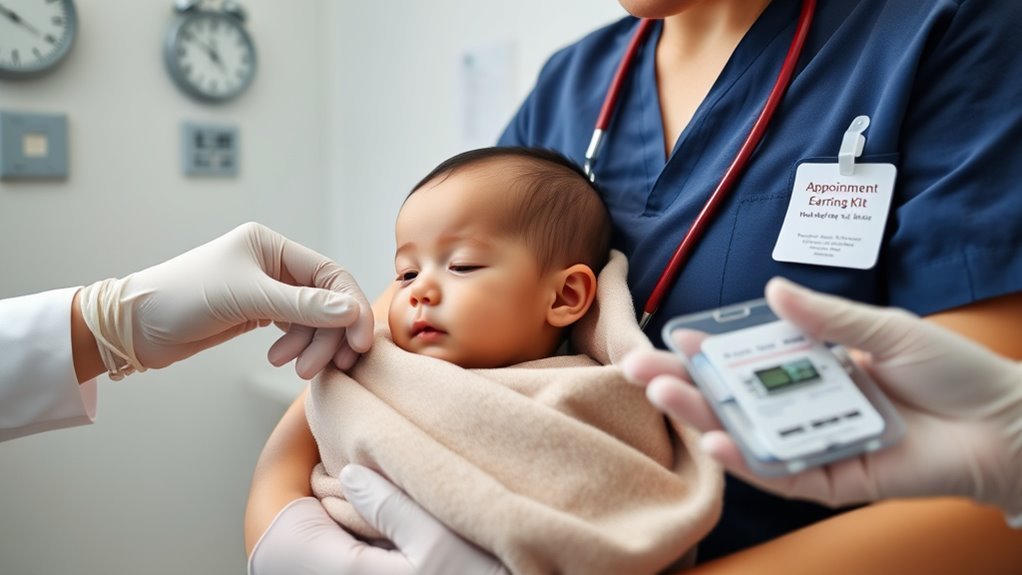
You can usually have your baby’s ears pierced after at least 2 months, ideally once they’ve had their DTaP vaccine and you can follow daily aftercare. Choose a trained medical professional, not a retail kiosk, and schedule it after a nap and feeding. Expect brief pain and minor bleeding. Clean the area twice daily, don’t twist unless told, and use hypoallergenic studs with secure backs. Watch for redness, swelling, drainage, or an embedded earring for more guidance.
When Can Babies Get Their Ears Pierced?

Babies can get their ears pierced as young as 2 months old, as long as they’ve received the DTaP vaccine to help reduce infection risk. You can approach ear piercing with confidence when you use evidence-based care and respect your baby’s comfort and bodily autonomy.
The American Academy of Pediatrics notes that piercing before age one may heal more easily because babies are less likely to handle the earrings. In sterile settings, adverse outcomes are rare, with reported rates below 0.01%, so the risk of infection stays low when you choose a trained healthcare professional. They use sterilized needles and hypoallergenic earrings to support safety.
For a calmer experience, schedule the procedure after a nap and feeding, when your baby is relaxed. This helps you keep the process stress-free, gentle, and medically sound while centering your family’s preferences.
What Is the Best Age for Ear Piercing?
The best age for ear piercing depends on your family’s preference, your baby’s healing needs, and how easily you can provide aftercare.
Many clinicians suggest 2 to 3 months because infants at this age are less likely to touch the earrings, which may support smoother healing.
If you wait until after age one, your child can often take part more in care and later decision-making.
Timing Depends On Preference
When it comes to ear piercing, the best age often depends on your preferences and your child’s needs. If you want to pierce your baby’s ears, you may choose around 2 months, when infants usually touch earrings less. Some parents prefer waiting until about one year so the child can help with decisions. Cultural values also matter. The AAP says the risks of infant ear piercing are minimal when done carefully. Many families like baby’s ears pierced before memory forms, which can feel simpler and more liberated for you.
| Timing | Consideration |
|---|---|
| 2 months | Less touching |
| Birth | Cultural choice |
| 1 year | More participation |
| Any age | Timing depends on preference |
You can choose what fits your family best without pressure.
Infant Healing And Care
Around 2 to 3 months, many infants heal well after ear piercing because they’re less likely to touch the earrings. Before age 1, adverse outcomes are reported to be very rare when care is done properly.
In baby ear piercing, your role is central: infant healing depends on consistent aftercare and calm monitoring. The risks involved stay low when you clean gently and watch for redness, swelling, or discharge.
- Clean the area as directed, twice daily.
- Avoid twisting earrings unless advised by your clinician.
- Delay piercing if you can’t support daily care.
You may choose to wait until your child can join aftercare, but if you pierce earlier, careful supervision preserves freedom and reduces complications.
How Do You Prepare for Baby Ear Piercing?
To help your baby have a calmer piercing experience, plan the appointment for a time when they’re naturally settled—ideally after a nap and feeding. This timing can reduce crying, improve cooperation, and make ear piercings feel less overwhelming for you and your baby.
Plan the appointment after a nap and feeding for a calmer, more cooperative piercing experience.
Use practical safety tips: bring a pacifier, bottle, or other familiar comfort item to help soothe them during the procedure. Keep your baby’s routine as consistent as possible before and after the visit, since predictability supports relaxation.
You can also prepare by feeding right after the piercing, which often offers immediate comfort and may ease stress. For infection prevention, choose a sterile setting, such as a healthcare professional’s office, where proper hygiene standards are followed.
A calm, well-planned approach gives you more control and helps you support your baby with confidence, care, and autonomy.
Where Should You Get Baby Ears Pierced?
For a safer experience, choose a healthcare professional’s office, such as a pediatrician’s, for your baby’s ear piercing. You’ll get cleaner technique, closer supervision, and care that respects your child’s comfort and your autonomy.
This setting is best for ear piercing for kids because it supports sterile conditions and rapid response if concerns arise.
- Choose a healthcare professional. A pediatrician or clinic can assess your baby and explain aftercare clearly.
- Avoid retail kiosks. Jewelry stores may not use sterilized tools, which can raise infection risk.
- Look for trained personnel. Experienced staff use sterile supplies and hypoallergenic earrings, helping reduce irritation and complications.
When you pick a clinical setting, you’re choosing evidence-based protection, not limiting your options.
A professional environment keeps the process controlled, sanitary, and more reassuring for both you and your baby.
How Does the Piercing Device Work?
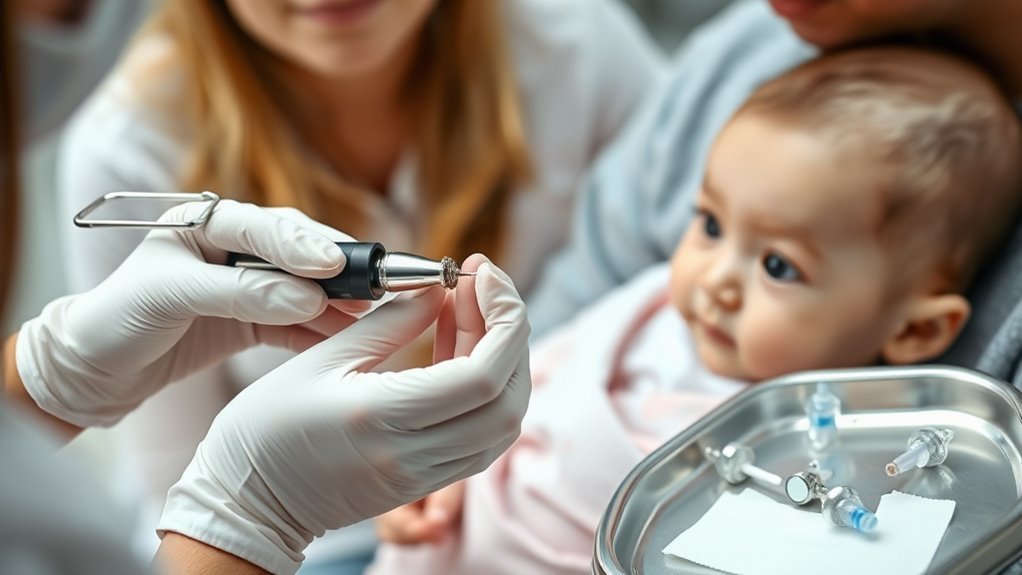
You’ll find that the hand-pressed device isn’t spring-loaded, so the nurse controls each step with steady pressure for a more precise piercing.
This gives the clinician clear guidance over alignment and placement, which helps reduce the risk of error and complications.
Because the process is quick and controlled, it can also limit pain and discomfort for your baby.
Hand-Pressed Control
The hand-pressed control device gives healthcare professionals complete control over the piercing process, allowing for a precise, guided application that supports safety and consistency.
When you choose ear piercing for your baby, this device helps the clinician place the piercing site accurately without the force of a spring-loaded piercing gun. That gentler control can reduce pain, trauma, and complications while supporting a clean puncture and faster healing.
- Sterile technique protects safety.
- Hand pressure improves control.
- Clean puncture supports recovery.
You can feel confident knowing the method is designed to work with careful, measured pressure rather than sudden impact. This approach respects your baby’s comfort and gives you a clearer, more dependable outcome.
Precise Nurse Guidance
With the same careful control that supports a gentle hand-pressed piercing, nurse guidance keeps the procedure precise from start to finish.
You can expect a trained nurse to guide the controlled piercing with steady pressure, not a spring-loaded burst. That means your baby’s ears get a gradual, measured placement that helps protect children’s safety and reduces discomfort.
The device uses sterilized needles, which supports cleaner technique and lowers complication risk. Because the nurse controls each step, you’re less likely to see unnecessary pain, tissue trauma, or uneven placement.
Proper supervision matters, and it gives you freedom from guesswork while keeping the process calm, hygienic, and evidence-based.
In short, skilled guidance makes piercing safer, clearer, and more reassuring for you and your child.
How Much Pain Does Ear Piercing Cause?
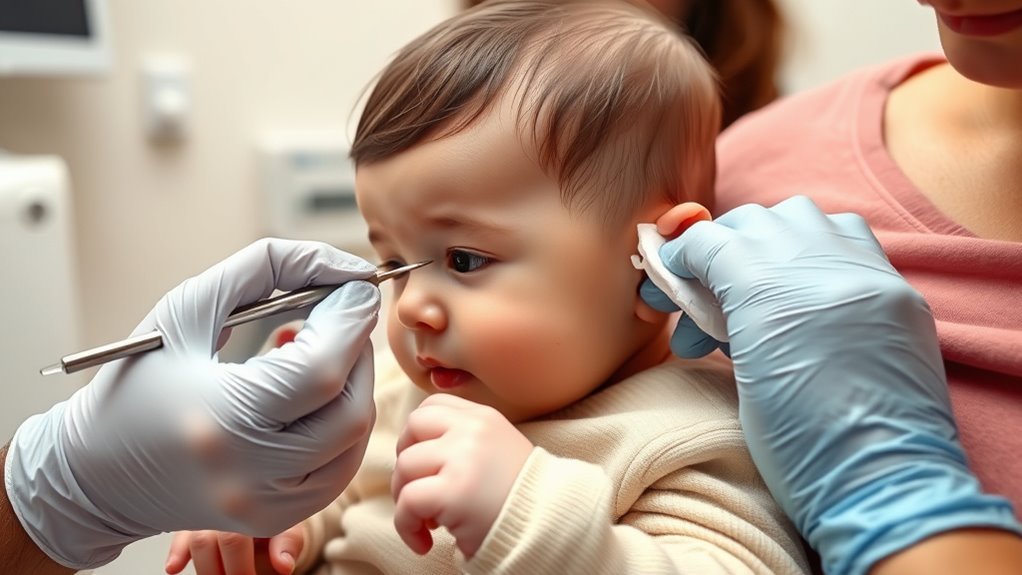
How painful is baby ear piercing? You can expect brief pain during ear piercing, usually just a few seconds, followed by mild discomfort that fades quickly.
Clinically, your baby’s response often stays limited when a trained professional works fast and cleanly. You can also use topical anesthesia to dull sensation and support a calmer procedure, especially if you want more comfort and less distress.
- Apply ice packs before the appointment to numb the area.
- Ask for topical anesthesia if it’s available.
- Choose a skilled professional who performs the piercing quickly.
Afterward, you may notice short-lived soreness, but it shouldn’t persist. If discomfort continues longer than expected, monitor it closely and seek guidance.
Your goal is simple: make the experience as gentle, controlled, and informed as possible. With the right preparation, you keep control and reduce unnecessary pain.
What Baby Ear Piercing Risks Should You Watch For?
A few baby ear piercing risks deserve your attention, even when the procedure is done quickly and cleanly.
During ear piercing, you may see brief pain or a little bleeding at the puncture site, but this usually fades within seconds.
Watch for infections: redness, swelling, warmth, or drainage can signal a problem, and you should seek medical advice if these signs appear.
You should also consider allergic reactions to nickel or low-quality gold; choosing hypoallergenic jewelry lowers that risk.
Check the backing often, because it can become embedded in the hole and need prompt removal.
Loose earrings can also pose a choking hazard, so select secure fasteners and inspect them regularly.
These safety tips help you protect your baby while supporting a calm, informed choice.
How Do You Care for Baby Ear Piercing?
You should clean the piercing with an aftercare solution 2-3 times daily for 30 days, and wash your hands before you touch the earrings or the site.
After cleaning, you can gently rotate the earrings while they’re wet, and you shouldn’t tighten the backs, since a little space helps prevent irritation and embedding.
Use hypoallergenic earrings for at least a year to lower the risk of allergic reactions and support healing.
Cleaning And Rotation
Keeping your baby’s ear piercings clean is the best way to support healing and lower the risk of infection. You’ll use cleaning and gentle rotation to protect the tissue while it settles.
- Clean the site 2-3 times daily with an Aftercare Solution for at least 30 days.
- Wash your hands before touching the earrings, then rotate them once while they’re wet so they don’t stick.
- Don’t tighten the backs; leave a little space for swelling, and choose hypoallergenic earrings for at least one year to reduce allergic risk.
If you stay consistent, you’re supporting healing with a simple, evidence-based routine that keeps your baby’s care calm, safe, and under your control.
Earrings And Healing
Earrings and the healing process go hand in hand in baby ear piercing care: clean the site with Aftercare Solution 2–3 times daily for 30 days, then gently rotate the earrings while the skin is still wet to help prevent sticking and support even healing.
Choose hypoallergenic earrings, like surgical steel or 14-karat gold, for at least one year to lower irritation and support healing. Keep backs snug, but don’t tighten them; you need space on both sides to prevent embedding.
Watch for infection signs such as pain, discharge, or inflammation. If you notice anything unusual, call your pediatrician promptly.
Consistent care protects the piercing, supports comfort, and lets you maintain your child’s style with confidence and freedom.
Which Earrings Are Safest for Babies?
When choosing earrings for a baby, prioritize hypoallergenic materials such as surgical steel or at least 14-karat gold to lower the risk of allergic reactions. You’re choosing comfort and safety, not decoration alone.
Choose hypoallergenic earrings like surgical steel or 14-karat gold to help protect sensitive baby ears.
Small and secure designs reduce snagging and choking risks, while flat backs and smooth edges protect delicate skin. Avoid mixed metals, since they can trigger irritation in sensitive ears.
- Pick hypoallergenic materials.
- Choose small and secure earrings.
- Use them for post-piercing care and check for irritation regularly.
Keep the earrings in place for at least a year after piercing to support healing. During this time, clean the area as directed and watch for redness, swelling, or tenderness.
If you notice changes, pause and reassess the jewelry choice. With the right pair, you can support healing while giving your baby a safer, simpler start.
When Should You Call the Pediatrician?
You should call your pediatrician if the piercing site becomes increasingly red, swollen, or starts to discharge, since these can be signs of infection.
If you notice fever, worsening tenderness, or the area looks hot, don’t wait for it to settle on its own.
You should also call the pediatrician right away if your baby has excessive pain, persistent bleeding from the earlobe, or if the earring seems embedded in the tissue.
These findings need prompt evaluation.
Watch for an allergic reaction too, including rash, itching, or notable irritation around the piercing.
A pediatrician can assess whether your baby needs treatment, removal of the jewelry, or a change in aftercare.
If you’re unsure about healing, trust your judgment and reach out.
You deserve clear guidance, and early support can protect your baby’s comfort and health while preserving your choices.
Frequently Asked Questions
What Is the Best Time to Pierce Baby Ears?
You’ll usually get the best results around 2 months, after DTaP, when healing’s easier and safety precautions matter most. Choose earrings wisely, follow aftercare tips, and your baby’s healing process should stay smooth and low-risk.
What Is the 3 2 Rule for Ear Piercings?
The 3-2 rule means you wait until your baby’s at least 3 months old and 2 months past the DTaP vaccine, supporting safety measures, the healing process, jewelry choices, and cultural significance while reducing infection risk.
Which Day Is Good for an Ear Piercing for Babies?
Like a gentle rite of passage, you’ll usually choose a calm weekday after nap and feeding. Prioritize ear piercing safety, pain management techniques, aftercare essentials, and choosing earrings; avoid illness or teething.
Should I Get My 2 Year Old’s Ears Pierced?
Yes, you can, if you’re ready for the responsibilities. Benefits of Piercing include family preference; Pain Management Tips, sterile technique, Aftercare Essentials, and Choosing Jewelry like hypoallergenic studs help reduce complications. Talk with your pediatrician.
Conclusion
Choosing when to pierce your baby’s ears is a personal decision, but safety should lead the way. You should wait until your baby is healthy, and you should use a trained professional who follows sterile technique. Clean the area as directed, watch for redness, swelling, or drainage, and call your pediatrician if concerns come up. The right timing and careful aftercare can lower risks. As the saying goes, “An ounce of prevention is worth a pound of cure.”
