
For diastasis recti, you can usually do gentle core work most days, ideally 10 to 15 minutes, about six days a week. Focus on deep breathing, pelvic tilts, bent knee marches, and glute bridges, and avoid crunches or sit-ups. Stop if you notice coning, pain, fatigue, or pelvic floor symptoms. See a clinician if the gap is over 2 cm, symptoms persist, or daily function is affected; there’s more to guide your next step.
What’s Safe to Do With Diastasis Recti?

When you have diastasis recti, the safest approach is to focus on gentle, targeted core work that builds support without increasing abdominal pressure.
You can use exercises such as deep core breathing, glute bridges, bent knee marches, and controlled pelvic tilts to help your abdominal muscles work together again. These proper exercises can support a postpartum core stability exercise program and promote healing without strain.
Avoid crunches and sit-ups, because they can increase pressure and widen the gap. Instead, engage the deep core, coordinate with your pelvic floor muscles, and move with control.
If you’re unsure, physical therapy can help you choose the right exercises and adjust your form. In diastasis recti, consistency matters, but your goal is quality, not intensity.
Short daily sessions can build strength, restore confidence, and support your freedom of movement. If you notice pain, coning, or harder daily tasks, seek evaluation. Additionally, understanding the causes of diastasis recti can help you avoid activities that may exacerbate the condition.
How Often Should You Exercise After Diastasis Recti?
You should aim for targeted core work at least six days a week, and even 10-minute daily sessions can help rebuild the transverse abdominis and support healing.
Start with lower intensity and gradually progress after the early recovery phase, usually around 2 to 6 weeks postpartum, based on how you feel and how you’re healing.
If you notice pain, pressure, or other unusual symptoms, slow down and check in with your healthcare provider or physical therapist. Additionally, incorporating core-strengthening exercises during this time can further aid in recovery and prevention.
Safe Weekly Exercise Frequency
After diastasis recti, aim to do targeted core and pelvic floor exercises at least 6 days per week, starting with about 10 minutes a day and increasing gradually as your strength and tolerance improve. For postpartum women, this exercise plan supports recovery, core stability, and gentle abdominal separation healing.
| Frequency | Focus |
|---|---|
| 6 days | targeted exercises |
| 10 minutes | daily start |
| Gradual | increase time |
| Consistent | physical activity |
| Guided | healthcare provider |
Keep movements controlled and functional, so you rebuild confidence without overloading tissue. Rest when needed, but return to your routine as soon as you can. If you’re unsure about progress, ask your healthcare provider before changing your program. Consistent practice helps restore strength, support posture, and improve long-term recovery.
Signs To Slow Down
If your diastasis recti exercises start to cause increased pain, discomfort, bulging, or abdominal coning, slow down and reduce your workload.
You don’t need to push through symptoms; back pain, fatigue, or changes in pelvic floor function, including urinary incontinence, are signals to reassess.
Keep your abdominal exercises gentle and brief, especially if you’re still building tolerance. A good pace is 10 to 15 minutes, at least 3 times a week, but only stay there if you feel stable and symptom-free.
If symptoms persist, consult a healthcare provider or physical therapist. They can help you adjust your plan, protect healing, and keep your movement practice supportive, not restrictive.
The goal is freedom through steady progress, not strain.
What Are the Best Diastasis Recti Exercises?
You’ll get the best results from deep core breathing and gentle core strengtheners that activate your transverse abdominis without straining the abdominal wall. Start with safe progression moves such as glute bridges and bent knee marches, keeping your movements small and controlled. Avoid crunches and sit-ups, and build consistency with about 10 minutes a day, six days a week. Additionally, maintaining a healthy weight can alleviate pressure on your pelvic floor, supporting overall recovery.
Deep Core Breathing
| Step | Action |
|---|---|
| 1 | Inhale deeply and relax your belly |
| 2 | Exhale slowly and draw in gently |
| 3 | Repeat with control and awareness |
| 4 | Practice during daily tasks |
With consistent practice, deep core breathing may help reduce width and improve function. Use it several times a day, especially during routine activities. This clinical habit can restore confidence and give you more freedom in movement.
Gentle Core Strengtheners
With diastasis recti, you can use gentle core exercises such as deep core breathing, bent-knee marches, and glute bridges to activate your transverse abdominis. These moves train your deep core without straining the gap.
Avoid sit-ups and crunches, which can worsen separation by raising intra-abdominal pressure. Choose small exercise variations that keep your abdomen flat and controlled.
Consistency matters: 10 minutes a day can improve support over time. If you notice pain, bulging, or other symptoms of diastasis, pause and speak with a healthcare provider.
With steady, careful practice, you can strengthen your core while staying aligned with your body’s need for freedom, recovery, and function.
Safe Progression Moves
In the postpartum period, start with deep core breathing so you can feel the transverse abdominis draw in and support you.
Then add a deep core stability exercise like bent knee marches, lying on your back with your knees bent, to challenge control without strain.
Glute bridges also help; they strengthen your core and wake up the pelvic floor.
When you’re ready, try modified planks with careful alignment and steady breathing.
These exercises for diastasis recti should feel controlled, not forceful. You can reclaim strength step by step.
Avoid crunches and sit-ups, since they can widen the gap and raise pressure.
Progress only as your form stays strong, and stop if you notice doming or pain.
What Signs Mean Your Core Needs a Break?
How do you know when your core needs a break? With Diastasis recti, your core muscles may be telling you that exercise after pregnancy is too much today.
Watch for persistent low back pain during or after movement, signs of coning or doming in the abdominal region, or trouble keeping proper form. If you lose alignment, need frequent modifications, or feel your pelvis dropping, core fatigue is building.
Your pelvic floor can also signal overload. Urinary incontinence or pelvic pressure during workouts means you should stop and rest.
Excessive soreness or discomfort in your abdominal region, beyond normal post-exercise recovery, is another clear cue. Engaging in pelvic floor exercises can help strengthen your core and support recovery.
These signs don’t mean you’re failing. They mean your body is asking for a smarter pace.
Pause, recover, and return only when you can breathe, brace lightly, and move without strain. Listening now helps you protect healing tissue, preserve function, and stay in charge of your recovery.
How Do You Track Diastasis Recti Progress Safely?
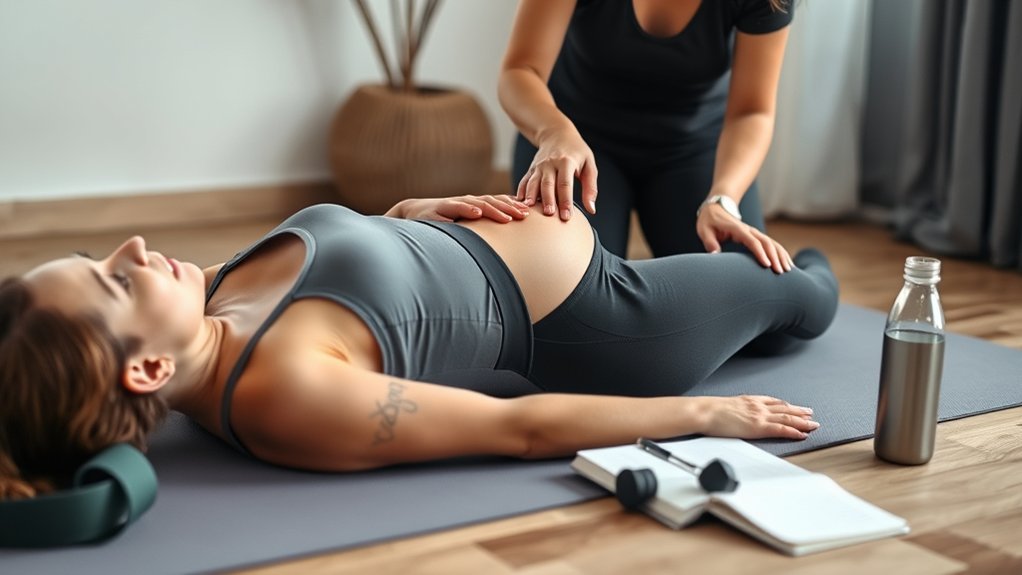
To track diastasis recti progress safely, check the abdominal gap with a simple self-test while you’re lying on your back: lift your head slightly, place your fingers at and around the belly button, and note how many widths fit between the muscles.
Measure the gap above, at, and below the navel, because diastasis recti can vary across the abdomen. A gap wider than one inch suggests separation.
Track your results weekly, using the same position, effort, and time of day so changes stay reliable. Watch for symptoms like coning or doming during movement; these signs can mean your core isn’t engaging well.
Gentle, consistent tracking helps you stay informed without judgment, and it supports a more liberated return to function. Incorporating transverse abdominis exercises can enhance your core stability and support recovery.
If the gap isn’t shrinking, or you have pain or functional limits, contact a healthcare provider or pelvic floor therapist for guidance and to protect your recovery.
When Should You Repeat the Program or Move On?
If you still notice a gap wider than two fingers, coning, or doming after finishing the program, you can repeat the Diastasis Recti Repair Program to keep building strength and support further healing.
With diastasis recti, repeating exercises can help your core and pelvic floor recover, especially if you’re postpartum and still feel weak. Use your progress as the guide:
Repeating exercises can help your core and pelvic floor recover, especially if you’re postpartum and still building strength.
- Repeat the program if symptoms persist or you need more control.
- Move on to the 30-Day Postpartum Workout Plan if you’re six weeks postpartum and you completed the first phase well.
- Advance further to Strong 20 when your diastasis recti has resolved and you’re cleared for strength training.
If you don’t see better muscle tone or function after two rounds, talk with a healthcare provider. Remember that consistent self-assessment is vital for tracking your recovery progress.
You deserve a plan that fits your body, supports liberation, and lets you move forward with confidence and clarity.
When Should You Call a Doctor About Diastasis Recti?
Even with consistent exercise, some diastasis recti symptoms need medical evaluation. You should call a healthcare provider if the gap between your right and left abdominal muscles is wider than 2 cm, or about two finger widths. Ongoing lower back pain, pelvic pain, or trouble with daily tasks also deserves assessment. If you notice coning during lifting, coughing, or other exertion, don’t ignore it. Postpartum urinary incontinence or signs of pelvic floor dysfunction can point to a broader recovery issue. Early intervention is crucial for core strength and overall well-being.
| Symptom | What it may mean | Next step |
|---|---|---|
| Gap >2 cm | Diastasis recti may be significant | Seek assessment |
| Coning | Pressure management issue | Stop and call |
| Persistent pain | Functional strain | Get evaluated |
If targeted exercises haven’t helped after several weeks, a pelvic floor therapist can guide you. Getting care isn’t defeat; it’s a practical step toward safer healing and more freedom in your body.
Frequently Asked Questions
How Often Should You Do Diastasis Recti Workouts?
You should do diastasis recti workouts six days weekly, about 10 minutes each, using safe movements for core strengthening and postpartum recovery. Seek professional guidance for prenatal considerations, rehabilitation techniques, exercise modifications, and nutrition support.
Can Exercise Fix Diastasis Recti?
Yes, exercise can help fix diastasis recti by building core strength. During postpartum recovery, use physical therapy, breathing techniques, pelvic floor work, and smart rehabilitation strategies. Skip risky abdominal exercises, ignore fitness myths, and support nutrition impact.
Can You Ever Fully Heal Diastasis Recti?
Yes, you can often heal diastasis recti, though your healing timeline varies. Like a bridge mending, targeted exercise types improve abdominal strength; impact factors, nutrition role, symptom management, self assessment, postpartum recovery, and surgery options guide care.
What Not to Do if Diastasis Recti?
Avoid crunches, limit heavy lifting, skip high impact, avoid twisting motions, and focus on breathing. Prioritize safe exercises, listen to your body, respect healing, and consult a specialist if you notice coning or worsening.
Conclusion
If you’re managing diastasis recti, steady, gentle exercise can help—but do you really need to push hard every day? Listen to your body, track your progress, and rest when your core feels tired or strained. Focus on safe, controlled movements and repeat your program only as directed. If you notice pain, worsening bulging, or no improvement over time, check in with a doctor or pelvic health specialist for guidance and reassurance.
