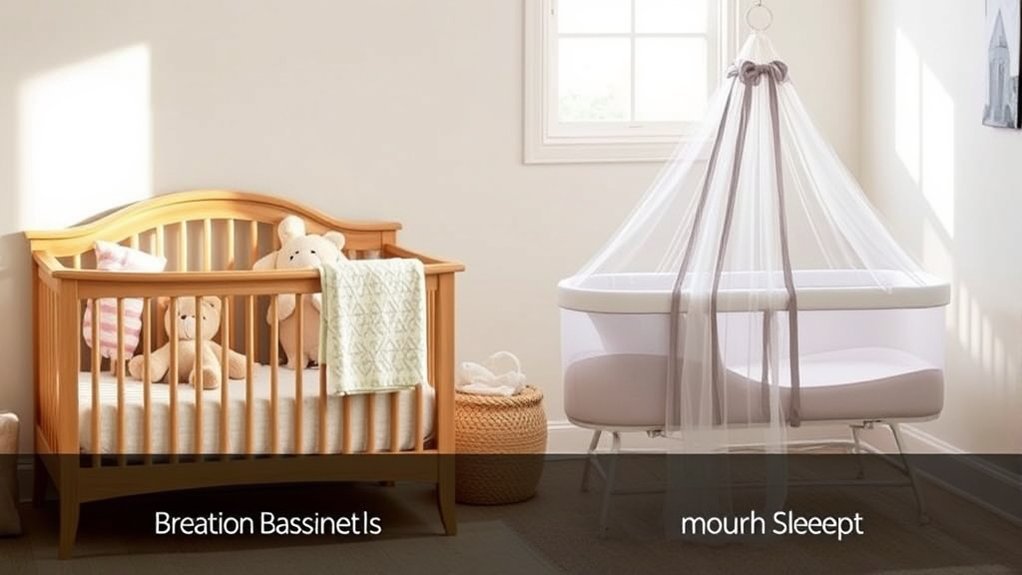
Many parents underestimate the importance of choosing the right sleep space for their newborn. Cribs and bassinets each offer unique benefits, but knowing the do’s and don’ts can make all the difference. It’s not just about comfort; safety standards play a vital role in your child’s well-being. So, how do you decide which option suits your needs best? Understanding these factors can help you make an informed choice that supports your family’s lifestyle.
Understanding the Purpose of Cribs and Bassinets
When you’re welcoming a new baby, understanding the purpose of cribs and bassinets can help you make informed decisions for their sleep space.
Cribs are designed for longevity, offering robust safety features and ample space as your child grows. Their functionality allows for easy shifts from newborn to toddler stages.
On the other hand, bassinets provide immediate benefits, such as portability and a cozy, snug environment for your newborn. They make nighttime feedings easier, allowing you to keep your little one close during those early days.
Size and Space Considerations
As you prepare for your new arrival, considering size and space is essential when choosing between a crib and a bassinet. Both options have distinct space requirements that can impact your room layout. A bassinet is compact, making it ideal for smaller spaces or when you want to keep your baby close at night. Conversely, a crib requires more room but can accommodate your child for a longer period.
| Feature | Bassinet | Crib |
|---|---|---|
| Size | Compact & portable | Larger & stationary |
| Lifespan | 0-6 months | 0-3 years or longer |
| Space Needs | Minimal | Requires dedicated area |
Ultimately, choose what suits your living space and lifestyle best.
Safety Features and Guidelines
When it comes to choosing between a crib and a bassinet, understanding safety features is essential for your baby’s well-being.
You’ll want to follow safe sleep practices and guarantee that the crib or bassinet meets current safety standards.
Safe Sleep Practices
To guarantee your baby sleeps safely, it’s crucial to understand the essential features and guidelines for both cribs and bassinets.
Start by creating a safe sleep environment; make sure the mattress is firm and fits snugly without gaps. Always place your baby on their back for safe positioning, as this greatly reduces the risk of Sudden Infant Death Syndrome (SIDS).
Avoid using soft bedding, pillows, or toys in the sleep space. Keep the sleep area free from hazards and maintain proper ventilation.
Check that the crib or bassinet meets safety standards and is free from recalls.
Crib and Bassinet Standards
Choosing the right crib or bassinet involves understanding the safety standards and features that guarantee your baby’s well-being. Regulatory standards in your country make certain that these products are tested for safety, durability, and non-toxicity.
Look for safety certifications from recognized organizations, indicating that the crib or bassinet meets or exceeds essential safety requirements. Check for features like slats spaced no more than 2 and 3/8 inches apart to prevent entrapment, and verify the mattress fits snugly without gaps.
Avoid using used cribs or bassinets unless you can confirm their compliance with current safety standards. By prioritizing these guidelines, you empower yourself to create a safe sleep environment, giving you peace of mind for your little one’s restful nights.
Portability and Convenience
When choosing between a crib and a bassinet, consider how easy it’s to move each option around your home.
A bassinet is typically lighter and more portable, allowing you to keep your baby close by in different rooms.
Additionally, many bassinets come with storage options, making it convenient to organize baby essentials right where you need them.
Easy to Move
One of the biggest advantages of using a bassinet over a crib is its portability and convenience. The lightweight design allows you to easily move it from room to room, ensuring your little one is always close by, whether you’re in the living room or the kitchen.
This feature is especially beneficial during nighttime feedings, as you can keep the bassinet right next to your bed. Plus, many bassinets offer travel-friendly options, making them perfect for family trips or visits to friends.
You’ll appreciate that you can create a familiar sleeping environment for your baby, no matter where you are. With a bassinet, you’ll find freedom in mobility, allowing you to embrace parenthood while staying connected with your child.
Storage Options Available
While both cribs and bassinets serve the essential purpose of providing a safe sleep space for your baby, their storage options can greatly impact your experience as a parent. Cribs typically require more space, making them less portable, while bassinets often come with built-in storage solutions, allowing for better organization. Here are some organization tips to reflect upon:
| Furniture Type | Storage Options |
|---|---|
| Crib | Limited, under-bed space |
| Bassinet | Shelves, pockets, drawers |
| Portability | Heavy, stationary |
| Lightweight, mobile | |
| Usage | Long-term investment |
Choosing wisely can enhance your home’s functionality and make life easier during those early, busy days.
Duration of Use
Understanding the duration of use for cribs and bassinets is essential for ensuring your baby’s safety and comfort.
Bassinets generally have shorter duration limits, typically accommodating infants up to 3-4 months or until they can push up on their hands and knees. This is vital for preventing accidents as your baby grows.
On the other hand, cribs are designed for longer use, often recommended until your child is around 2-3 years old, depending on their size and development.
Following these age recommendations helps you make informed decisions, allowing your little one to shift safely.
Cost and Budget Factors
When evaluating your baby’s sleeping arrangements, cost and budget factors play a significant role in your decision-making process.
Both cribs and bassinets come with their own budget implications, so it’s important to weigh your options carefully. Here are some points to reflect on:
Cribs and bassinets each have unique budget considerations, making careful evaluation essential for your family’s needs.
- Cribs often have a higher initial cost but can last for years.
- Bassinets usually have a lower price but may require replacement sooner.
- Check for safety certifications to avoid hidden costs of unsafe products.
- Look for resale or gently used options to save money.
- Factor in accessories like sheets, mattress protectors, and other essentials.
Making informed budget comparisons can empower you to choose the best option for your family while ensuring your baby sleeps safely and soundly.
Personal Preferences and Lifestyle Choices
Choosing between a crib and a bassinet often hinges on your personal preferences and lifestyle choices, especially since each option caters to different needs and routines.
If you prioritize mobility and a smaller footprint in your home, a bassinet may suit your lifestyle better, allowing you to keep your baby close during the night.
Conversely, if you envision a long-term setup, a crib might align more with your personal choice, accommodating your growing child.
Consider the lifestyle impact of each option: do you travel frequently or have limited space?
Reflect on your unique situation to make a decision that empowers you.
Ultimately, it’s about finding what feels right for you and your family, fostering a nurturing environment for your little one.
Frequently Asked Questions
Can I Use a Crib for a Newborn?
Yes, you can use a crib for a newborn. Just verify it meets safety standards and has features like adjustable mattress heights. Prioritize newborn safety, keeping the crib free of soft bedding and toys.
What Bedding Is Safe for a Bassinet?
For bassinet safety, choose breathable materials like cotton to reduce suffocation risks. Did you know that 3,500 infants die annually from sleep-related issues? Prioritize your baby’s comfort and safety with the right bedding choices.
How Do I Transition From Bassinet to Crib?
To shift your baby from bassinet to crib, start by introducing short naps in the crib. Gradually increase time there, creating a calming bedtime routine. Consistency helps your baby adjust to this new sleep environment.
Are There Specific Brands Recommended for Safety?
For safety, consider brands like Graco and Babyletto, which meet safety standards. Research brand comparisons online to guarantee you choose a reliable option, giving you peace of mind for your little one’s sleep environment.
Can I Use a Crib Outdoors Temporarily?
Yes, you can use a crib outdoors temporarily, but make certain it’s stable and secure. Prioritize outdoor safety by placing it in a shaded area, away from hazards, while keeping an eye on your little one.
Conclusion
In the grand showdown between cribs and bassinets, remember that both options have their pros and cons. While a bassinet offers the luxury of convenience during those sleepless early months, a crib stands tall as a steadfast fortress for your child’s growing years. By prioritizing safety and your lifestyle needs, you can make a choice that’s not just good, but absolutely legendary! So, embrace the journey ahead with confidence and a sprinkle of joy!

