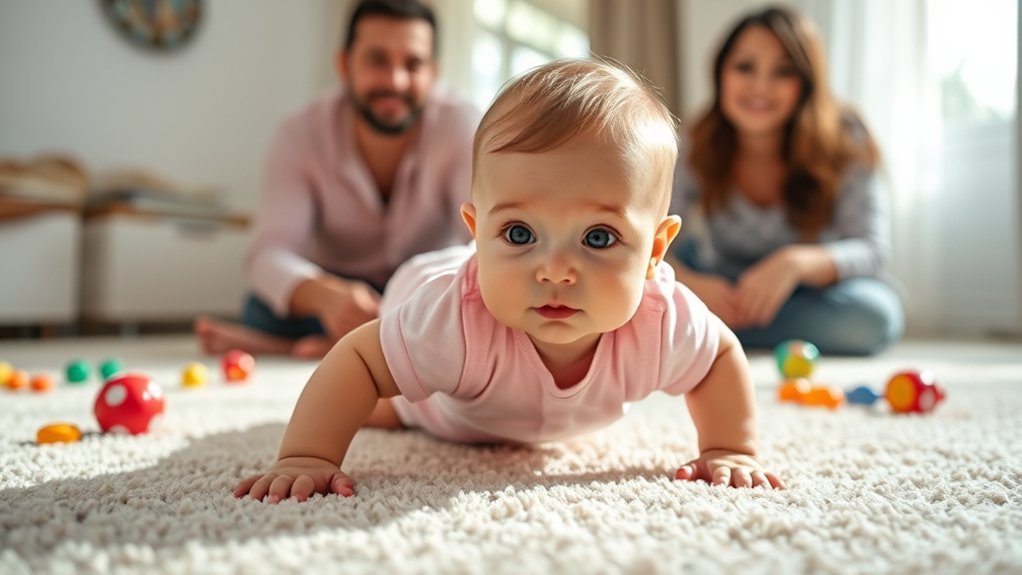
Baby Crawling Milestones: Timeline, Signs, Types, and Safe Support
What’s in This Article
Your baby’s first crawl can feel small at first, but it changes their world fast. That little push, scoot, or rock builds strength, balance, and confidence for later movement. This guide explains the crawling timeline, readiness signs, crawling styles, safety tips, and when you may want to ask your pediatrician.
Quick Answer
Many babies start early crawling movements between 6 and 10 months, but each baby develops at a different pace. Crawling may look like a classic hands-and-knees crawl, belly crawl, bear crawl, or seated scoot. Give your baby safe floor time, tummy time, and toys just out of reach to support practice.
Key Takeaways
- Crawling helps your baby build strength, balance, coordination, and confidence.
- Many babies show crawling signs between 6 and 10 months, but timing can vary.
- Different crawling styles can still support healthy motor development.
- A safe floor space helps your baby move, explore, and practice with less risk.
- You should speak with a pediatrician if you feel concerned about delays or uneven movement.
Understanding the Importance of Crawling
Crawling supports your baby’s physical development and helps prepare their body for future movement skills.
During this stage, your child strengthens their arms, shoulders, core, and legs. They also build coordination and learn how their body moves through space.
As your child explores their environment, they build muscle strength, coordination, and confidence while learning cause and effect.
Crawling can also support sensory exploration. Your baby touches different textures, reaches for objects, and learns how actions create results.
You can support crawling with tummy time, safe floor play, and simple encouragement. These daily moments help your baby practice movement without pressure.
Typical Crawling Timeline
A typical crawling timeline can help you notice progress, but it should not become a strict test. Babies often build crawling skills through small steps before they move across the room.
Physical strength, curiosity, floor time, and comfort on the belly can all affect timing.
Milestones in Crawling Development
Many babies start showing crawling behaviors around 6 to 8 months. You may see rocking, pivoting, rolling, scooting, or pushing up during tummy time.
Your baby may then move from belly play to hands-and-knees practice. This stage strengthens muscles and improves balance.
By around 9 to 10 months, many babies crawl with more purpose. They may move toward toys, people, or places they want to reach.
Celebrate each small step. Every bit of practice helps your baby build confidence and independence.
Factors Influencing Crawling Timeline
Each baby follows a unique path, but several factors can affect when crawling begins. Understanding these factors can help you support your baby without rushing them.
| Factor | Influence on Crawling | Tips for Parents |
|---|---|---|
| Physical Development | Stronger muscles can support earlier movement | Offer regular tummy time |
| Motivation | Interest in toys can prompt movement | Place toys just out of reach |
| Environment | Safe floor space encourages exploration | Create a crawl-friendly area |
| Genetic Factors | Family patterns may play a role | Notice sibling milestone patterns |
| Health Conditions | Some conditions can affect movement | Ask a pediatrician if you feel concerned |
Recognizing these factors can help you guide your baby with patience. Your support matters most when it feels calm and consistent.
Signs Your Baby Is Ready to Crawl
As your baby grows, you’ll notice signs that they may soon start crawling.
Look for stronger arms, better head control, and moments when their belly lifts off the ground. These signs show that your baby has started building the strength needed for movement.
When you recognize these signs, you can offer more safe floor time and gentle encouragement.
Increased Arm Strength
One key sign of crawling readiness comes from stronger arms. You may see your baby push up during tummy time, lift their chest, or reach for toys.
This strength helps your baby support their body weight. It also helps them build the balance and coordination needed for crawling.
Watch how your baby uses their arms during play. If they push, pivot, or reach often, they may prepare for more movement.
Floor play can help your baby practice these skills. Keep sessions short, safe, and positive.
Belly Off the Ground
When your baby lifts their belly off the ground, they may prepare for crawling. This movement often appears around 6 to 10 months.
You may see your baby push onto hands and knees or rock back and forth. These actions show growing core strength and balance.
Encourage this stage with a safe play area. Use soft play mats and place a few favorite toys nearby.
Every baby develops at their own pace. Celebrate progress, even when it looks small.
Different Types of Crawling
Crawling can look different from one baby to another. Your baby may not use the classic hands-and-knees style right away.
The most common style is the classic crawl, where your baby moves on hands and knees. You may also see the belly crawl, where your baby pulls forward while their belly stays low.
As your baby develops, watch for different crawling styles, such as the classic crawl and the belly crawl.
Some babies use a bear crawl, where they move on hands and feet with raised hips. Others use a seated scoot and push themselves forward from a sitting position.
These styles can still help your baby build motor skills. Focus more on steady progress than on one perfect crawling style.
Note: Some babies skip classic crawling and move straight to pulling up or cruising.
Creating a Safe Crawling Environment
As your baby starts moving, your floor becomes their main learning space. A safe setup helps them explore with less risk.
Remove sharp objects, cords, small choking hazards, and unstable items from their reach. Use soft mats to cushion falls and create a clear play area.
Here’s a quick checklist to help you:
| Action | Purpose |
|---|---|
| Clear pathways | Reduce tripping hazards |
| Use baby gates | Limit access to unsafe areas |
| Add soft flooring | Cushion falls and protect joints |
| Cover outlets | Lower electrical risk |
| Secure furniture | Reduce tip-over danger |
Warning: Keep small objects, loose cords, and unstable furniture away from your crawling baby.
Activities to Encourage Crawling
Simple play can help your baby build crawling skills. You do not need special equipment to support this stage.
Place colorful toys just out of reach so your baby stretches, reaches, and shifts weight. Keep the toy close enough to prevent frustration.
You can also create a soft obstacle course with cushions and blankets. This lets your baby practice moving across safe textures.
Games like peek-a-boo can motivate your baby to push up and reach toward you. Tummy time also strengthens the neck, back, arms, and core.
Talk and sing while your baby explores. Your voice can keep them engaged and help build your bond.
Pro tip: Keep practice playful and short, then stop before your baby gets too tired.
Supporting Your Baby’s Crawling Journey
You may feel eager to see your baby crawl, but your baby needs time and steady support. Patience helps this stage feel safe and fun.
Start with a safe space and a soft surface for floor play. Place toys slightly out of reach to encourage movement.
Get down on your baby’s level and show excitement when they try. Praise effort, not just success.
Avoid comparing your baby with other babies. Each child builds strength, balance, and confidence at a personal pace.
If your baby seems frustrated, pause and try again later. Interactive play can make crawling practice feel more natural.
What to Expect After Crawling
After your baby masters crawling, you may notice new movement skills. Your baby may pull up to stand and use furniture for support.
This stage helps develop leg strength, balance, and body control. You may also hear more sounds as your baby experiments with communication.
Your baby may show stronger curiosity and move toward new spaces. Keep safe areas ready because their reach will grow quickly.
Crawling often leads toward cruising and walking within the next stage of development. Keep celebrating progress while watching safety closely.
Frequently Asked Questions
When Should I Worry if My Baby Isn’t Crawling?
If your baby isn’t crawling by around 12 months, ask your pediatrician for guidance. Some babies skip crawling, but your doctor can check strength, movement, and overall development.
Can Crawling Help With My Baby’s Cognitive Development?
Crawling can support learning because your baby explores space, distance, and cause and effect. As they move toward people and objects, they practice problem-solving in simple ways.
How Does Crawling Affect a Baby’s Physical Health?
Crawling strengthens your baby’s arms, shoulders, core, and legs. It also supports coordination, balance, and later movement skills such as pulling up and walking.
What Are the Common Crawling Challenges Parents Face?
Parents often deal with uneven floors, distractions, tired babies, and safety concerns. You can help by keeping the play area clear, soft, and calm.
Should I Consult a Doctor if My Baby Crawls Backward?
Backward crawling usually fits normal development. If you also notice stiffness, weakness, one-sided movement, or missed milestones, ask your pediatrician for advice.
Medical Disclaimer: This article is for informational purposes only and does not replace professional medical advice. Always consult a qualified doctor or pediatrician before making decisions about your child’s health or development.
Conclusion
Crawling helps your baby build strength, balance, confidence, and curiosity. Your best next step is to offer safe floor time, simple toys, and calm encouragement each day. Watch your baby’s progress without pressure, and ask your pediatrician if something feels off. Each crawl moves your baby closer to more independence and new skills.