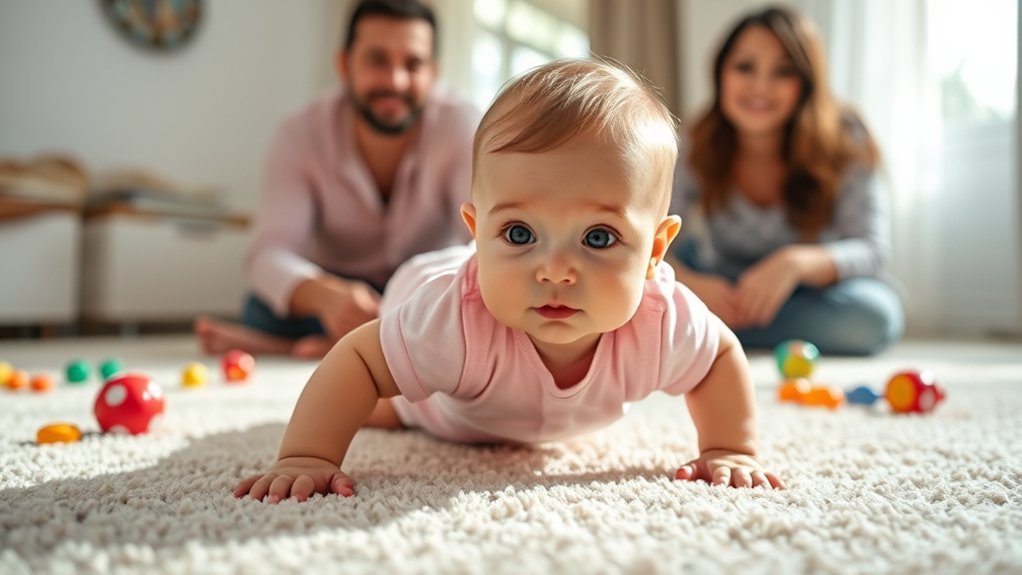
Crawling is a vital milestone in your baby’s development, paving the way for future movement skills. Understanding the stages of crawling can help you support your child effectively. You’ll notice signs indicating readiness, and it’s essential to create a safe space for exploration. Different crawling styles can emerge, each reflecting your baby’s unique journey. As you navigate this exciting phase, you might wonder what comes next in their development.
Understanding the Importance of Crawling
Crawling is more than just a developmental milestone; it’s a crucial phase that lays the foundation for your child’s future physical and cognitive skills.
During this stage, your child strengthens their muscles, enhances coordination, and develops spatial awareness. As they navigate their environment, they learn cause and effect, problem-solving, and gain confidence.
As your child explores their environment, they build essential muscle strength, coordination, and confidence while mastering cause and effect.
Research shows that crawling helps with brain development, fostering connections between motor skills and cognitive functions. It’s also an important period for sensory exploration, as your little one engages with different textures and objects.
Encouraging crawling through tummy time and safe spaces allows your child to thrive and discover their world. Embrace this exciting journey, knowing it’s significant for their overall growth and development.
Typical Crawling Timeline
Understanding the typical crawling timeline can help you track your baby’s development and identify key milestones.
Various factors, such as physical strength and motivation, can influence how and when your child starts crawling.
Milestones in Crawling Development
Around six to eight months, most infants begin to exhibit crawling behaviors, marking a significant milestone in their physical development.
During this stage, you may notice your baby evolving from belly time to crawling on hands and knees. This movement not only strengthens their muscles but also enhances coordination and spatial awareness.
Typically, babies start by scooting or rolling before mastering the classic crawl. By around nine to ten months, many will crawl with purpose, exploring their surroundings and developing problem-solving skills.
It’s essential to celebrate these achievements, as each milestone builds confidence and independence.
Factors Influencing Crawling Timeline
While each baby’s journey is unique, several factors can influence the timeline of when they start crawling. Understanding these can help you support your child’s development more effectively.
| Factor | Influence on Crawling | Tips for Parents |
|---|---|---|
| Physical Development | Stronger muscles lead to earlier crawling | Encourage tummy time |
| Motivation | Interest in toys can prompt movement | Place toys just out of reach |
| Environment | Safe space encourages exploration | Create a crawl-friendly area |
| Genetic Factors | Family history may play a role | Observe siblings’ milestones |
| Health Conditions | Any delays can affect crawling | Consult a pediatrician if concerned |
Recognizing these factors can help you nurture your baby’s crawling journey. Your support makes all the difference!
Signs Your Baby Is Ready to Crawl
As your baby grows, you’ll notice signs that they’re gearing up to crawl.
Look for increased arm strength and moments when their belly lifts off the ground—these are key indicators of readiness.
Recognizing these milestones can help you support your little one on their journey to mobility.
Increased Arm Strength
One of the key indicators that your baby is ready to crawl is noticeable increased arm strength. You might observe your little one pushing up during tummy time, lifting their chest off the ground, and using their arms to pivot or reach for toys.
This newfound strength shows that their muscles are developing, which is essential for crawling. As your baby practices these movements, they’re building the necessary coordination and balance that will support their crawling journey.
Pay attention to how they use their arms to support their weight; if they’re consistently demonstrating this strength, it’s a positive sign they’re gearing up for mobility.
Encouraging playtime on the floor can further enhance their arm strength and confidence.
Belly Off the Ground
Noticing your baby getting their belly off the ground is another clear sign they’re on the path to crawling. This movement typically occurs around 6 to 10 months, indicating that your little one has developed the necessary core strength and balance.
You might see them push up on their hands and knees or rock back and forth, demonstrating their enthusiasm to explore. It’s important to encourage this behavior by providing a safe space for them to practice.
Lay down soft play mats and keep engaging toys nearby to motivate them further. Remember, every baby develops at their own pace, so celebrate these milestones, no matter how small.
Your support will boost their confidence as they inch closer to crawling!
Different Types of Crawling
Crawling is a crucial developmental milestone, showcasing your baby’s growing strength and coordination.
As your little one progresses, you’ll notice different types of crawling emerge. The most common style is the classic crawl, where your baby moves on hands and knees. You might also see the belly crawl, where they drag their body across the floor.
As your baby develops, watch for various crawling styles like the classic crawl and the belly crawl.
Some babies opt for the “bear crawl,” walking on hands and feet with their hips raised. Others may prefer a “scoot,” where they push themselves forward while sitting.
Each style reflects your baby’s unique preferences and physical development. Remember, these variations are perfectly normal, and they all contribute to your child’s overall motor skills and confidence as they explore their world.
Creating a Safe Crawling Environment
As your baby explores the different types of crawling, it’s important to create a safe environment for their newfound mobility. Start by removing any hazards, like sharp objects and small items they could swallow. Use soft mats to cushion falls and create a designated play area.
Here’s a quick checklist to help you:
| Action | Purpose |
|---|---|
| Clear pathways | Prevent tripping hazards |
| Use baby gates | Limit access to unsafe areas |
| Soft flooring | Cushion falls and protect joints |
Activities to Encourage Crawling
To help your baby develop their crawling skills, engaging them in fun activities can make all the difference. Start by placing colorful toys just out of reach, encouraging them to stretch and move toward the objects.
You can also create a soft obstacle course with cushions and blankets, inviting them to maneuver through various textures. Play games like “peek-a-boo” to motivate them to push up and reach out.
Additionally, tummy time is essential; it strengthens their neck, back, and arm muscles, all vital for crawling. Singing or talking to your baby while they explore can enhance their motivation.
These activities not only promote physical development but also foster bonding and communication between you and your little one.
Supporting Your Baby’s Crawling Journey
While you might feel enthusiastic to see your baby crawl, supporting their journey requires patience and understanding.
First, create a safe environment by removing hazards and providing a soft surface for exploration. Encourage your baby by placing toys just out of reach, motivating them to move.
You can also get down on their level, showing excitement and offering praise when they make progress. It’s essential to recognize that each baby develops at their own pace; avoid comparing them to others.
If you notice any signs of frustration, give them a break and revisit crawling later.
Finally, engage in interactive play, as it fosters their physical skills and boosts their confidence, making their crawling experience enjoyable and fulfilling.
What to Expect After Crawling
Once your baby masters crawling, you’ll likely notice a range of exciting developments that come next. Your little one may start pulling up to stand, using furniture for support. This shift is vital for developing strength and balance.
Typically, around this time, you might hear your baby experimenting with sounds and even attempting to mimic words as their communication skills grow.
You’ll also see increased curiosity, leading to exploration of their environment. It’s important to guarantee safe spaces for them to explore, as this fosters independence and confidence.
Finally, these newfound skills pave the way for walking, which usually follows within a few months. Embrace this exciting phase, celebrate their milestones, and always be there to support their adventurous spirit!
Frequently Asked Questions
When Should I Worry if My Baby Isn’t Crawling?
If your baby isn’t crawling by around 12 months, it’s worth discussing with your pediatrician. Every child develops at their own pace, but early intervention can help address potential concerns. Trust your instincts as a parent.
Can Crawling Help With My Baby’s Cognitive Development?
Sure, your baby’s crawling does more than just get them from point A to B; it fosters cognitive development, enhancing spatial awareness and problem-solving skills. So, while they’re busy exploring, they’re also learning!
How Does Crawling Affect a Baby’s Physical Health?
Crawling boosts your baby’s physical health by strengthening muscles, enhancing coordination, and improving balance. It also encourages movement exploration, laying the foundation for later skills like walking, running, and overall physical fitness in their development.
What Are the Common Crawling Challenges Parents Face?
As your little explorer ventures into the world, you’ll face challenges like uneven surfaces, distractions, and fatigue. Balancing encouragement with safety can be tough, but steady support helps your baby master this exciting milestone.
Should I Consult a Doctor if My Baby Crawls Backward?
If your baby crawls backward, it’s usually normal and part of development. However, if you’re concerned or notice other developmental delays, consulting a doctor can provide reassurance and guidance for your baby’s growth.
Conclusion
As your baby begins this exciting crawling adventure, think of it as a dance of discovery, where every movement unfolds new horizons. Embrace the wobbles and tumbles—they’re stepping stones to greater skills. By fostering a safe space and celebrating these milestones, you’re nurturing not just their physical growth but their confidence, too. Remember, each crawl brings you closer to a world of exploration, setting the stage for the vibrant journey ahead.
