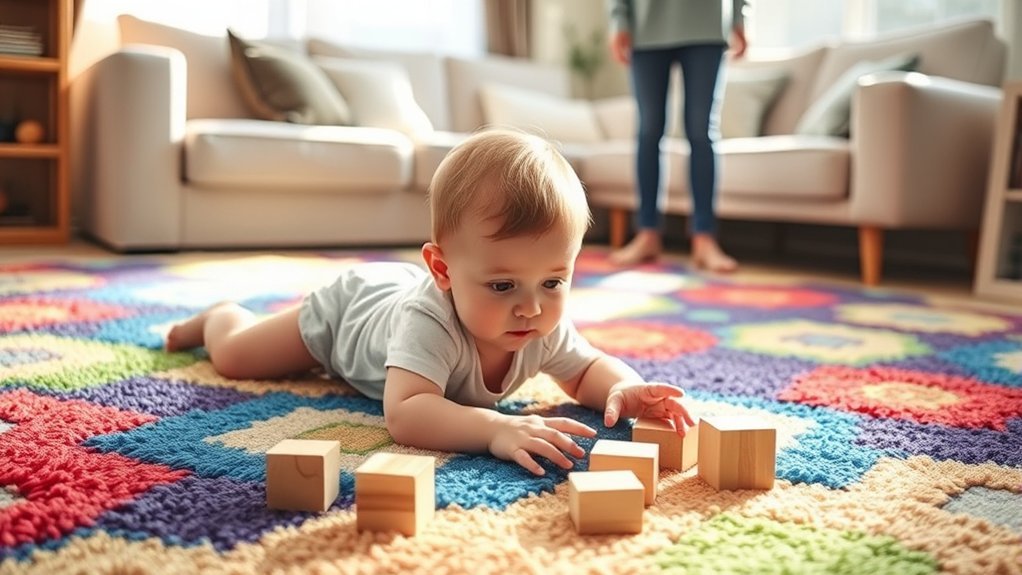
Steering through the crawling stages of your baby’s development is vital for their growth. You’ll want to encourage exploration while ensuring safety at every turn. Understanding what to do and what to avoid can make a significant difference in this phase. By fostering a stimulating environment and recognizing potential hazards, you can support your child’s journey. Let’s explore the essential do’s and don’ts that will help you create a secure space for your little one’s movement.
Understanding the Crawling Milestone
As your baby approaches the crawling milestone, it’s vital to understand what this developmental stage entails. Crawling typically occurs between 6 to 10 months, signaling significant physical and cognitive growth.
During this period, your baby develops essential motor skills, strength, and coordination. You’ll notice them shifting from tummy time to rocking back and forth, eventually pushing off with their hands and knees. This movement promotes spatial awareness and problem-solving abilities as they explore their environment.
It’s important to recognize that each child progresses at their own pace; some may skip crawling altogether. Stay observant of your baby’s individual journey and provide a safe space for exploration, encouraging their natural instincts to move and discover.
Do’s for Encouraging Crawling
Encourage your baby’s crawling journey by creating a safe and stimulating environment. Start by providing ample space for exploration, free from hazards.
Use colorful toys to attract your baby’s attention and motivate movement. Place toys just out of reach to encourage them to crawl towards them.
Get down on the floor with your baby; your presence can boost their confidence and interest in crawling. Consider using soft mats or blankets to create a comfortable surface.
Also, engage in tummy time regularly, as it strengthens the muscles needed for crawling.
Be patient and celebrate small achievements to foster a positive experience. These supportive strategies can greatly enhance your baby’s crawling development and encourage them to explore their world.
Don’ts to Avoid During Crawling Stages
While fostering an environment for crawling is important, there are specific pitfalls to avoid that can hinder your baby’s progress.
First, don’t place your baby on slippery surfaces. These can obstruct their ability to gain traction, making crawling more difficult.
Avoid using excessive baby gear, like walkers and jumpers, which can limit their natural movement and exploration.
Additionally, steer clear of cluttered spaces; obstacles can frustrate your baby and impede their crawling development.
Finally, don’t underestimate the importance of supervision. Leaving your baby unattended, even for a moment, can lead to unsafe situations.
Creating a Safe Environment for Crawling
Creating a safe environment for crawling is essential for your baby’s development and exploration. By ensuring safety, you allow your little one to thrive while discovering their surroundings.
Ensuring a safe crawling environment fosters your baby’s development and encourages exploration of their surroundings.
Here are four key steps to create that secure space:
- Clear the Floor: Remove small toys, cords, and any choking hazards to prevent accidents.
- Soft Surfaces: Use play mats or carpets to cushion falls and enhance comfort during crawling.
- Secure Furniture: Anchor heavy furniture to walls and remove sharp-edged items to avoid injury.
- Baby Gates: Install gates at stairs and doorways to limit access to potentially dangerous areas.
Supporting Your Baby’s Development Beyond Crawling
Once you’ve established a safe environment for your baby to crawl, it’s important to focus on their development in other areas.
Engage your baby with interactive toys that encourage sensory exploration and problem-solving. Simple puzzles or stacking blocks can enhance fine motor skills.
Encourage verbal communication by talking to your baby, responding to their coos and babbles, and reading aloud. This promotes language development and strengthens your bond.
Social interactions with peers or family members can also foster emotional and social skills.
Encourage physical activities, like cruising along furniture, to build strength and coordination.
Frequently Asked Questions
What Age Do Babies Typically Start Crawling?
Babies typically start crawling between 6 to 10 months. You’ll notice them developing strength and coordination during this stage, so provide a safe space for exploration and encourage their natural curiosity to enhance their skills.
Are There Different Crawling Styles Babies Might Use?
Yes, babies use various crawling styles, including the classic crawl, army crawl, and bear crawl. Each style reflects their developing motor skills and individual preferences, so celebrate their unique progress as they explore the world around them.
How Can I Tell if My Baby Is Ready to Crawl?
You can tell your baby’s ready to crawl when they push up on their hands and knees, rock back and forth, show interest in moving towards objects, and exhibit excitement when exploring their surroundings.
Should I Be Concerned if My Baby Skips Crawling?
It’s not uncommon for 10-15% of babies to skip crawling entirely. If your baby’s developing other motor skills and meeting milestones, there’s generally no need for concern. Always consult your pediatrician for personalized guidance.
What Toys Can Help Promote Crawling Skills?
To promote crawling skills, use toys that encourage movement, like soft balls, push toys, or textured mats. These stimulate your baby’s curiosity and motivate them to reach, crawl, and explore their environment effectively.
Conclusion
In summary, embracing the crawling stages is essential for your baby’s development. By creating a safe and stimulating environment, you encourage exploration and confidence. Remember to celebrate their milestones while avoiding common pitfalls, such as slippery surfaces and excessive baby gear. Visualize their growth as a journey, where each crawl represents strength and curiosity. Your active involvement and supervision will guarantee a secure space for movement, fostering their physical and cognitive development beyond this significant milestone.
