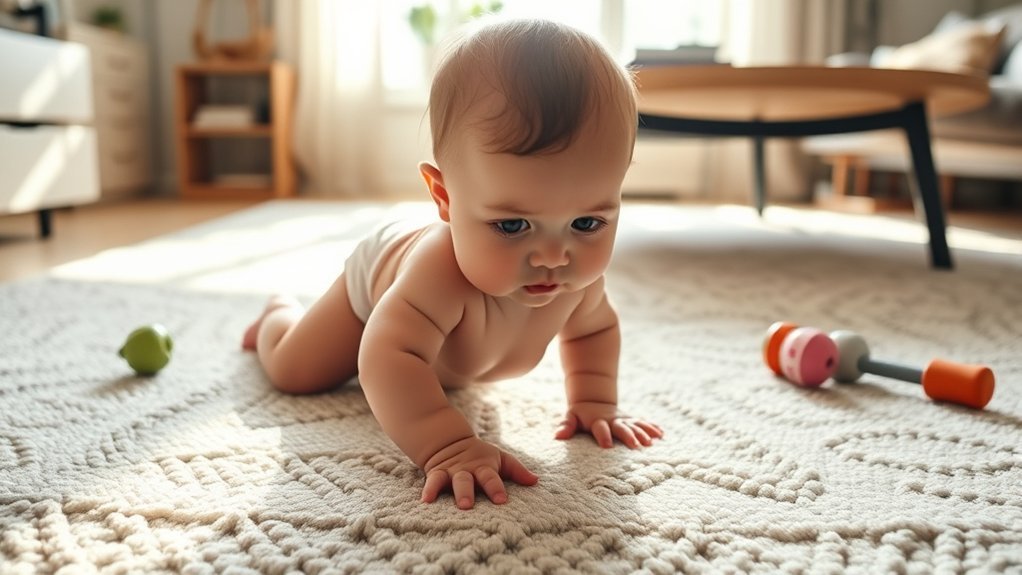
How Genetics and Environment Affect Crawling Stages
Your baby may crawl early, late, or skip a classic crawl, and that can feel confusing. Crawling often reflects both your baby’s natural development and the space you give them to practice. This guide explains how genetics, environment, and daily support can shape your baby’s crawling journey.
Quick Answer
Genetics can affect your baby’s muscle tone, body growth, coordination, and temperament. Your baby’s environment also matters because floor time, safe space, and daily encouragement help them practice movement. Most babies start crawling between 6 and 10 months, but timing can vary.
Key Takeaways
- Genetics may affect when your baby gains the strength and coordination needed to crawl.
- A safe floor space gives your baby more chances to move, reach, and explore.
- Tummy time helps build the neck, shoulder, back, and arm strength needed for crawling.
- Different crawling styles can still show normal progress and growing body control.
- You should speak with your pediatrician if your baby shows limited movement or loses skills.
Understanding Crawling Milestones
Crawling milestones help you track your baby’s physical development and movement skills. Babies often begin to crawl between 6 and 10 months. This stage shows better coordination and strength, especially in their arms, legs, shoulders, and core.
Your baby may first build strength through tummy time. As they progress, they may use different crawling styles, such as classic crawling, army crawling, scooting, or rolling to reach objects. Each style can show your baby’s own way of learning movement.
Watching these milestones can help you notice possible developmental delays. Floor play can support crawling skills when you keep the space safe, clean, and easy to explore.
Genetic Influences on Crawling
Genetics can play a role in your baby’s crawling development. Your baby may inherit traits that affect muscle tone, coordination, body size, and interest in movement.
You may notice that crawling timing or crawling style runs in your family. These links do not guarantee the same pattern, but they can help explain why babies develop at different speeds.
Common genetic influences may include:
- Family history: Early crawlers in your family may suggest a similar pattern for your baby.
- Motor skills: Inherited traits can affect muscle tone, balance, and coordination.
- Growth patterns: Height and weight can change how easy crawling feels for your baby.
- Temperament: Curiosity and persistence may encourage your baby to move toward people or toys.
These influences can help you understand your baby’s pace. They should not replace medical advice if you feel concerned.
Environmental Factors Affecting Crawling
Your baby’s environment can support or limit crawling practice. Space, floor texture, toys, and obstacles all shape how your baby moves and explores.
A safe and open area gives your baby room to reach, pivot, roll, and try crawling. Soft but firm surfaces often work better than slippery floors or very soft bedding.
| Environmental Factor | Positive Impact | Negative Impact |
|---|---|---|
| Space | Encourages exploration | Limits movement |
| Surface Texture | Provides traction | May cause slips and falls |
| Obstacles | Supports problem-solving | May create frustration |
Warning: Avoid placing your baby on beds, couches, or high surfaces for crawling practice because falls can happen quickly.
Parenting Practices and Their Impact
Your daily support can strongly shape your baby’s crawling practice. You can help by giving your baby time, space, and safe motivation to move.
- Provide regular tummy time: This helps strengthen your baby’s neck, back, shoulders, and arms.
- Create a safe play area: Clear sharp objects, cords, small items, and hard obstacles.
- Encourage reaching: Place toys slightly out of reach to invite movement without causing stress.
- Support small progress: Praise effort, stay close, and let your baby practice at their own pace.
You do not need to force crawling. Short, regular practice sessions often work better than long sessions that make your baby tired.
Pro tip: Put your baby’s favorite toy just beyond their hands, then move it closer if they get upset.
Recognizing Delays and Seeking Help
As your baby nears the usual crawling age, watch how they move during floor play. Some babies crawl later than others, and some use different movement styles before walking.
You may see signs of readiness, such as pushing up on hands, rocking back and forth, pivoting, or trying to reach for toys. These actions show growing strength, balance, and coordination.
Speak with your pediatrician if your baby shows little interest in movement, seems very stiff or floppy, uses one side much more than the other, or loses skills they had before. Early support can help your child build skills with the right guidance.
How to Support Crawling Safely at Home
You can support crawling by making movement feel safe and rewarding. Start with short floor sessions when your baby feels rested, fed, and alert.
- Use a clean, firm play mat or carpeted floor.
- Keep small objects, cords, and sharp edges away from the play area.
- Place toys in a semicircle so your baby can turn and reach.
- Stay nearby and respond when your baby needs comfort.
These simple steps give your baby more chances to practice. They also help your baby connect movement with play, confidence, and curiosity.
Frequently Asked Questions
What Are the Average Ages for Babies to Start Crawling?
Babies often start crawling between 6 and 10 months. Each child develops at their own pace, so your baby may start earlier or later. Encourage safe floor play and speak with your pediatrician if you feel concerned.
How Can I Encourage My Baby to Crawl?
Create a safe floor space and place toys just out of reach. You can also get down on the floor and show your baby how to move toward a toy. Praise effort, but do not pressure your baby to crawl before they feel ready.
Are There Specific Toys That Promote Crawling?
Yes, some toys can encourage crawling by inviting your baby to reach and move. Choose colorful, lightweight toys that roll, make gentle sounds, or hold your baby’s attention. Avoid small parts and toys that could cause choking.
Does Crawling Affect Cognitive Development?
Crawling can support learning because your baby practices space, distance, balance, and problem-solving. Moving toward toys or people helps your baby connect action with results. This kind of exploration can support both movement and early thinking skills.
Can Diet Influence a Baby’s Crawling Ability?
A balanced diet supports your baby’s overall growth, muscle development, and energy. Good nutrition does not make a baby crawl on a fixed schedule, but it helps support healthy development. Ask your pediatrician for feeding guidance based on your baby’s age and needs.
Medical Disclaimer: This article is for informational purposes only and does not constitute professional medical advice. Always consult a qualified doctor before making decisions based on this information.
Conclusion
Your baby’s crawling journey can reflect both inherited traits and daily movement practice. Genetics may shape readiness, but a safe and supportive space helps your baby build strength and confidence. Watch for progress, encourage floor play, and talk with your pediatrician if something feels concerning. With patient support, your baby can keep building the skills they need for future movement and exploration.