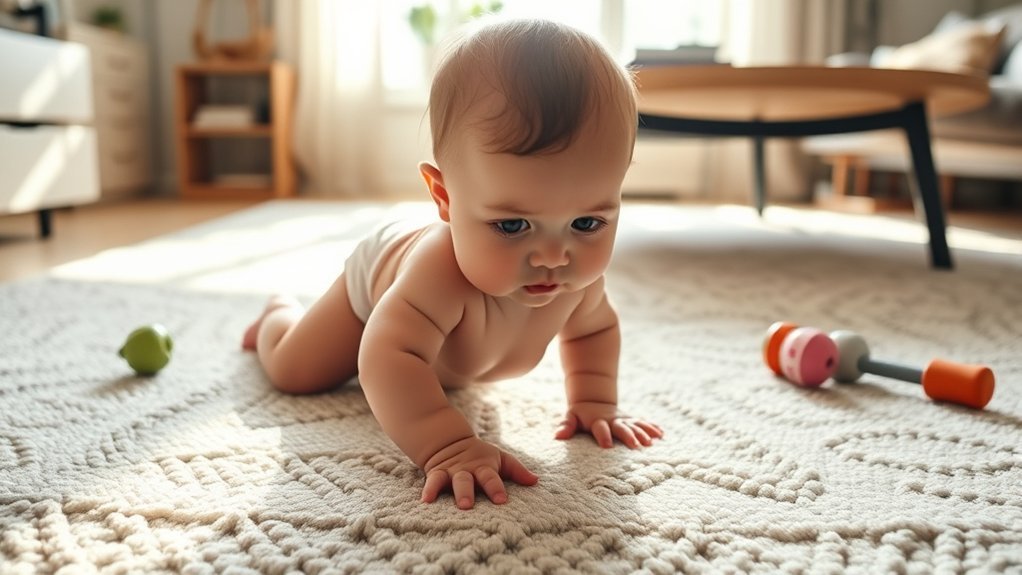
Is it true that crawling stages in babies are shaped by both genetics and the environment? Many parents wonder why their child crawls at different times than others. Understanding the interplay of these factors can illuminate why some babies excel earlier than others. This exploration is essential, as it not only highlights normal developmental variations but also helps identify potential concerns that may require attention. What insights can we uncover about your child’s crawling journey?
Understanding Crawling Milestones
Crawling milestones are essential indicators of your baby’s physical development and mobility. Typically, babies begin to crawl between six to ten months. This phase signifies improved coordination and strength, particularly in their arms and legs.
You might notice your baby starting with tummy time, which builds the necessary muscle. As they progress, they’ll likely adopt various crawling styles, such as the classic crawl, army crawl, or scoot. Each variation demonstrates your baby’s unique approach to exploration.
Monitoring these milestones helps identify any potential developmental delays. Encouraging playtime on the floor can foster crawling skills, ensuring a safe environment for your little one to thrive.
Genetic Influences on Crawling
While monitoring your baby’s crawling milestones, it’s important to contemplate the role genetics plays in their development.
Research indicates that certain genetic factors can influence when and how your baby begins to crawl. You may notice variations in crawling styles and timing among infants, often linked to inherited traits.
Consider these genetic influences:
- Family History: Early crawlers in your family may suggest a genetic predisposition.
- Motor Skills: Genetic factors can affect muscle tone and coordination.
- Growth Patterns: Height and weight, influenced by genetics, can impact crawling ability.
- Temperament: Some traits, like curiosity and persistence, can be inherited and motivate crawling.
Understanding these influences can help you appreciate your baby’s unique journey.
Environmental Factors Affecting Crawling
The environment in which your baby develops plays an essential role in shaping their crawling abilities. Factors like space, surface texture, and obstacles can either encourage or hinder movement. A safe and spacious environment allows your baby to explore, boosting their confidence and skill.
| Environmental Factor | Positive Impact | Negative Impact |
|---|---|---|
| Space | Encourages exploration | Limits movement |
| Surface Texture | Provides traction | Causes slips and falls |
| Obstacles | Promotes problem-solving | Creates frustration |
Parenting Practices and Their Impact
Effective parenting practices greatly influence your baby’s crawling development. Your engagement and encouragement can notably shape their motor skills. Here are some key practices to take into account:
- Provide ample tummy time: This strengthens your baby’s neck, back, and shoulder muscles, essential for crawling.
- Create a safe, stimulating environment: Guarantee a clear space for exploration, filled with soft toys and varied textures.
- Encourage movement: Use toys to motivate your baby to reach and crawl, fostering independence.
- Be patient and supportive: Celebrate small milestones and provide reassurance, building their confidence.
Recognizing Delays and Seeking Help
As your baby approaches the typical age for crawling, it’s important to monitor their progress closely, since delays in this developmental milestone can indicate underlying issues.
If your baby isn’t showing signs of crawling by around 10 months, it’s worth discussing with your pediatrician. Look for behaviors like pushing up on their hands, rocking back and forth, or pivoting. These indicate that they’re developing the necessary muscles and coordination.
If you notice a lack of these movements or other concerns, don’t hesitate to seek help. Early intervention can make a significant difference in your child’s development.
Frequently Asked Questions
What Are the Average Ages for Babies to Start Crawling?
Babies typically start crawling between 6 to 10 months. Each child develops at their own pace, so don’t worry if yours takes a bit longer. Encourage movement to support their crawling journey.
How Can I Encourage My Baby to Crawl?
Encouraging your baby to crawl’s like nurturing a tiny plant; it needs sunlight. Create a safe space, place toys just out of reach, and demonstrate crawling yourself. Celebrate their efforts to boost confidence and motivation.
Are There Specific Toys That Promote Crawling?
Yes, specific toys can promote crawling. Look for colorful, lightweight items that encourage reaching and grabbing. Soft mats and toys with movement features can motivate your baby to explore and strengthen their muscles effectively.
Does Crawling Affect Cognitive Development?
Crawling’s essential for cognitive development; it helps you build spatial awareness and problem-solving skills. By moving, your brain processes information better, fostering connections. Encouraging your baby to crawl supports their overall cognitive growth and exploration.
Can Diet Influence a Baby’s Crawling Ability?
Yes, diet can influence a baby’s crawling ability. Nutrient-rich foods support muscle development and coordination, helping your baby gain strength. Ensuring a balanced diet fosters overall growth, enhancing their motor skills and encouraging movement.
Conclusion
In closing, understanding your baby’s crawling journey is essential for their development. By recognizing the role of genetics and the importance of a supportive, stimulating space, you can foster their movement milestones. Staying vigilant for any signs of delay allows for timely intervention, ensuring your little one gets the support they need to succeed. Remember, a nurturing environment nurtures not just crawling but confidence and curiosity, creating a vital foundation for future physical feats and flourishing exploration.
