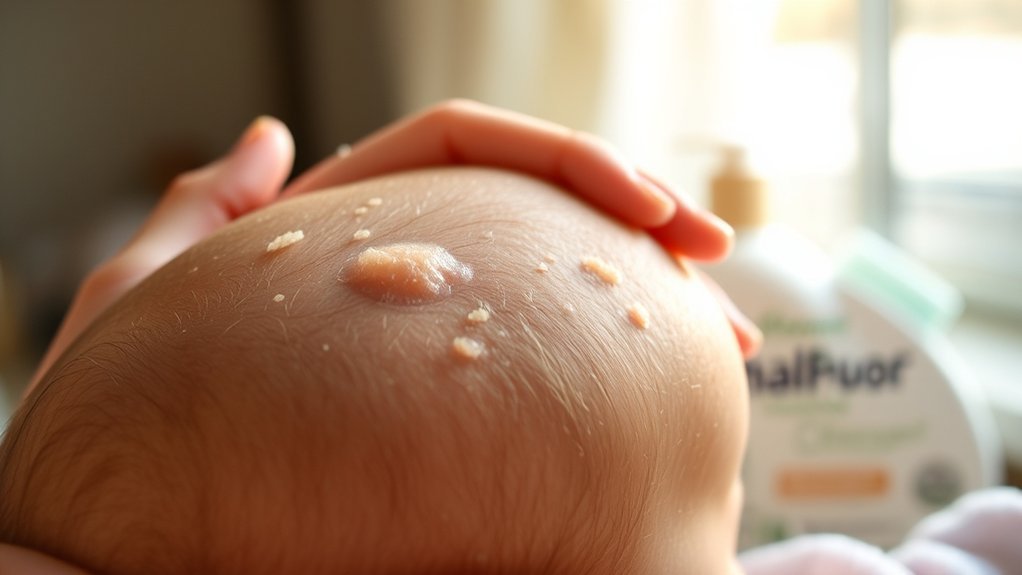
Cradle cap can be unsettling to see on your baby’s scalp for the first time. The condition is usually harmless, but knowing when to call a doctor matters for your baby’s comfort and health. Spotting the warning signs early can make a real difference in managing this common skin issue. Here’s what to watch for and how to care for your baby through it.
Quick Answer
- Cradle cap is a common, harmless skin condition in infants caused by overactive oil glands on the scalp.
- Most cases clear up on their own within a few weeks to a few months with gentle home care.
- See a doctor if patches spread, become red or inflamed, show signs of infection, or don’t improve after several weeks of home treatment.
- For stubborn cases, a pediatrician may recommend medicated shampoos or other treatments.
Understanding Cradle Cap: What Is It?
Cradle cap, medically known as seborrheic dermatitis, is a common skin condition in infants. You might notice dry, flaky patches on your baby’s scalp, often yellowish or greasy in appearance. It isn’t harmful and usually clears up on its own.
The condition results from overactive sebaceous glands, which produce excess oil and lead to a buildup of dead skin cells. It’s most common in babies under a year old, and it isn’t caused by poor hygiene or allergies. It’s a temporary phase your baby will most likely outgrow without any lasting effects.
Recognizing the Symptoms of Cradle Cap
Knowing what cradle cap looks like can help you manage it with confidence. You might notice flaky, yellowish patches on your baby’s scalp, which can vary in severity. How long the symptoms last is also worth tracking.
Typical Cradle Cap Signs
Cradle cap typically shows up as yellowish, greasy patches or crusty scales on your baby’s scalp. These areas can appear thick and vary in size. The condition usually isn’t itchy, so your baby likely won’t seem bothered. Here’s a quick reference:
| Sign | Description |
|---|---|
| Yellowish patches | Greasy and thick on the scalp |
| Crusty scales | Flaky areas that can be crusted |
| Non-itchy | Typically doesn’t cause discomfort |
| Common in infancy | Often appears in the first few months |
| Self-limiting | Usually resolves without treatment |
Severity Indicators to Note
Some signs suggest cradle cap needs a closer look. Watch for redness or swelling on the scalp, which can point to inflammation. If your baby is scratching or seems uncomfortable, that may indicate irritation beyond the usual case.
Discharge or a foul odor could signal an infection. If the cradle cap spreads beyond the scalp to the face or neck, or if thick scaling persists despite gentle washing, it’s time to call your doctor. Your baby’s comfort is the priority, so don’t wait if something feels off.
Duration of Symptoms
Tracking how long symptoms last helps you decide whether to step up care. Cradle cap may last anywhere from a few weeks to several months. If symptoms persist beyond three months or get worse, professional evaluation makes sense. This table outlines common timelines:
| Duration | Implication | Action Required |
|---|---|---|
| Less than 2 weeks | Normal variation | Monitor symptoms |
| 2-4 weeks | Common cradle cap | Gentle care recommended |
| 1-3 months | Possible need for care | Consult a doctor |
| Over 3 months | Persistent symptoms | Seek medical advice |
| Worsening symptoms | Possible infection | Immediate medical care |
Home Care Strategies for Managing Cradle Cap
A few simple steps at home can ease your baby’s symptoms and keep their scalp healthy:
- Gently wash your baby’s scalp with a mild baby shampoo to reduce oil buildup.
- Use a soft brush or cloth to loosen scales during bath time.
- Apply natural oils like coconut or olive oil to soften crusts before washing.
- Maintain a consistent bathing routine to keep the scalp clean and moisturized.
- Avoid harsh soaps or lotions that might irritate your baby’s sensitive skin.
When to Seek Medical Advice
Even with good home care, cradle cap sometimes needs medical attention. If the flaky patches are spreading, turning red, or becoming inflamed, call your pediatrician. The same goes if your baby seems itchy or fussy in a way that points to discomfort from the scalp.
Cradle cap that doesn’t improve after several weeks of home treatment deserves a professional look. Your doctor can rule out other skin conditions and point you toward the right treatment. Trust your instincts — if something doesn’t feel right, reach out.
Differentiating Cradle Cap From Other Skin Conditions
Cradle cap shares some surface-level similarities with other skin conditions, so knowing the differences helps you take the right steps. Here’s what sets it apart:
- Appearance: Cradle cap often presents as yellow, greasy patches.
- Location: It typically appears on the scalp but can also show up behind the ears or on the face.
- Itching: Cradle cap usually doesn’t cause itching, unlike eczema or allergic reactions.
- Scales: The scales are thick and crusty, which is different from the fine, dry flakes of dandruff.
- Age: Cradle cap is most common in infants, typically between 2 and 6 months old.
Treatment Options Your Doctor May Recommend
If your child’s cradle cap needs more than home care, a doctor can suggest treatments matched to their specific case. A common starting point is a mild shampoo made for infants to gently clean the scalp. Applying mineral oil or petroleum jelly beforehand can soften scales and make them easier to wash away.
For stubborn cases, a medicated shampoo with ketoconazole or selenium sulfide may be prescribed. Always follow your doctor’s guidance on how often to use these products. If the cradle cap doesn’t respond or gets worse, further evaluation may be needed. Your child’s comfort and skin health stay at the center of any treatment plan.
Preventive Measures to Reduce Cradle Cap Recurrence
A consistent scalp care routine can lower the chance of cradle cap coming back. Regular care helps manage existing symptoms and discourages new ones from forming:
- Gently wash your baby’s scalp with a mild shampoo during bath time.
- Use a soft brush or comb to gently remove flakes or scales.
- Limit heavy oils or greasy products on the scalp.
- Keep your baby’s hair dry and clean between washes.
- Watch for signs of irritation and adjust your routine as needed.
Frequently Asked Questions
Can Cradle Cap Affect Older Children or Adults?
Yes, cradle cap can affect older children and adults, though it’s less common. Symptoms like flaky patches can still be treated effectively. If the condition persists, talk to your healthcare provider.
Is Cradle Cap Contagious to Others?
No, cradle cap isn’t contagious. It’s a skin condition caused by overactive oil glands, primarily in infants. You don’t need to worry about spreading it to others.
How Long Does Cradle Cap Typically Last?
Cradle cap typically lasts a few weeks to several months. It’s common and usually resolves on its own. Regular, gentle cleansing can help speed things along.
Will Cradle Cap Cause Hair Loss in My Baby?
Cradle cap doesn’t usually cause permanent hair loss. Some temporary shedding is possible, but hair typically regrows normally as the condition clears. Keeping the scalp clean helps.
Are There Natural Remedies for Cradle Cap?
Yes. Massaging coconut oil or olive oil onto your baby’s scalp, gently brushing with a soft brush, and bathing regularly can all help loosen scales.
Conclusion
Cradle cap is usually harmless, but knowing when to get medical advice makes a real difference for your baby’s comfort and health. If the condition worsens or your baby seems distressed, don’t hesitate to contact a healthcare professional. Understanding how cradle cap differs from other skin conditions puts you in a better position to manage it effectively and feel confident doing so.
