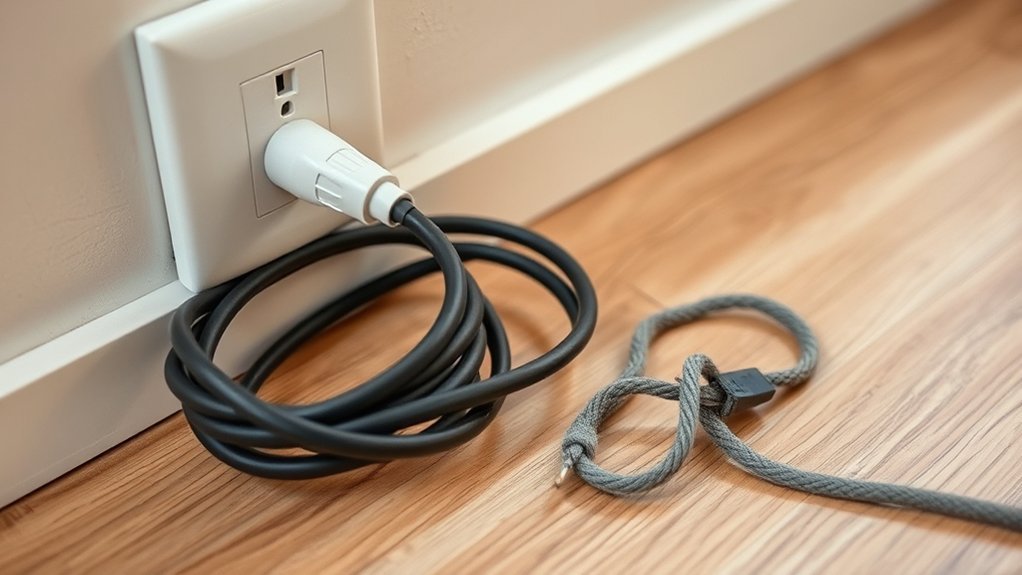
Imagine a tangled mess of cords resembling a spider’s web—one wrong move and it could lead to a shocking disaster. Cord safety is a vital aspect of home management that often gets overlooked. By understanding the do’s and don’ts, you can protect your space from hazards while ensuring efficient organization. What steps can you take to keep cords safe and manageable? Let’s explore the best practices and common pitfalls to avoid.
Understanding the Risks of Cords
When you use cords, it’s essential to understand the potential risks involved. Cord hazards are more common than you might think, and they can lead to serious electrical risks.
Frayed wires, loose connections, and damaged insulation can expose you to shock or fire hazards. Overloading outlets creates dangerous conditions that can easily escalate.
Frayed wires and overloaded outlets pose serious shock and fire hazards; stay vigilant to ensure your safety.
It’s vital to recognize that not all cords are created equal; some are more susceptible to wear and tear. Be vigilant about your environment—keep cords neat and untangled to prevent tripping or damage.
Awareness is key to protecting yourself and your surroundings. By understanding these risks, you empower yourself to take the necessary precautions and enjoy the freedom that comes with safe cord management.
Do’s for Safe Cord Management
Recognizing the risks of cords lays the foundation for effective safety practices. To guarantee safe cord management, start with cord organization. Keep cords neatly bundled and secured to prevent tangling and tripping hazards. Use cable ties or clips to maintain order and create a clean environment.
Next, don’t underestimate the power of cord labeling. Clearly label your cords to identify their purpose and prevent confusion, especially in shared spaces. This simple step not only enhances safety but also empowers you to find the right cords quickly.
Finally, regularly inspect your cords for wear and tear. By staying proactive, you can mitigate risks and foster a liberated space free from the chaos of disorganized cords.
Don’ts to Avoid With Cords
While it might be tempting to hide cords behind furniture or rugs for a tidier look, doing so can lead to serious hazards. Tucking cords away may result in cord damage and increase the risk of electrical hazards. Here are some key don’ts to keep in mind:
| Action to Avoid | Reason | Hazard Type |
|---|---|---|
| Hiding cords | Increases risk of overheating and damage | Electrical hazards |
| Overloading outlets | Can cause short circuits or fires | Fire hazards |
| Using frayed cords | Leads to potential shocks and appliance failures | Electrical hazards |
| DIY repairs on cords | Might not meet safety standards, risking your safety | Cord damage |
Stay vigilant about these don’ts, and guarantee your space remains safe and cord-friendly!
Childproofing Your Home From Cords
To guarantee your home is safe for children, it’s essential to take proactive measures against cord-related hazards.
Start by using cord covers to conceal and secure any exposed wires. These covers not only reduce the risk of entanglement but also keep cords out of reach, promoting child safety.
Using cord covers helps conceal exposed wires, minimizing entanglement risks and enhancing child safety by keeping cords out of reach.
Anchor cords behind furniture or along walls to prevent kids from pulling them down. If possible, consider using cordless devices to eliminate hazards altogether.
Regularly inspect your home for new cord risks, especially as your child grows and explores.
Pet Safety and Cord Management
When it comes to keeping your pets safe, proper cord placement is essential.
Make sure to secure cords out of reach and consider using pet-proofing techniques to minimize risks.
Safe Cord Placement
Ensuring cords are safely placed can prevent accidents, especially in homes with pets. Start by evaluating cord visibility; keep them out of your pet’s reach to avoid tripping or chewing hazards.
Use cord clips or raceways to secure longer lengths against walls, maintaining a tidy environment that minimizes entanglement. Always consider the cord length; excess slack can entice pets to play, leading to potential danger.
If you can, opt for shorter cords or strategically place furniture to conceal and support them effectively. Regularly check for wear and tear, replacing any damaged cords promptly.
Pet-Proofing Techniques
Five effective pet-proofing techniques can help you manage cords and keep your furry friends safe.
Understanding pet behavior is essential, as certain pets might chew or play with cords made from various materials.
Here’s how to secure your space:
- Use cord organizers to bundle and hide cords away from curious pets.
- Choose chew-resistant cord materials for added durability.
- Install cord covers that deter pets from accessing cords.
- Redirect pet curiosity with engaging toys or distractions nearby.
Best Practices for Organizing Cords
Although managing a jumble of cords might seem intimidating, implementing a few best practices can make it surprisingly simple.
Start by grouping cords by function, such as charging cables, audio, and video cables. Use cable ties or clips to bundle them together, reducing clutter and improving cord organization. Label each cord to easily identify them, which saves time and frustration.
Invest in cable management solutions like cord sleeves or boxes to conceal and protect them. Regularly check for frayed cords and replace damaged ones to guarantee safety.
Frequently Asked Questions
Are There Specific Cords More Prone to Hazards Than Others?
Yes, certain cord types, like those made from hazardous materials, are more prone to hazards. Always check for fraying, exposed wires, or damaged insulation to guarantee your safety and prevent potential dangers in your environment.
How Often Should I Inspect My Cords for Safety?
Just like a gardener tends to their plants, you should inspect your cords regularly—at least once a month. Consistent cord maintenance guarantees safety and prevents hazards, keeping your space as vibrant as a blooming garden.
What Are the Signs of Cord Damage I Should Look For?
Look for frayed edges and exposed wires on your cords. If you notice any wear, cracks, or unusual bulges, it’s time to replace them. Safety’s key, so don’t ignore these warning signs!
Can I Use Extension Cords Outdoors Safely?
Yes, you can use outdoor extension cords safely. Just make sure they’re rated for outdoor use, keep them dry, and avoid running them through water or excessive heat. Prioritize safety for a worry-free experience.
What Should I Do if My Pet Chews on a Cord?
If your pet’s auditioning for “Cord Chewing Champion,” step in! Remove the cord, assess for damage, and provide chew toys. Prioritize pet safety and prevent future chewing by using protective coverings and distractions.
Conclusion
By treating your cords like unruly vines, you can cultivate a safer home. Just as a gardener prunes and organizes plants to prevent chaos, you should manage your cords to avoid hazards. Remember, a tangled mass can lead to accidents, just as wild vines can choke the life out of your garden. Stay vigilant, keep cords neat, and regularly check them for wear. With these practices, you’ll create a thriving, hazard-free environment for your family.