Disclosure: As an Amazon Associate, we earn from qualifying purchases. If you click a link on this page and make a purchase, we may receive a small commission at no extra cost to you.
Choosing sunscreen for a baby or young child is not just about picking a high SPF number. You also need a formula that is gentle enough for sensitive skin, easy to apply, and reliable during water play or sweaty outdoor time. Coppertone WaterBabies Sunscreen is built around SPF 50, broad-spectrum coverage, and up to 80 minutes of water resistance. This review helps you decide where it fits well, where you still need caution, and what to check before using it on very young skin.
Quick Verdict
Rating: 8.4/10, Recommended with caveats
Best For: Parents who want an SPF 50 sunscreen for beach days, pool time, playgrounds, and active outdoor use.
Bottom Line: Coppertone WaterBabies Sunscreen is a practical choice if you want strong SPF coverage, water resistance, and a baby-focused formula. The main tradeoff is that sunscreen still needs careful application, frequent reapplication, and a label check before use on infants or very sensitive skin.
| Specification | Detail |
|---|---|
| Brand | Coppertone |
| Product name | Coppertone WaterBabies Sunscreen |
| Product type | Baby and children’s sunscreen |
| SPF | SPF 50 |
| Protection type | Broad-spectrum UVA and UVB protection |
| Water resistance | Up to 80 minutes, then reapply as directed |
| Skin-use positioning | Hypoallergenic and made for sensitive young skin |
| Formula notes | Article-supported notes include zinc oxide and no oxybenzone, octinoxate, dyes, or PABA. Always check the current Drug Facts label. |
| Best use | Beach days, pool time, stroller walks, parks, daycare bags, and family travel |
| Safety note | Use sunscreen with shade, hats, UPF clothing, and pediatric guidance for babies under 6 months. |
What Is the Coppertone WaterBabies Sunscreen?
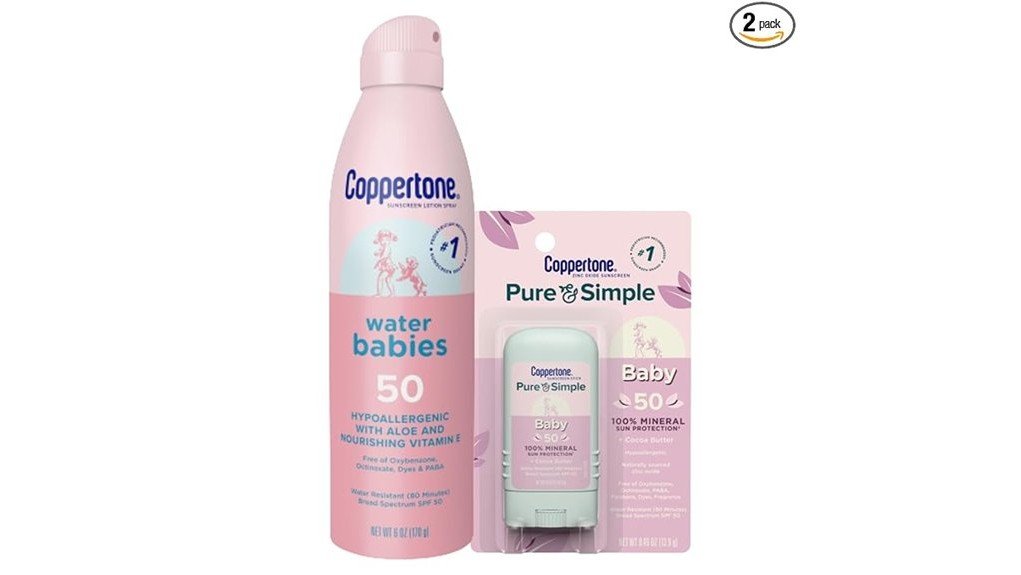
Coppertone WaterBabies Sunscreen is a children-focused sunscreen made for parents who need strong sun protection during outdoor play. The key buying points are SPF 50, broad-spectrum protection, sensitive-skin positioning, and water resistance for up to 80 minutes.
It is best viewed as one part of a full sun-safety routine. Sunscreen can protect exposed skin, but you still need shade, protective clothing, hats, sunglasses, and breaks from direct sun. For babies under 6 months, ask your pediatrician before using sunscreen broadly, and rely first on shade and protective clothing.
Before You Buy: Sunscreen formulas and labels can change. Check the current Drug Facts panel, active ingredients, age guidance, and water-resistance directions before using it on a baby, a child with eczema-prone skin, or anyone with known sunscreen sensitivities.
Who Should Buy It?
Best For
- Parents who want SPF 50 coverage for exposed skin during outdoor family activities.
- Kids who swim, splash, sweat, or play outside and need a water-resistant sunscreen.
- Families who prefer a baby-focused sunscreen described as hypoallergenic and gentle.
Skip If
- You need a sunscreen with a fully verified current ingredient panel before purchase and cannot check the listing or package label.
- Your child has reacted to sunscreen before and your pediatrician or dermatologist has recommended a different formula.
- You want sun protection that works without reapplication, because no sunscreen should be used that way.
Key Takeaways
- SPF 50 protection: The formula is designed for strong UVB protection when applied correctly and generously.
- Broad-spectrum coverage: It helps protect against both UVA and UVB rays, which matters for outdoor use.
- Water-resistant use: The 80-minute water-resistance claim makes it useful for swimming, sweating, and splash play.
- Sensitive-skin focus: The article-supported formula is described as hypoallergenic and baby-friendly.
- Reapplication still matters: You need to reapply every two hours, after 80 minutes in water, after sweating, and after towel drying.
Top Reasons to Choose Coppertone WaterBabies Sunscreen
The biggest reason to consider Coppertone WaterBabies Sunscreen is its balance of protection and everyday practicality. SPF 50 gives you a strong protection level for exposed skin, while broad-spectrum labeling matters because UVB and UVA rays affect skin in different ways.
The water-resistant claim is another key benefit. If your child is at the pool, at the beach, or running around on a hot day, a formula rated for up to 80 minutes of water resistance gives you more practical coverage than a non-water-resistant sunscreen. It still needs reapplication, but the label direction gives you a clearer schedule to follow.
The sensitive-skin positioning is helpful for parents who want a baby-focused option instead of using a general adult sunscreen. The formula is described as hypoallergenic and free from certain ingredients parents often check for, including oxybenzone, octinoxate, dyes, and PABA. Because labels can change, always confirm those details on the current bottle before use.
What You Need to Know About SPF and Broad Spectrum
SPF tells you how well a sunscreen protects against sunburn-causing UVB rays when used correctly. SPF 50 is a strong level for kids, but it does not mean you can apply once and stay outside all day. Under-applying sunscreen is one of the most common reasons people get less protection than the label suggests.
Broad-spectrum protection is just as important as the SPF number. It means the sunscreen is designed to protect against both UVA and UVB rays. For a baby or child, that matters because their skin needs careful protection during outdoor time.
Water resistance also has a time limit. Coppertone WaterBabies Sunscreen is positioned for up to 80 minutes of water resistance, so you should reapply after that window, after towel drying, or sooner if the product label tells you to.
Applying and Reapplying for Best Results
Good sunscreen performance starts with even coverage. Apply enough sunscreen to cover all exposed skin, including ears, the back of the neck, tops of the feet, backs of the hands, and any scalp areas not covered by hair or a hat. For children, those small missed areas are often where sunburn shows up first.
Apply sunscreen before outdoor exposure when the label directs you to do so. Reapply at least every two hours during continued outdoor time. If your child swims, sweats heavily, or gets towel dried, reapply again according to the water-resistance directions.
Do not rely on sunscreen alone. Pair it with shade, a wide-brim hat, sunglasses, lightweight protective clothing, and breaks away from peak sun. This is especially important for babies and toddlers, who may not tell you when they are getting too hot or uncomfortable.
Pro Tip: Put sunscreen on before leaving the house, then pack it where you can reach it quickly. Reapply after swimming, towel drying, or about every two hours, even if the day feels cloudy.
Skin Safety and Formula Notes
Coppertone WaterBabies Sunscreen is presented as a baby-focused formula for sensitive skin. The article-supported ingredient notes include zinc oxide and a formula free from oxybenzone, octinoxate, dyes, and PABA. Those details are useful, but you should still check the current label because sunscreen formulas can change by seller, package, or product version.
If your child has eczema-prone skin, allergies, or a history of rashes from sunscreen, test carefully and ask a pediatrician or dermatologist for guidance. A sunscreen can be gentle and still not work for every child. Stop using it if irritation appears and seek professional advice when needed.
For newborns and very young babies, the safest first step is usually shade, light protective clothing, and avoiding direct sun during the hottest parts of the day. Use sunscreen on infants under 6 months only with medical guidance or when shade and clothing are not enough for small exposed areas.
How It Performs in Real Use
For Pool and Splash Pad Days
The 80-minute water-resistance claim is the main advantage for pool use. It gives you a clear reapplication window, but it does not make the sunscreen waterproof. Reapply after swimming, towel drying, and long play sessions.
For Beach and Park Use
SPF 50 and broad-spectrum coverage make this sunscreen a practical choice for exposed skin at the beach, playground, or park. Sand, water, pavement, and light-colored surfaces can reflect sunlight, so sunscreen should work with hats and shade, not replace them.
For Travel and Daycare Bags
This type of sunscreen is useful to keep in a diaper bag, stroller organizer, swim bag, or grandparent bag. Before sending it to daycare, write your child’s name on the bottle and confirm the center’s sunscreen policy.
For Sensitive Skin
The hypoallergenic positioning is helpful, but sensitive skin still needs caution. Apply a small amount first if your child has reacted to skincare products before. Watch for redness, stinging, bumps, or rubbing after application.
How to Use It Correctly
Start with clean, dry skin when possible. Apply the sunscreen in a visible layer, then rub it in evenly until all exposed areas are covered. Do not forget the edges of clothing, because sleeves, swimsuit straps, and diaper lines can shift during play.
For face application, place sunscreen in your hand first, then apply it carefully around the cheeks, nose, forehead, and ears. Avoid getting it in the eyes. If your child rubs their face often, use a hat and shade to reduce how much sunscreen has to do on its own.
For water use, reapply after the labeled water-resistance period and after drying with a towel. A towel can remove sunscreen even when the child has not been in the water for the full 80 minutes.
Pros and Cons
Pros
- SPF 50 gives strong sunburn protection when applied generously and correctly.
- Broad-spectrum coverage helps protect against both UVA and UVB rays.
- Up to 80 minutes of water resistance works well for swimming and sweaty play.
- Baby-focused, hypoallergenic positioning is useful for sensitive young skin.
- Free-from notes include no oxybenzone, octinoxate, dyes, or PABA, based on article-supported claims.
Cons
- You must check the current label because sunscreen ingredients and packaging can change.
- It still needs frequent reapplication, especially after water, sweat, and towel drying.
- It may not be the right choice for every child with very reactive or medically sensitive skin.
Is It Worth the Price?
Coppertone WaterBabies Sunscreen is worth considering if you want a familiar baby sunscreen with SPF 50, broad-spectrum coverage, and water resistance. It fits the everyday family-use category rather than a specialty premium sunscreen.
You get the most value from it if your child spends time at pools, beaches, parks, splash pads, or outdoor family events. The main limitation is that value depends on correct use. If you apply too little or forget to reapply, the product cannot perform as intended.
How It Compares to Alternatives
If you want a thicker mineral-style baby sunscreen, Thinkbaby SPF 50 is worth comparing. If your child has eczema-prone or very sensitive skin, Aveeno Baby Continuous Protection and Blue Lizard Baby Mineral Sunscreen are also common alternatives parents compare in this category.
Coppertone WaterBabies Sunscreen makes the most sense if you want a familiar brand, SPF 50 protection, and up to 80 minutes of water resistance for active outdoor use. If your main priority is a fully mineral-only formula or a dermatologist-recommended option for a known skin condition, compare ingredient labels carefully before choosing.
Frequently Asked Questions
Is Coppertone WaterBabies Sunscreen safe for newborns?
For babies under 6 months, ask your pediatrician before using sunscreen broadly. Shade, protective clothing, and avoiding direct sun should come first for newborns and very young infants.
Can you use it on sensitive skin?
The formula is described as hypoallergenic and made for sensitive young skin. If your child has eczema, allergies, or past sunscreen reactions, check the label and ask a pediatrician or dermatologist before regular use.
How often should you reapply it?
Reapply at least every two hours during outdoor use. Also reapply after swimming, sweating, towel drying, or after the 80-minute water-resistance window.
Is it good for swimming pools and ocean use?
Yes, the 80-minute water-resistance claim makes it practical for pools, splash pads, and beach use. It is not waterproof, so you still need to reapply after water exposure and towel drying.
Does SPF 50 mean you can stay outside longer?
No. SPF 50 gives strong protection only when you apply enough and reapply correctly. It should not be used as a reason to extend a baby’s or child’s time in direct sun.
What is the best way to store the sunscreen?
Store it in a cool, dry place away from direct heat and sunlight. Do not leave it in a hot car for long periods, and replace it if the texture, smell, or expiration date suggests it is no longer usable.
Who should skip Coppertone WaterBabies Sunscreen?
Skip it if your child’s doctor has recommended a different sunscreen type or if you cannot confirm the current ingredient label. You may also want another option if you need a specific mineral-only, fragrance-free, or eczema-focused formula.
The Bottom Line
Coppertone WaterBabies Sunscreen is a strong everyday option for families who want SPF 50, broad-spectrum protection, and up to 80 minutes of water resistance for outdoor play. It is best for parents who will apply it carefully and reapply on schedule, but it is not a substitute for shade, hats, protective clothing, or pediatric advice for very young babies.