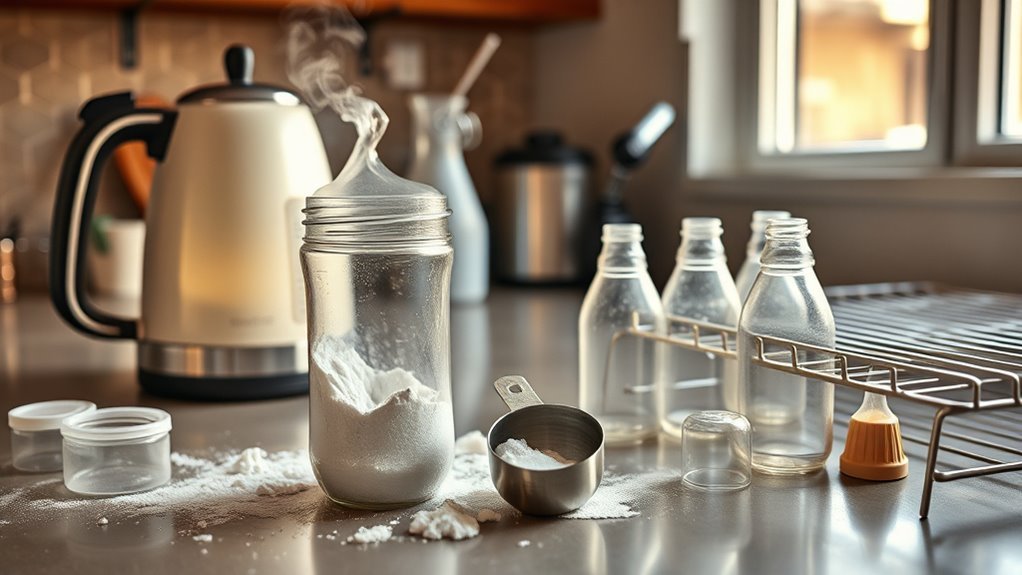
You can avoid common baby bottle prep mistakes by washing your hands well, using a clean surface, and sterilizing bottles and nipples after each use. Mix formula exactly as directed, using the correct scoop and safe water temperature, then swirl gently instead of shaking. Warm bottles without microwaving, and test the temperature on your wrist. Store prepared formula safely, discard leftovers after two hours, and keep the nipple full to reduce air intake. More tips can help.
Inadequate Hand Hygiene
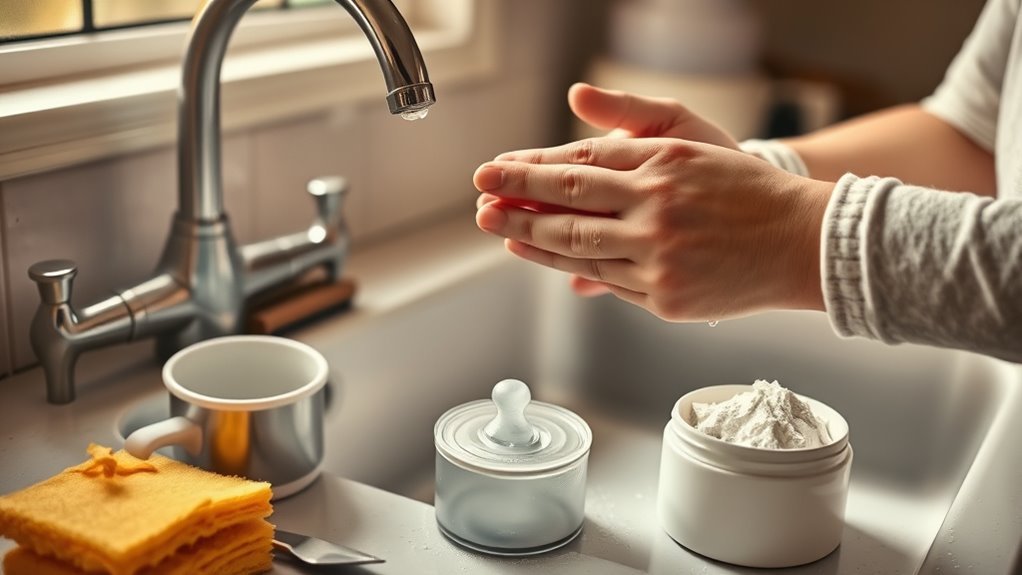
Before you prepare baby formula, wash your hands with soap for at least 20 seconds to help prevent contamination and protect your baby’s health. Strong hand hygiene is a simple, effective step before feeding your baby.
Wash your hands with soap for at least 20 seconds before preparing baby formula to help protect your baby’s health.
Scrub every surface of your hands, including between fingers and under nails, then rinse well. Dry with a clean towel or let your hands air dry, because damp skin can pick up germs again.
Keep your hands away from your face and hair while you work, since touch can transfer bacteria back to clean skin. Use a clean preparation surface so you don’t reintroduce germs to the bottle or baby formula.
These habits support safety without adding burden or ritual. When you practice them consistently, you reduce contamination risk and protect a vulnerable infant with calm, deliberate care.
Sterilize Baby Bottles and Gear
You should sterilize baby bottles and gear after every use to reduce harmful bacteria and protect your baby’s still-developing immune system.
First, clean all bottle parts thoroughly, then sterilize them with boiling water or a sterilizer so every surface and crevice is sanitized.
After that, let the items air dry on a clean surface to help prevent contamination.
Sterilize After Every Use
Sterilizing baby bottles and feeding gear after every use helps eliminate harmful bacteria and lower the risk of infection in infants.
When you sterilize baby items, you protect your baby’s health and avoid common mistakes that can undo your feeding tips. Use boiling water, a steam sterilizer, or your dishwasher’s sterilization cycle to kill germs reliably.
Because newborns and young infants have underdeveloped immune systems, you can’t rely on quick rinsing alone. Keep sterilizing until your baby’s at least 12 months old, when immunity is stronger.
Inspect bottles and nipples regularly, and replace any worn or damaged parts so you maintain safe, independent feeding routines.
Consistent sterilization gives you control, reduces worry, and supports a cleaner feeding environment every day.
Clean Bottles Thoroughly
| Step | Action |
|---|---|
| Clean | Wash all parts well |
| Sterilize | Boil or steam |
| Check | Inspect bottles and nipples |
Inspect bottles and nipples for scratches, cracks, or wear; replace them every three to six months. Dry every component fully, including caps, to prevent moisture and mold. You deserve safe, simple feeding routines.
Mix Formula the Right Way
Mix formula according to the manufacturer’s instructions so your baby gets the correct nutrient balance and you avoid over- or under-dilution.
When you mix formula, use the exact scoop size and level it with a clean edge. This helps keep every bottle consistent and supports safe common feeding.
Check the expiration date before you open the can, and discard any product that’s out of date.
Check the expiration date before opening the can, and discard any formula that’s out of date.
Prepare the powder with water heated to at least 70°C, then measure carefully into baby bottles. That step protects your baby from bacteria that can be present in powdered formula.
At feeding time, gently swirl the bottle instead of shaking it hard; this limits air bubbles and may reduce colic.
You’re not following rigid rules for their own sake—you’re protecting your baby’s nutrition and comfort while keeping feeding simple, safe, and steady.
Warm Formula Safely
When you warm formula, avoid using a microwave, since it can heat unevenly and create hot spots that may burn your baby’s mouth.
For safe bottle feeding, place the bottle in a bowl of warm water or use a bottle warmer, and let the formula reach body temperature, about 37°C.
If you need to warm formula quickly, run hot water over the bottle for a minute or two so the heat spreads evenly.
Before you feed, test a few drops on your wrist; it should feel lukewarm, not hot. This simple check is important to make feeding safer and calmer for you and your baby.
If you’ve already warmed the bottle and your baby doesn’t finish it, don’t save the leftover milk for later; discard it after two hours.
These steps help you keep control, reduce risk, and support feeding with confidence.
Store Milk and Discard Leftovers
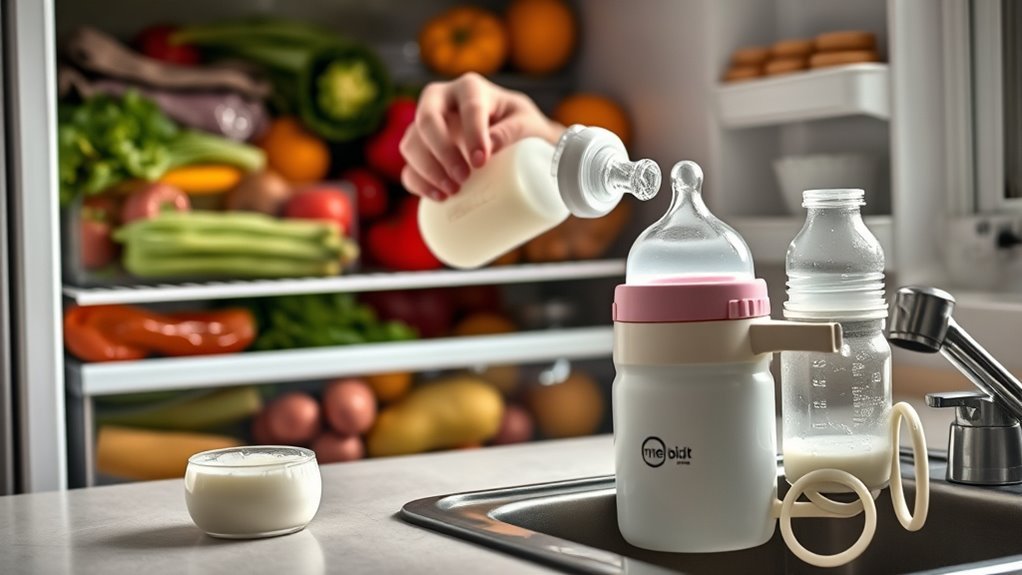
You should refrigerate any prepared formula you won’t use right away and use it within 24 hours, while bottled milk left at room temperature for more than two hours should be discarded.
If you thaw breast milk, use it within 24 hours and don’t refreeze it. After a feeding, throw away any leftover milk, and label stored containers clearly so you can track safe expiration times.
Safe Milk Storage Times
Once milk or formula is prepared, timing matters: keep bottled formula and liquid milk at room temperature for no more than 2 hours, while breast milk can stay out for up to 4 hours.
You protect your baby’s safety by watching storage limits closely and using each bottle on schedule. Once you refrigerate prepared formula, use it within 24 hours; keep breast milk in the fridge for up to 5 days.
If you thaw breast milk, don’t refreeze it, and use it within 24 hours. Check every formula expiration date before you mix a bottle.
These simple storage rules help you stay organized, reduce waste, and keep milk handling safe and calm.
Discard Leftover Formula
Safe timing matters not only before feeding but after it, too. You should discard leftover formula after each feeding, even if your baby drank only a little.
Once milk or formula has been offered, bacteria can multiply quickly, especially if it sits at room temperature for more than two hours. Prepared formula may stay refrigerated for up to 24 hours, but don’t save anything left in the bottle.
Breast milk can remain at room temperature for four hours, yet any uneaten milk should still be thrown away. Don’t store previously offered powdered or liquid formula for later use.
Check the package guidelines every time, because they tell you how to handle milk or formula safely and avoid contamination. This simple step protects your baby and supports your freedom from worry.
Avoid Bottle-Feeding Mistakes
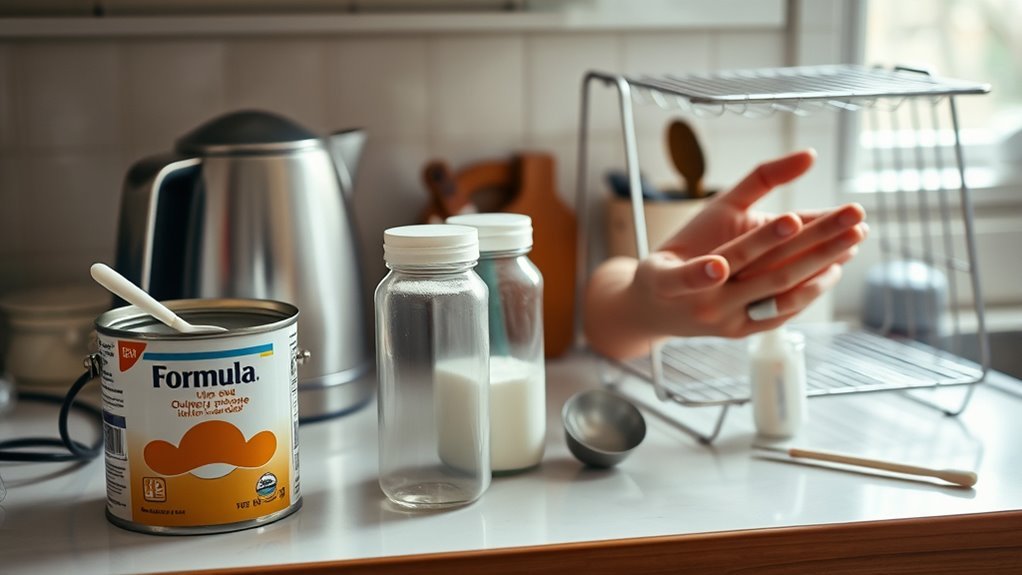
Avoid common bottle-feeding mistakes by following a few basic safety steps every time you prepare a feed.
Wash your hands first, because germs on your skin can reach your baby.
Sterilize bottles, nipples, and containers, especially for newborns, so you reduce harmful bacteria before you make bottle feeds.
Measure Formula exactly as directed; too much or too little powder can upset nutrition and encourage overfeeding.
To avoid air, don’t shake hard—swirl gently until the mix is smooth.
Check storage limits closely: if milk sits at room temperature for two hours, discard it.
These mistakes to avoid are simple to correct, and they give you more control over feeding with confidence.
When you handle each step carefully, you protect your baby’s health and support safe, consistent nourishment without unnecessary stress or guesswork.
Fix Common Feeding Comfort Issues
Keeping the preparation steps right also helps the feed feel comfortable for your baby. Sterilize bottles and nipples before every use so you’re not introducing bacteria.
Warm milk to about body temperature, around 37°C, so you avoid burns and support feeding comfort. Choose the right nipple size for your baby’s age: slow-flow for younger infants and medium-flow for older ones. The correct nipple size helps control milk flow and reduces choking.
Hold your baby in a semi-upright position to support digestion and lower the risk of gas, ear infections, and choking. During the feed, keep the bottle tilted just enough to keep the nipple filled with milk, and adjust the angle as needed to limit air intake. This simple check can ease colic and discomfort.
If your baby tenses, pauses, or swallows hard, slow down and reassess the setup. You’re allowed to make feeding work for both of you.
Frequently Asked Questions
What Is the 3 6 9 Rule for Babies?
The 3 6 9 rule guides you to offer solids around 3, 6, and 9 months, matching feeding schedules, formula types, nipple flow, and sterilization methods to your baby’s readiness, growth, and motor skills.
What Are the Mistakes for Bottle Feeding?
You can avoid bottle-feeding mistakes by improving bottle cleaning, following formula preparation directions, using safe feeding positions, and doing temperature checks. Don’t skip handwashing, sterilizing, storage limits, or microwaving; they can harm your baby.
Do New Parents Make Mistakes?
Yes, you can make mistakes, but you can correct them. Like Odysseus steering home, you should practice nipple selection, temperature checks, formula mixing, and cleaning techniques carefully; you’ll protect your baby and gain confidence.
What Is the 4 4 4 Rule for Breastfeeding?
The 4-4-4 rule means you nurse for 4 minutes per breast, aiming for 12 minutes total. You’ll support breastfeeding benefits, improve latch techniques, guide feeding schedules, and use shifting tips to maintain supply.
Conclusion
By washing your hands, sterilizing bottles, mixing formula точно? Actually, let’s provide English. By washing your hands, sterilizing bottles, mixing formula correctly, warming milk safely, and storing leftovers properly, you reduce risks and protect your baby. You can also avoid feeding fumbles by checking nipple flow and comfort often. These simple steps help you feed with confidence, calm, and care. Stay consistent, stay careful, and you’ll support safer, smoother, healthier feeds every time.
