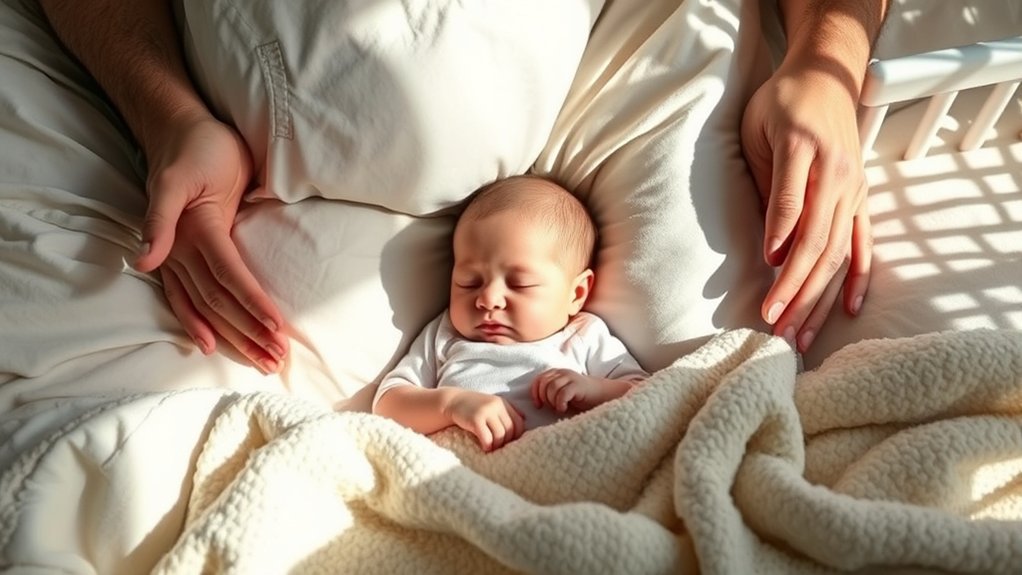
Co-Sleeping Risks and Safer Sleep Options for Your Baby
Co-sleeping can feel comforting when your baby wakes often at night, but shared sleep surfaces can create real safety risks. Accidental suffocation, overheating, falls, and trapped bedding can put your baby in danger. This guide explains the main risks, the factors that raise those risks, and safer ways to keep your baby close during sleep.
What’s in This Article
- Understanding Co-Sleeping: What It Is and Why Parents Choose It
- Identifying the Risks of Co-Sleeping
- Factors That Increase Co-Sleeping Risks
- Safer Sleep Practices to Consider
- Alternatives to Co-Sleeping for Better Sleep
- Making Informed Decisions About Your Family’s Sleep Arrangements
- Frequently Asked Questions
Quick Answer
Co-sleeping means your baby sleeps near you, but bed-sharing can raise the risk of suffocation, falls, overheating, and sleep-related infant death. The safer choice for babies is room-sharing on a separate, firm, flat sleep surface. You can keep your baby close in a crib, bassinet, or bedside sleeper without sharing the same mattress.
Key Takeaways
- Keep your baby on a firm, flat, separate sleep surface for every sleep.
- Place your baby on their back to reduce sleep-related risks.
- Avoid soft bedding, pillows, loose blankets, and toys in your baby’s sleep space.
- Never share a sleep surface after alcohol, drugs, smoking, or extreme tiredness.
- Choose room-sharing instead of bed-sharing when you want closeness at night.
Understanding Co-Sleeping: What It Is and Why Parents Choose It
Co-sleeping means your baby sleeps close to you. Some parents use the term for bed-sharing, while others use it for room-sharing in a separate crib or bassinet.
You may choose closeness because it can make night feeds easier. It can also help you respond faster when your baby cries or needs comfort.
Many families also connect co-sleeping with culture, bonding, and family routines. Those reasons matter, but sleep safety should guide every choice.
Note: Room-sharing means your baby sleeps near your bed, while bed-sharing means your baby sleeps on the same surface.
Identifying the Risks of Co-Sleeping
Many parents find comfort in co-sleeping, but bed-sharing can increase serious risks for babies. The biggest concerns include accidental suffocation, entrapment, falls, and injury.
Soft mattresses, pillows, loose blankets, and adult bedding can block your baby’s airway. A baby can also become trapped between a mattress, wall, headboard, or another person.
Overheating can also raise concern during infant sleep. Keep your baby lightly dressed and avoid heavy bedding near their sleep area.
Co-sleeping may also affect how your baby learns to settle. Some babies need more time and support before they feel secure sleeping in their own space.
Factors That Increase Co-Sleeping Risks
Some situations make shared sleep more risky. Review your sleep setup before you bring your baby into any adult bed.
These factors can raise the chance of harm:
- Alcohol, drugs, or sedating medicine: These can slow your response to your baby.
- Smoking or smoke exposure: Smoke can raise sleep-related health risks for babies.
- Soft sleep surfaces: Sofas, recliners, cushions, and soft mattresses increase suffocation risk.
- Premature birth or low birth weight: Smaller babies may face higher sleep-related risks.
- Loose bedding: Pillows, comforters, quilts, and stuffed toys can block breathing.
- Overheating: Heavy clothes, hats indoors, or too many layers can warm your baby too much.
- Other people or pets in bed: Partners, siblings, and pets can roll or shift during sleep.
Warning: Never sleep with your baby on a sofa, recliner, armchair, or cushioned chair.
Safer Sleep Practices to Consider
The safest way to keep your baby close is to place them in a separate sleep space near your bed. Use a crib, bassinet, or bedside sleeper with a firm, flat mattress.
Place your baby on their back for every sleep. Keep the sleep area free from pillows, blankets, bumper pads, toys, and loose fabric.
Keep your baby’s head and face uncovered. Dress your baby in light sleep clothing instead of using loose blankets.
Avoid bed-sharing if anyone in the bed smokes, drank alcohol, used drugs, took sedating medicine, or feels extremely tired. You should also avoid bed-sharing with other children or pets nearby.
Check that your baby’s sleep surface has no gaps near the wall, bed frame, or furniture. Gaps can trap your baby and make movement unsafe.
Alternatives to Co-Sleeping for Better Sleep
You can stay close to your baby without sharing the same mattress. A separate sleep space can protect your baby and still support feeding, comfort, and bonding.
Consider these safer options:
- Crib near your bed: This gives your baby a firm, separate sleep space within reach.
- Bassinet: This works well for many newborns during the early months.
- Bedside sleeper: This keeps your baby close while giving them their own surface.
- Portable play yard: This can help during travel or naps away from the nursery.
- Baby monitor: This helps you hear or see your baby when they sleep nearby or in another room.
- Steady bedtime routine: This helps your baby learn sleep cues over time.
Choose a product that follows current safety rules and fits your baby’s age, weight, and stage. Stop using any sleep space once your baby outgrows its listed limits.
Making Informed Decisions About Your Family’s Sleep Arrangements
Your family’s sleep arrangements should balance closeness, rest, and safety. Start with your baby’s needs, then adjust your routine in ways that reduce risk.
Talk with your partner or caregiver before sleep problems build. A shared plan can help you respond calmly during night wakings.
Safety Considerations for Co-Sleeping
Safety should guide each choice you make about co-sleeping. Use the safest setup you can manage every night and during naps.
Keep these points in mind:
- Use a firm, flat, separate mattress for your baby.
- Keep pillows, toys, quilts, and blankets away from your baby.
- Place your baby on their back for every sleep.
- Avoid shared sleep after alcohol, drugs, sedating medicine, or smoking.
- Check for gaps where your baby could become trapped.
Alternatives to Co-Sleeping
A crib or bassinet near your bed can make nighttime care easier. This setup lets you feed and comfort your baby while protecting their sleep space.
You can also use room-sharing when your baby needs close support. Your child sleeps in their own space but stays close enough for quick care.
A steady bedtime routine can also help. Use simple cues, such as feeding, a clean diaper, dim lights, and a short lullaby.
Guidelines for Family Sleep
Healthy family sleep depends on habits you can repeat. Keep your plan simple, safe, and realistic for tired nights.
These guidelines can help:
- Choose a firm mattress and avoid soft bedding.
- Keep your baby’s sleep area free from smoke and loose items.
- Use light sleep clothing instead of loose blankets.
- Build a calm bedtime routine your baby can learn.
- Protect your own sleep when possible, since fatigue affects caregiving.
When to Talk to a Doctor About Sleep Safety
Ask your child’s doctor for sleep guidance if your baby was born early, had a low birth weight, or has breathing concerns. You should also ask for advice if your baby has reflux, feeding issues, or a medical device.
A doctor can help you choose a safe plan that fits your baby’s health. Bring up your real sleep routine, even if it feels imperfect.
Frequently Asked Questions
What Age Is Appropriate for Transitioning Out of Co-Sleeping?
You can start moving your child toward independent sleep when the change feels safe and realistic for your family. Many toddlers handle this better when they have a steady routine, comfort object, and clear bedtime steps.
How Can I Gently Encourage My Child to Sleep Alone?
Start with a calm bedtime routine and repeat it each night. Stay nearby at first, then slowly reduce your support as your child gains confidence.
Are There Cultural Differences in Co-Sleeping Practices?
Yes, many cultures view close sleep as normal and comforting. You can respect your family’s values while still choosing the safest sleep surface for your baby.
What Are the Signs My Child Is Ready for Independent Sleep?
Your child may show readiness when they follow bedtime steps, self-soothe for short periods, and feel curious about their own sleep space. A calm response to small changes can also show growing independence.
How Can I Address My Partner’s Concerns About Co-Sleeping?
Listen first and name the concerns clearly. Then agree on safety rules, such as using a separate crib or bassinet near the bed instead of sharing the same mattress.
Medical Disclaimer: This article is for informational purposes only and does not constitute professional medical advice. Always consult a qualified doctor before making decisions based on this information.
Conclusion
Your safest sleep choice keeps your baby close, but on a separate firm and flat surface. Co-sleeping may feel natural, yet bed-sharing can increase risks when the setup includes soft bedding, alcohol, smoking, fatigue, or gaps.
Choose a crib, bassinet, or bedside sleeper when you want closeness at night. Review your sleep plan with your child’s doctor if your baby has any health risk or special need.
A safe, steady routine can help your baby rest while giving you more peace of mind.