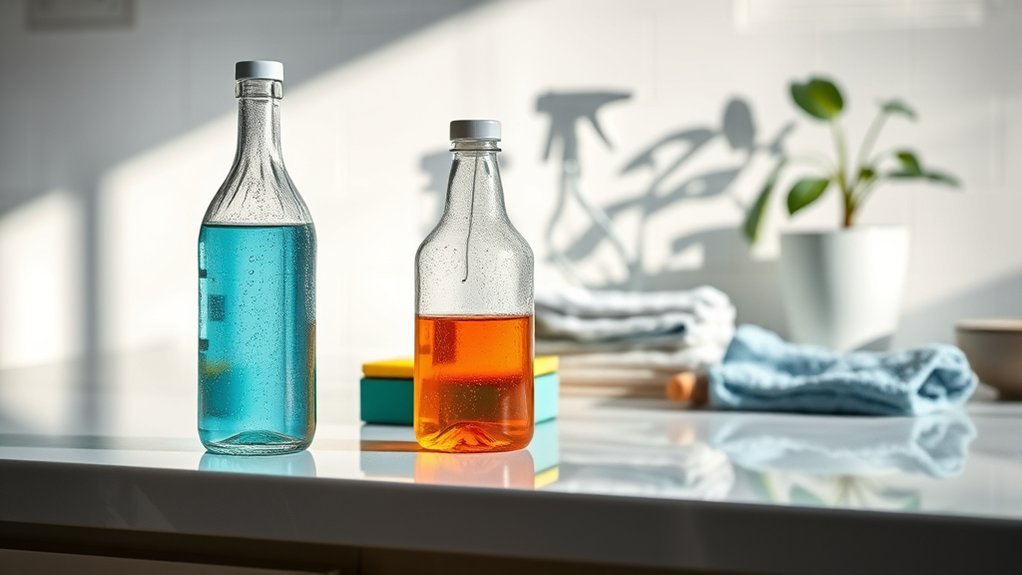
When it comes to cleaning bottles, prevention is key for avoiding stubborn stains and odors. Establishing a routine tailored to how often you use each bottle can save you time and effort in the long run. It’s crucial to contemplate the materials and components of your bottles, as different types may require specific cleaning methods. Are you aware of the best practices that can enhance your cleaning routine and guarantee your bottles remain fresh?
Choosing the Right Cleaning Materials
When it comes to cleaning bottles, selecting the right materials is crucial for effective results. The type of bottle materials you encounter, such as glass, plastic, or stainless steel, often dictates the cleaning tools you should use.
For instance, glass bottles can handle abrasive scrubbers, while softer plastic requires gentler sponges to avoid scratches.
Using specialized cleaning tools like bottle brushes can help you reach the nooks and crannies that standard sponges can’t. Additionally, consider using eco-friendly cleaning solutions to guarantee safety for both you and the environment.
Inspect your bottles regularly to determine if any specific cleaning materials or tools are needed for stubborn stains or odors. Choosing wisely will enhance the longevity and cleanliness of your bottles effectively.
Establishing a Regular Cleaning Routine
To guarantee your bottles remain free from bacteria and odors, establishing a regular cleaning routine is essential. Set a cleaning frequency that aligns with your usage; for example, daily for sports bottles and weekly for less frequently used containers. Use routine reminders like phone alerts or calendar entries to keep you accountable.
| Day | Bottle Type | Cleaning Action |
|---|---|---|
| Monday | Sports Bottle | Wash with soap and water |
| Wednesday | Travel Mug | Disassemble and clean |
| Friday | Water Bottle | Soak in vinegar solution |
| Sunday | Juice Container | Rinse and air dry |
| Every Month | All Bottles | Deep clean and inspect |
Following this simple structure helps maintain hygiene and prolongs the life of your bottles.
Tips for Cleaning Different Types of Bottles
Maintaining a consistent cleaning routine sets the foundation for effective bottle care, but different types of bottles require specific cleaning methods to assure ideal hygiene.
For baby bottles, make sure you disassemble all parts and wash them in hot, soapy water or use a dishwasher on a sterilizing cycle. Pay special attention to nipples, as they can harbor bacteria. Rinse thoroughly to eliminate any soap residue.
When it comes to sports bottles, focus on the nozzle and internal parts, which can trap moisture and mold. A bottle brush works best for deep cleaning. Consider using a mixture of water and vinegar for stubborn odors.
Always air dry your bottles upside down to prevent water buildup, making certain they remain clean and safe for use.
Using Natural Cleaning Solutions
While many commercial cleaners are effective, using natural cleaning solutions can be a safer and eco-friendly alternative for maintaining bottle hygiene.
Here are four effective methods you can use:
- Vinegar Solution: Mix equal parts of water and white vinegar. This solution effectively breaks down stains and eliminates odors.
- Baking Soda Paste: Combine baking soda with a small amount of water to create a paste. Apply it to stubborn stains and scrub gently.
- Lemon Juice: The natural acidity in lemon juice helps to disinfect and freshen bottles, making it a great addition to your cleaning routine.
- Salt Scrub: For tough grime, sprinkle coarse salt inside the bottle and scrub with a brush. It acts as a natural abrasive without damaging surfaces.
These solutions are simple, effective, and environmentally friendly.
Storing Bottles Properly After Cleaning
Once you’ve thoroughly cleaned your bottles, storing them properly is essential to prevent contamination and guarantee they stay fresh for future use.
Start by making sure your bottles are completely dry before storage; moisture can lead to mold and bacteria growth.
Organize your bottles in a way that minimizes contact, using storage containers to keep them upright and separated. This not only enhances bottle organization but also makes it easier to access them when needed.
Consider labeling your storage containers to quickly identify contents and avoid confusion.
By implementing these strategies, you’ll maintain the integrity of your bottles and make certain they remain in ideal condition for your next use.
Proper storage is a key step in your cleaning process.
Frequently Asked Questions
How Often Should I Replace My Cleaning Materials for Bottles?
You should replace your cleaning materials every three to six months, depending on usage. Regular cleaning frequency helps maintain hygiene, while following replacement guidelines guarantees effectiveness, preventing any buildup of bacteria or residues in your bottles.
Can I Use Bleach to Clean My Bottles?
You can use bleach to clean your bottles, but make certain the bleach concentration is appropriate for the materials. High concentrations can damage plastic, while glass withstands it better. Always rinse thoroughly to avoid residue.
Are There Specific Bottles That Require Special Cleaning Methods?
Yes, certain bottles made from special materials like stainless steel or glass require specific cleaning techniques. Use gentle, non-abrasive cleaners and avoid harsh chemicals to maintain their integrity and prevent damage during cleaning.
What Should I Do if My Bottle Develops a Persistent Odor?
If your bottle develops a persistent odor, try using vinegar or baking soda for effective odor removal techniques. Soak the bottle overnight and rinse thoroughly. Explore persistent smell solutions to eliminate any lingering scents efficiently.
Can I Clean My Bottles in a Dishwasher?
Yes, you can clean your bottles in a dishwasher, like putting dishes into a protective cocoon. Just verify the bottle materials are dishwasher safe, as some plastics may warp or degrade under high temperatures.
Conclusion
Incorporating a consistent cleaning routine and using the right materials can keep your bottles fresh and free from stubborn stains and odors. Remember, prevention is better than cure; a little effort now can save you from a lot of hassle later. By embracing natural solutions and storing your bottles properly, you’re not just maintaining cleanliness but also safeguarding your health. So, take the bull by the horns, and make bottle cleaning a priority in your daily life.
