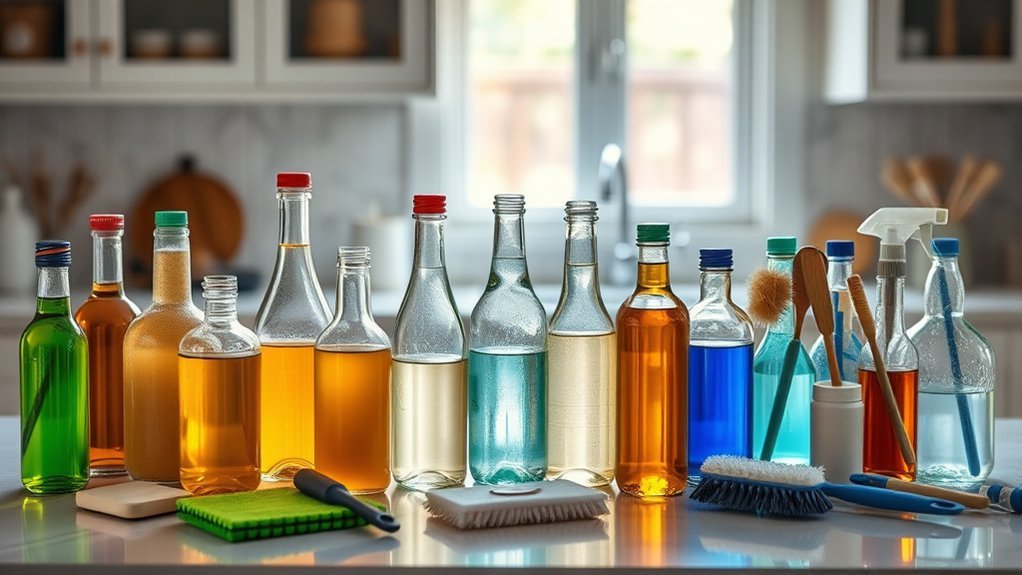
When it comes to cleaning bottles, you might think bleach is your only option, but that’s a common myth. Many alternatives can effectively sanitize your bottles without harsh chemicals. Plus, relying solely on hot water isn’t enough to eliminate all germs. Understanding these misconceptions is key to ensuring your bottles are truly clean and safe. So, what practices should you adopt for ideal hygiene? Let’s explore the facts behind these cleaning strategies.
The Bleach Debate: Is It Necessary for Cleaning Bottles?
When it comes to cleaning bottles, how essential is bleach really? While bleach is effective in killing germs, it also raises safety concerns. You might want to take into account bleach alternatives, like vinegar or hydrogen peroxide. These options effectively sanitize without the harsh chemicals found in bleach.
Vinegar’s acidity can eliminate bacteria while being safe for both you and the environment. Hydrogen peroxide is another great choice, breaking down into harmless water and oxygen after use.
When cleaning bottles, you should weigh the pros and cons of each method. If you opt for bleach, make sure you follow safety guidelines to prevent harmful exposure. Ultimately, you can achieve clean bottles without resorting to bleach, proving that alternatives can be just as effective.
Hot Water and Soap: Are They Enough for Effective Cleaning?
How effective are hot water and soap when it comes to cleaning bottles? The combination of hot water and soap is generally quite effective for removing residues and killing many types of bacteria.
Hot water helps dissolve oils and food particles, enhancing soap effectiveness. However, while this method is good for routine cleaning, it mightn’t eliminate all pathogens, especially if bottles are heavily soiled or used for certain substances.
To maximize cleaning, make sure you’re using enough soap and scrub thoroughly. If you’re concerned about residual bacteria, consider incorporating additional cleaning agents or rinsing with vinegar.
The Truth About Bottle Brushes: Do You Really Need Them?
Are bottle brushes really necessary for keeping your containers clean? While you might think soap and hot water do the trick, bottle brush effectiveness can’t be overlooked.
Here’s why you should consider using one:
- Reach: Bottle brushes can easily access hard-to-reach areas inside your bottles.
- Scrubbing Power: They provide targeted scrubbing that alternative cleaning tools often lack.
- Versatility: Many bottle brushes are designed for various types of containers, from baby bottles to sports flasks.
- Durability: A good bottle brush can last through numerous cleanings, making it a worthwhile investment.
Ultimately, while there are alternative cleaning tools, a bottle brush can offer a more thorough clean, ensuring your containers stay germ-free and fresh.
Reusable vs. Disposable: Cleaning Practices for Different Bottles
While bottle brushes can enhance the cleaning of reusable containers, the approach to cleaning varies considerably between reusable and disposable bottles. Understanding these differences helps you maintain hygiene effectively.
| Bottle Type | Cleaning Practices |
|---|---|
| Reusable | Use warm soapy water or a bottle brush; sanitize regularly for ideal reusable benefits. |
| Disposable | Typically single-use; verify they’re sealed before use for disposable convenience. |
| Frequency | Clean reusable bottles after each use; dispose of single-use bottles when empty. |
| Environmental Impact | Reusables reduce waste over time; disposables contribute to landfill accumulation. |
How Often Should You Clean Your Bottles? Understanding the Frequency
To guarantee your bottles remain hygienic, it’s important to know how often to clean them.
Establishing the right bottle cleaning frequency is vital for your health. Here’s a recommended cleaning schedule you can follow:
- Daily: Clean your bottle if you use it for beverages like juice or milk.
- Every few days: If you fill it with water, a thorough wash every 3-4 days suffices.
- After workouts: If you use a sports bottle, clean it immediately after use to prevent bacteria buildup.
- Weekly: For bottles that aren’t used often, cleaning them weekly keeps them fresh.
Frequently Asked Questions
Can I Use Vinegar Instead of Bleach for Cleaning Bottles?
Yes, you can use vinegar instead of bleach for cleaning bottles. Vinegar’s effectiveness as a natural disinfectant makes it a great bleach alternative, reducing chemical exposure while still providing a thorough clean. Just rinse well afterward!
Are There Specific Cleaning Techniques for Baby Bottles?
Yes, you should use proper bottle sterilization methods like boiling or steam sterilization. After washing, employ effective bottle drying techniques, such as air drying on a clean rack, to guarantee safety and hygiene for your baby.
How Do I Remove Stubborn Stains From Bottles?
Think of stubborn stains as unwelcome guests. For effective stain removal, try soaking bottles in a vinegar-baking soda solution. These cleaning hacks work wonders, breaking down residue and leaving your bottles sparkling clean and fresh.
Is It Safe to Clean Bottles in the Dishwasher?
Yes, it’s safe to clean bottles in the dishwasher if they’re dishwasher-safe. Make certain you use the appropriate cleaning temperature to avoid damage. Check labels for specific instructions to maintain the bottle’s integrity and longevity.
Can I Reuse Cleaning Solutions for My Bottles?
You shouldn’t reuse cleaning solutions for your bottles. Doing so raises safety concerns, as residues can accumulate and lead to contamination. Always opt for fresh cleaning solutions to guarantee a thorough and safe cleaning process.
Conclusion
To sum up, understanding the myths and facts about cleaning bottles is essential for maintaining hygiene. While bleach might seem like the go-to option, alternatives like vinegar and hydrogen peroxide work wonders too. Remember, scrubbing with hot, soapy water is your best bet against germs, not just a quick rinse. So, whether you’re a bottle-washing novice or a seasoned pro, keep your cleaning routine regular and effective—because nobody wants to drink from a bottle that’s seen more action than a medieval joust!