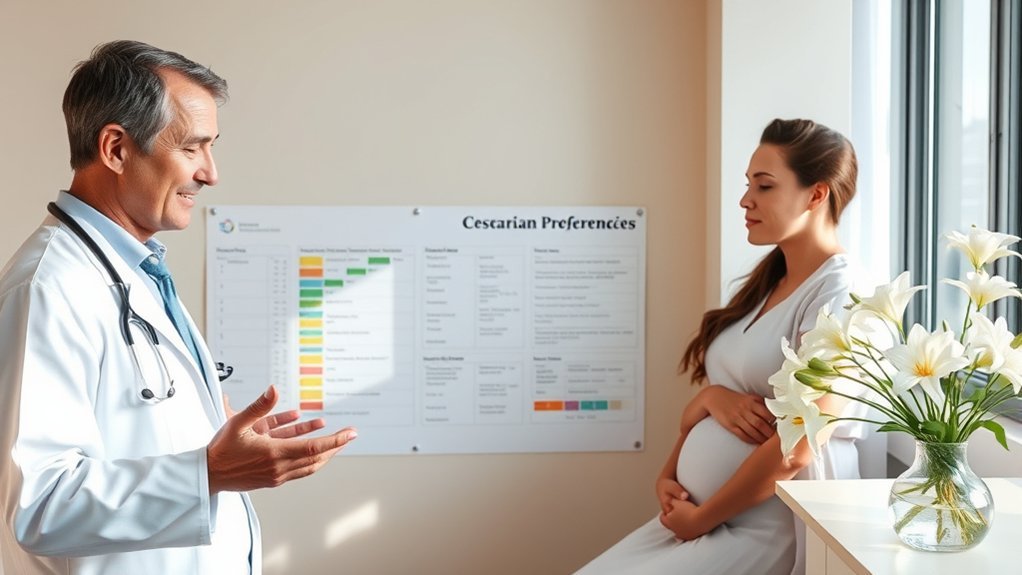
A cesarean delivery can provide a sense of control, but it also involves specific medical considerations. When planning for a cesarean, it’s crucial to understand your preferences and communicate them clearly to your healthcare provider. This discussion will help you navigate the complexities of the procedure, from anesthesia options to post-operative recovery plans. Knowing how to articulate your needs can greatly impact your experience. Are you ready to explore the essential steps for preparing?
Understanding Cesarean Deliveries
Understanding cesarean deliveries is essential for expecting parents, especially if you’re considering your options for childbirth. A cesarean delivery, or C-section, involves surgically delivering your baby through incisions in your abdomen and uterus. This procedure is typically performed when a vaginal birth poses risks to either the mother or baby. The surgery generally lasts about 45 minutes to an hour and requires anesthesia, which can be regional or general. Post-operative recovery usually takes longer than recovery from vaginal births, often involving a hospital stay of several days. It’s vital to discuss potential risks, benefits, and recovery aspects with your healthcare provider to make informed decisions tailored to your circumstances. Understanding these factors can help you prepare for the experience ahead.
Reasons for Choosing a Cesarean
There are several compelling reasons why expecting parents might choose a cesarean delivery. For some, it provides a sense of control over the birth process, allowing for scheduling and planning. Medical concerns, such as a previous cesarean or specific maternal health issues, can also make this option more appealing. Additionally, if there’s a risk of fetal distress or complications during labor, a cesarean can be a safer alternative. In cases of multiple births, such as twins, a cesarean may be recommended to guarantee the safety of both mother and babies. Finally, personal preferences regarding pain management and recovery can influence the decision, as some believe a cesarean aligns better with their birth experience goals.
Benefits and Risks of Cesarean Birth
Choosing a cesarean delivery comes with a set of benefits and risks that parents should consider carefully. Here’s a brief overview to help you weigh your options:
| Benefits | Risks | Considerations |
|---|---|---|
| Reduced labor complications | Longer recovery time | Hospital stay duration |
| Lower risk of birth trauma | Surgical risks (infection) | Anesthesia side effects |
| Scheduled delivery | Potential for future cesareans | Impact on future pregnancies |
While a cesarean can provide safety and predictability, it’s essential to understand the potential complications involved. Discussing these elements with your healthcare provider will help you make an informed choice for your and your baby’s health.
Communicating Your Preferences With Healthcare Providers
When discussing your cesarean preferences with healthcare providers, it’s crucial to be clear and direct about your needs and concerns. Effective communication can lead to a more positive experience. Here are three key steps to contemplate:
- Prepare Your Questions: Write down any questions or concerns you have about the procedure, recovery, and post-operative care.
- Express Your Preferences: Clearly outline your specific preferences regarding anesthesia, skin-to-skin contact, and the presence of support persons during the procedure.
- Ask for Clarification: Don’t hesitate to ask for explanations if you don’t understand something. This guarantees you’re fully informed and comfortable with your options.
Preparing for a Cesarean Delivery
To guarantee a smooth experience during your cesarean delivery, it’s vital to prepare both physically and mentally. Begin by discussing your concerns and preferences with your healthcare provider. Understand the procedure, including anesthesia options, and ask any questions you have. Physically, maintain a healthy diet, and consider light exercise to promote well-being. Pack a hospital bag with essentials like comfortable clothing, toiletries, and items for your baby. Arrange for support at home post-delivery, as recovery may take time. Mentally, practice relaxation techniques such as deep breathing or visualization to ease anxiety. Finally, confirm that you have a clear plan for transportation to and from the hospital, and verify logistics with your support team.
Frequently Asked Questions
Can I Have a Doula Present During My Cesarean Delivery?
Yes, you can have a doula present during your cesarean delivery, but it depends on your hospital’s policies. Discuss this with your healthcare provider to understand the specific guidelines and arrangements available for your situation.
Will I Be Able to Breastfeed Immediately After a Cesarean?
Yes, you can breastfeed immediately after a cesarean, though it may be more challenging. Many hospitals support skin-to-skin contact right after surgery, allowing you to initiate breastfeeding as soon as you’re able.
How Long Is the Recovery Time After a Cesarean?
Recovery after a cesarean can feel like waiting for a pot to boil; it typically takes six to eight weeks. You’ll need to rest, manage pain, and gradually resume activities as you heal.
Are There Any Specific Cesarean Delivery Techniques I Can Choose?
Yes, you can choose techniques like the horizontal incision, vertical incision, or a gentle cesarean approach. Discuss these options with your healthcare provider to determine which method best suits your medical needs and personal preferences.
What Happens if I Go Into Labor Before My Scheduled Cesarean?
If you go into labor before your scheduled cesarean, about 30% of women experience this. Your healthcare team will assess your situation, potentially proceeding with an emergency cesarean to guarantee safety for you and your baby.