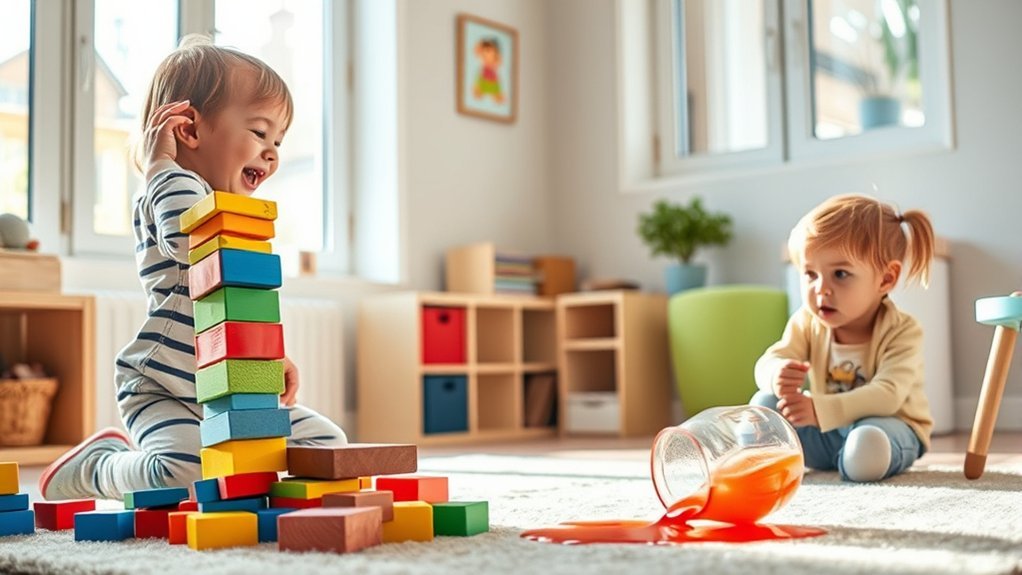
When it comes to cause and effect play, you might find yourself wondering how best to support your child’s learning. Encouraging their natural curiosity is essential, yet it’s easy to make mistakes that could hinder their growth. Understanding the right balance between guidance and independence can be challenging. As you navigate this journey, consider the specific do’s and don’ts that can make a significant difference in their development. What might those be?
Understanding Cause and Effect Play
When you engage with cause and effect play, it’s essential to recognize how actions lead to outcomes, shaping your child’s understanding of the world.
This type of play helps kids grasp fundamental concepts, like understanding that pressing a button makes a toy light up or that dropping a ball causes it to bounce.
By observing these relationships, your child starts to make predictions about what might happen next. It encourages critical thinking as they experiment with different actions and see the results.
This exploration lays a foundation for problem-solving skills that will benefit them throughout life.
Do’s: Encouraging Exploration and Curiosity
Encouraging exploration and curiosity in cause and effect play opens up exciting learning opportunities for your child. By fostering a sense of wonder, you help them discover the world around them. Here are some effective ways to promote this exploration:
| Activity | Benefit |
|---|---|
| Experimenting with water | Teaches concepts of volume and flow |
| Building with blocks | Enhances spatial awareness and problem-solving skills |
| Playing with musical instruments | Develops auditory skills and rhythm recognition |
These activities engage your child’s senses and encourage them to ask questions. When they see how their actions lead to different outcomes, it sparks their imagination and drives a desire to learn more. Embrace their curiosity, and watch them thrive!
Don’ts: Common Mistakes to Avoid
While it’s essential to nurture your child’s curiosity, there are common pitfalls to avoid in cause and effect play that can hinder their learning experience.
First, don’t rush in to solve problems for them. Allowing your child to experiment and struggle is important for their understanding.
Second, avoid overcomplicating the activities; keep them simple and age-appropriate to maintain engagement.
Additionally, don’t dismiss their questions or observations, as these are critical for their cognitive development.
Another mistake is providing excessive praise, which can create pressure rather than encouragement.
Finally, resist the urge to dominate playtime; give your child the space to lead.
Activities to Foster Cause and Effect Learning
After steering clear of common mistakes in cause and effect play, it’s time to explore activities that can ignite your child’s curiosity and understanding.
Simple experiments, like mixing baking soda and vinegar, demonstrate immediate reactions. Building with blocks encourages them to see how structures topple when they apply force.
You can also use toys like puppets to create scenarios where actions lead to consequences, such as a puppet getting “hurt” from jumping too high. Outdoor play, like blowing bubbles, shows how breath creates movement.
These activities allow children to actively engage, fostering both understanding and enjoyment.
Tips for Parents and Educators
Be patient and allow them to explore at their own pace. Celebrate their discoveries, reinforcing their learning.
Incorporate storytelling to illustrate cause and effect in relatable scenarios.
Finally, model cause-and-effect reasoning in everyday conversations, helping them connect their actions to outcomes.
With your guidance, they’ll develop critical thinking skills that extend beyond play, shaping their understanding of the world around them.
Frequently Asked Questions
What Age Is Best for Introducing Cause and Effect Play?
You can introduce cause and effect play around 6 to 12 months. At this age, infants start exploring and understanding how their actions lead to reactions, fostering curiosity and cognitive development in a fun way.
How Can Digital Games Support Cause and Effect Learning?
Imagine your kiddo traversing a digital adventure. These games engage their curiosity, letting them experiment with different choices and observe outcomes, which deepens their understanding of cause and effect while making learning fun and interactive.
Are There Specific Toys That Promote Cause and Effect?
Toys like building blocks, cause-and-effect toys, and simple action-reaction sets engage you in hands-on exploration. They spark curiosity and help you grasp how actions lead to outcomes in an enjoyable way.
Can Cause and Effect Play Enhance Problem-Solving Skills?
Yes, cause and effect play can enhance your problem-solving skills. Engaging in these activities encourages you to think critically, experiment with solutions, and adapt strategies, ultimately fostering a deeper understanding of how actions lead to specific outcomes.
How Do Cultural Differences Affect Cause and Effect Learning?
Cultural differences shape your understanding of cause and effect learning. They influence how you perceive relationships, interpret situations, and apply knowledge, ultimately affecting your problem-solving approach and the strategies you use in various contexts.
Conclusion
In nurturing cause and effect play, you’re not just fostering curiosity; you’re igniting creativity. You’re not just encouraging exploration; you’re building resilience. Remember to stand back and let your child navigate challenges, while offering support when needed. Embrace their questions, celebrate their discoveries, and watch their critical thinking skills flourish. By following these do’s and don’ts, you’re paving the way for a brighter, more independent future. So, let them play, learn, and grow!