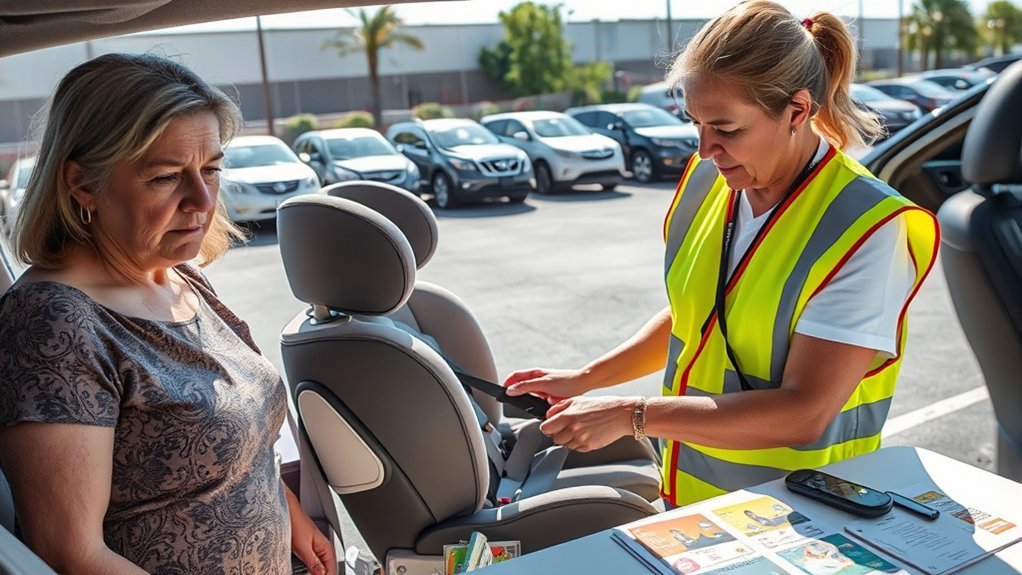
When it comes to your child’s safety, can you really afford to overlook the signs of improper car seat installation? Ensuring that your car seat is correctly fitted isn’t just about following rules; it’s about protecting your most precious passenger. From checking for excessive movement to ensuring the harness fits snugly, these safety checks are essential. Let’s explore the common pitfalls parents face and how you can avoid them to keep your child safe on the road.
Signs of Improper Installation
How can you tell if your car seat is installed correctly? Start by checking for tightness. Grab the seat at the base and attempt to move it side to side or forward; if it shifts more than an inch, it’s too loose.
Next, verify the harness fits snugly against your child’s body. You shouldn’t be able to pinch any excess webbing at the shoulders.
Also, check if the car seat is at the right angle. For rear-facing seats, the recline angle should support your baby’s head without falling forward.
Finally, consult your car seat manual and vehicle’s owner manual for specific installation guidelines. Taking these steps can make a huge difference in your child’s safety on the road.
Age-Related Concerns for Car Seats
Making sure your car seat is installed correctly is just the beginning of keeping your child safe on the road.
As your child grows, their needs change, and so should your car seat. Here are four age-related concerns you should consider:
- Infants (0-12 months): Always use a rear-facing seat to protect their fragile neck and spine.
- Toddlers (1-4 years): Shift to a forward-facing seat with a harness to provide stability and security.
- Preschoolers (4-7 years): A booster seat is essential to guarantee the seatbelt fits properly across their body.
- Older Kids (8+ years): Make sure they’re ready for a seatbelt alone, which usually happens when they’re tall enough.
Regularly reassess your child’s car seat to keep them safe and secure as they grow.
Indicators of Wear and Tear
Car seats can experience significant wear and tear over time, and recognizing the signs early can save lives.
Look for frayed straps, broken buckles, or cracks in the plastic shell—these are serious indicators that your car seat may no longer be safe. Pay attention to the expiration date, as many seats have a lifespan of 6 to 10 years.
Inspect for frayed straps, broken buckles, or cracks—these signs indicate your car seat’s safety may be compromised. Check the expiration date too.
If you notice any fading or discoloration, it could be a sign that the materials have weakened. Additionally, unusual noises during adjustments may suggest internal damage.
Trust your instincts; if something feels off, it’s better to replace the seat than risk your child’s safety. Regularly checking these indicators guarantees that your little one travels securely and comfortably.
Child’s Size and Fit in the Car Seat
As your child grows, guaranteeing they fit properly in their car seat becomes essential for their safety. A snug, secure fit protects them in case of an accident.
Here are four key points to take into account:
- Weight and Height Limits: Check the car seat’s specifications for weight and height limits to verify your child hasn’t outgrown it.
- Shoulder Straps: The shoulder straps should be at or above your child’s shoulders for forward-facing seats and below for rear-facing.
- Buckle Position: Make sure the harness clip is at armpit level to keep your child secure.
- Comfort: Your child should sit comfortably without excessive pressure from the straps, allowing them to enjoy the ride safely.
Regularly reassess your child’s fit to keep them safe on every journey.
Common Mistakes Parents Make
Many parents unknowingly make critical mistakes when it comes to car seat safety, putting their children’s well-being at risk.
One common error isn’t securing the car seat tightly enough; it should move no more than an inch side-to-side or front-to-back.
Another mistake is using the wrong harness slots; the harness should be at or below your child’s shoulders for rear-facing and at or above for forward-facing.
Additionally, many parents overlook expiration dates on car seats, which can compromise safety.
Finally, moving your child to a booster seat too soon can lead to improper belt positioning.
Frequently Asked Questions
How Often Should I Check My Car Seat’s Installation?
You should check your car seat’s installation every time you use it, especially after any adjustments or trips. Regular checks guarantee your child’s safety, giving you peace of mind while driving. Don’t take any chances!
Can I Use a Second-Hand Car Seat Safely?
Yes, you can use a second-hand car seat safely, but verify it meets current safety standards and hasn’t been recalled. About 80% of car seats are misused, so double-check its installation and condition for your child’s safety.
What Should I Do if My Car Seat Is Recalled?
If your car seat’s recalled, stop using it immediately. Contact the manufacturer for instructions on returns or replacements. Always prioritize safety; you can prevent potential hazards by acting swiftly and ensuring your child’s protection.
Are There Specific Car Seat Laws in My State?
Yes, there’re specific car seat laws in your state. You should check your local regulations to guarantee you’re compliant. It’s vital for your child’s safety, so stay informed and keep their well-being a priority.
How Can I Find a Local Car Seat Inspection Event?
You can find local car seat inspection events by checking your state’s transportation website, contacting local fire departments, or visiting organizations like Safe Kids. It’s essential to guarantee your child’s safety; don’t hesitate to take action!
Conclusion
In the journey of parenthood, ensuring your child’s safety in the car is a top priority. By regularly checking for signs of improper installation and wear and tear, you’re not just following guidelines—you’re embracing peace of mind. Remember, the right fit for your little one is essential, so keep an eye on those size specifications. Together, let’s make every trip a safe adventure, where you can focus on creating precious memories without a worry in the world.