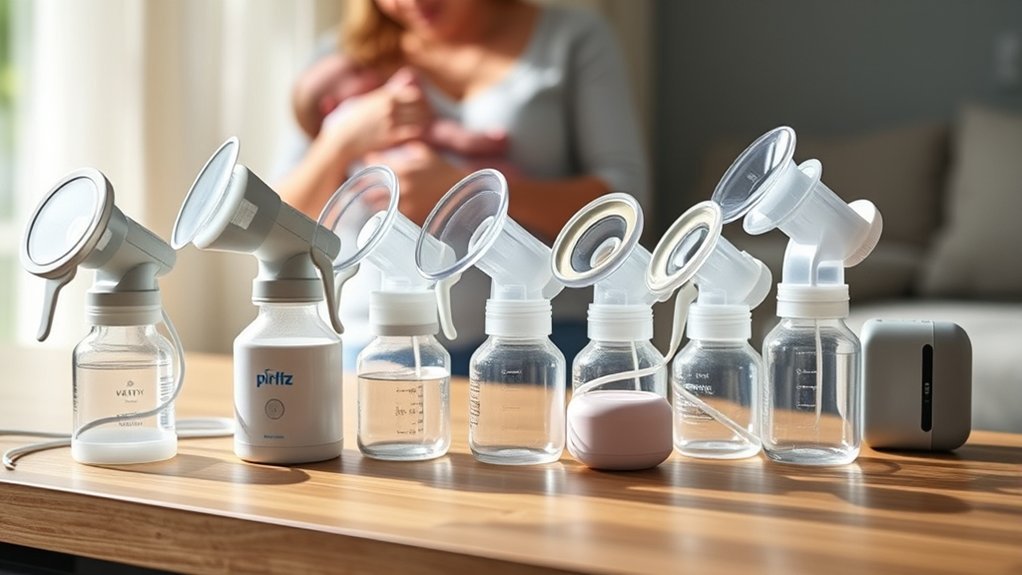
When it comes to choosing a breast pump, you might feel overwhelmed by the conflicting information out there. Many believe electric pumps are the only way to go, while others swear by manual options. Understanding the differences and what actually works for you is essential. Let’s explore the facts behind these common myths and help you make an informed decision that suits your needs. You might be surprised by what you learn.
Understanding Manual Breast Pumps
When you’re considering a breast pump, understanding manual breast pumps can be incredibly beneficial.
These pumps are hand-operated and offer a cost-effective option for breastfeeding mothers. They’re lightweight, portable, and don’t require batteries or electricity, making them a great choice for on-the-go use. You’ll have greater control over the suction, allowing you to adjust it according to your comfort level.
Many mothers appreciate the simplicity and quiet operation, making it easier to pump discreetly. Research shows that manual pumps can be just as effective as electric ones for occasional use.
However, if you plan on pumping frequently, consider your comfort and the time involved, as manual pumps may require more effort and time compared to their electric counterparts.
Exploring Electric Breast Pumps
Electric breast pumps offer a convenient alternative for mothers who need to express milk regularly or prefer an easier pumping experience.
These pumps use a motor to create suction, allowing for efficient milk extraction with minimal effort. Many models feature adjustable settings, enabling you to customize suction strength and speed to suit your comfort and needs.
Using an electric pump can considerably reduce the time spent pumping, making it a practical choice for busy moms. Additionally, they often come with double pumping options, which can help you express more milk in less time.
The Role of Hospital-Grade Pumps
Hospital-grade pumps play an essential role in supporting mothers who need to express milk, particularly in challenging situations like preterm birth or health complications.
These pumps are designed for frequent, powerful use and can often extract more milk in less time compared to standard pumps. They help establish and maintain milk supply, especially when direct breastfeeding isn’t possible.
You’ll find that these pumps are typically available at hospitals and breastfeeding support centers, ensuring mothers have access to high-quality equipment.
Using a hospital-grade pump can also be beneficial for mothers with low milk production or those needing to relieve engorgement.
Debunking Common Myths
Many new mothers encounter a variety of myths about breast pumps that can create confusion and uncertainty. It’s crucial to separate fact from fiction to make informed choices. Here’s a quick look at some common myths:
| Myth | Fact |
|---|---|
| Pumping will always hurt | Many find it comfortable with the right technique. |
| You can’t produce milk if you pump | Pumping can actually help increase milk supply. |
| All pumps are the same | Different types suit different needs. |
| You must pump after every feed | It depends on your personal routine. |
| Electric pumps are always better | Manual pumps can be effective too. |
Understanding these myths will empower you as you navigate your breastfeeding journey. Trust reliable sources and consult with professionals for tailored advice.
Choosing the Right Pump for Your Needs
When you’re selecting a breast pump, it’s essential to take into account your unique lifestyle and needs.
Consider how often you’ll be pumping and whether you’ll be at home or on the go. If you plan to pump regularly, a double electric pump can save you time and increase milk output. For occasional use, a manual pump might suffice.
Don’t forget about portability; some pumps are designed for discreet travel, while others are bulkier. Also, think about comfort—look for pumps with adjustable settings and soft flanges.
Researching brands and reading reviews can also guide your decision. Ultimately, choosing the right pump can make your breastfeeding journey smoother and more enjoyable, so invest the time to find what works best for you.
Frequently Asked Questions
Can I Use a Breast Pump While Breastfeeding?
Yes, you can use a breast pump while breastfeeding. It can help increase your milk supply and provide flexibility. Just make sure to maintain a good latch and alternate between pumping and nursing for best results.
How Often Should I Clean My Breast Pump?
Every time you use your breast pump, you should clean it thoroughly. It’s essential to maintain hygiene, so after each session, rinse parts in warm, soapy water, then air dry. You’ll keep everything safe for baby!
Are Breast Pumps Covered by Insurance?
Yes, many insurance plans cover breast pumps, but it depends on your policy. Check with your provider to understand your benefits and guarantee you get the support you need during your breastfeeding journey.
Can I Share My Breast Pump With Others?
No, you shouldn’t share your breast pump with others. Sharing increases the risk of infection and contamination. Each pump is designed for individual use, so it’s best to keep yours for your own health and safety.
How Long Can I Store Expressed Milk?
You can store expressed milk in the refrigerator for up to four days and in the freezer for six months. Always label containers with dates, and remember to thaw milk safely before feeding your baby.
Conclusion
In your journey to find the perfect pump, remember that understanding your unique needs is key. Manual or electric, each option offers its own benefits. Don’t let myths mislead you; with the right technique and tools, you can pump comfortably and confidently. Prioritize your preferences and keep your milk supply strong. Ultimately, choosing the right breast pump is about what works best for you and your baby—so embrace the process and enjoy the bonding experience!

