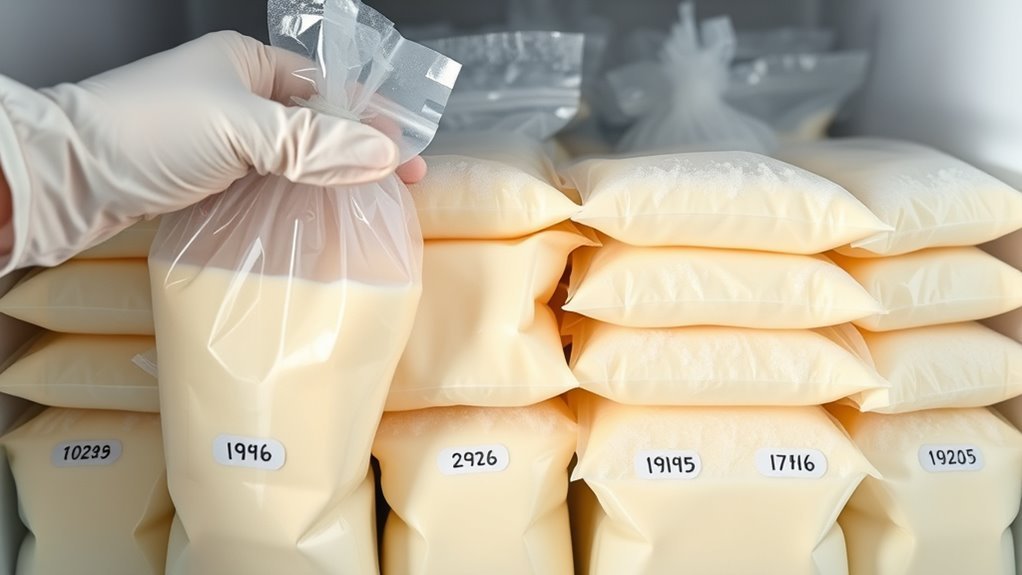
Frozen breast milk can last up to 12 months in a deep freezer set at 0°F (-18°C) or lower, but you’ll get the best quality if you use it within 6 months. If your freezer is attached to the fridge, aim for about 2 weeks. Store bags in the back, label each one with the date, and discard milk that smells off, looks strange, or has been thawed too long for safety.
How Long Does Frozen Breast Milk Last?
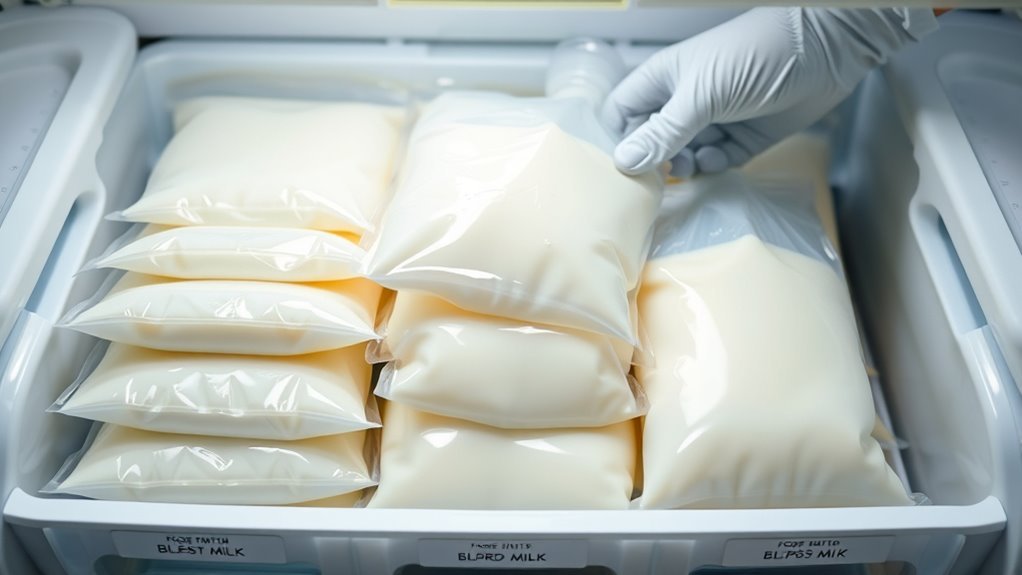
Frozen breast milk can last quite a while, but the exact shelf life depends on your freezer. In a deep freezer at 0°F or below, you can store frozen breast milk for up to 12 months, though you’ll get peak quality if you use it within 6 months.
If you have a separate-door freezer, aim for 6 months. With a freezer attached to refrigerator, use it within 2 weeks for the best results.
Follow simple storage guidelines: label each bag with the expression date, keep older milk front and center, and don’t mix freshly pumped milk with older frozen milk.
Breast milk expands as it freezes, so leave room in each bag. When you thaw milk, use it within 24 hours, and discard thawed breast milk that sits longer.
You’re doing a lot right already, and these steps help you protect both safety and your freedom to feed on your terms.
What Freezer Temperature Is Best for Breast Milk?
The best freezer temperature for breast milk is 0°F (-18°C) or lower, because that helps keep it safe and preserves quality for longer. When you’re storing breast milk, this best freezer temperature supports maximum safety and helps protect nutrients in frozen breast milk.
For storage duration, aim to use it within 6 months for the best quality, though you can keep it up to 12 months at this temperature. If you use a separate-door freezer, you can safely store it for up to 6 months; milk from the refrigerator in a freezer attached to a refrigerator is best used within 2 weeks.
Keep each bag at the back of the freezer, where the temperature stays steadier, not in the door. To stay organized and in control, label frozen breast milk with dates so you can use the oldest milk first.
How Should You Label Frozen Breast Milk?
Once you’ve frozen breast milk at the right temperature, clear labeling helps you keep track of every bag with less stress. You can label each bag with the date you expressed it, so you’ll follow the FIFO principle and use the oldest frozen breast milk first.
Add your baby’s name too, especially if anyone else stores milk nearby, because that simple step prevents mix-ups and protects every feeding. Use waterproof labels or a permanent marker so the writing stays readable in the freezer.
- Date expressed
- Baby’s name
- Volume in ounces or milliliters
That’s enough to make daily decisions easier and reduce waste. Check your labels regularly, and update them if needed, so you can monitor storage duration with confidence. Aim to use milk within 6 months for the best quality.
Check labels regularly, update them as needed, and aim to use milk within 6 months for best quality.
With a clear label, you’re not trapped guessing—you’re staying organized, free, and ready to feed your baby with ease.
Where Should You Store Breast Milk Bags?
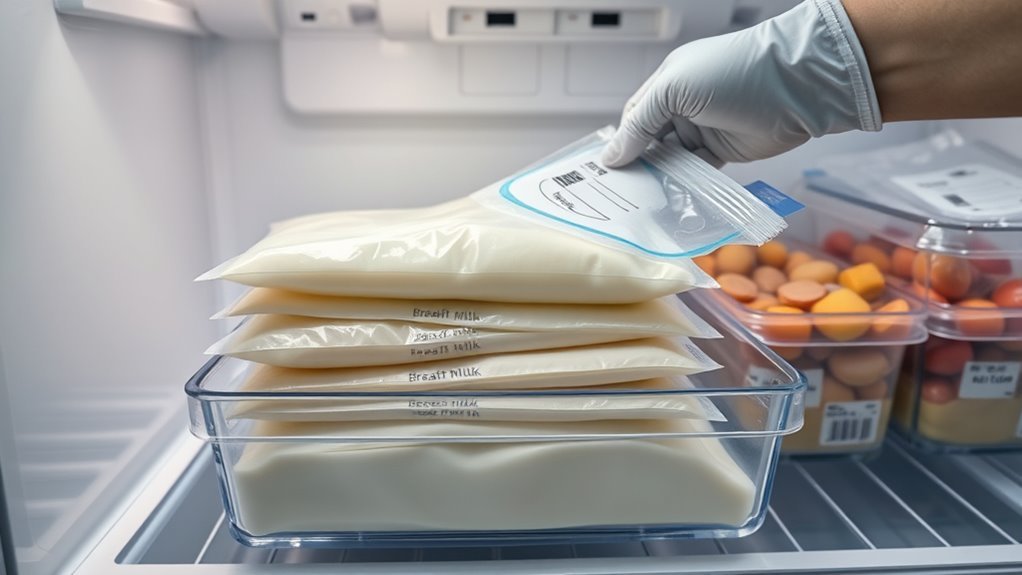
You’ll get the best results by storing breast milk bags in the back of the freezer, where the temperature stays most consistent.
Try not to keep them in the door, since that spot warms up each time you open it.
If you label the bags and keep the freezer from getting too crowded, you’ll help protect the milk’s quality.
Best Storage Locations
For the safest storage, place breast milk bags in the back of the freezer or refrigerator, where temperatures stay most steady and the milk is less exposed to warm air from the door.
With smart breast milk storage, you can store breast milk bags with confidence and protect every drop you’ve worked hard to pump.
- Freezer: Use the back of the freezer for up to 6 months in a separate-door unit.
- Deep freezer: Keep bags at 0°F or below for up to 12 months.
- Back of the refrigerator: Store bags at 39°F or colder for up to 4 days.
Label breast milk bags with the pumping date and your baby’s name, and you’ll track freshness without stress.
This simple system helps you avoid temperature fluctuations and stay free.
Avoid Door Storage
To keep breast milk bags safe and fresh, store them in the back of the freezer or refrigerator, not in the door, where temperatures change every time it opens. That simple move protects milk safety and helps your breast milk storage bags stay frozen longer.
Avoid door storage because it’s the warmest spot and can raise spoilage risk. Label each bag with the date and contents, then rotate them first in, first out so you use older milk first.
In a deep freezer, your milk’s shelf life can reach 6 months for best quality, and up to 12 months overall. Keep the freezer closed as much as you can to prevent thawing and refreezing.
You’re making smart, freeing choices that support your baby and your peace.
Can You Add Fresh Milk to Stored Milk?
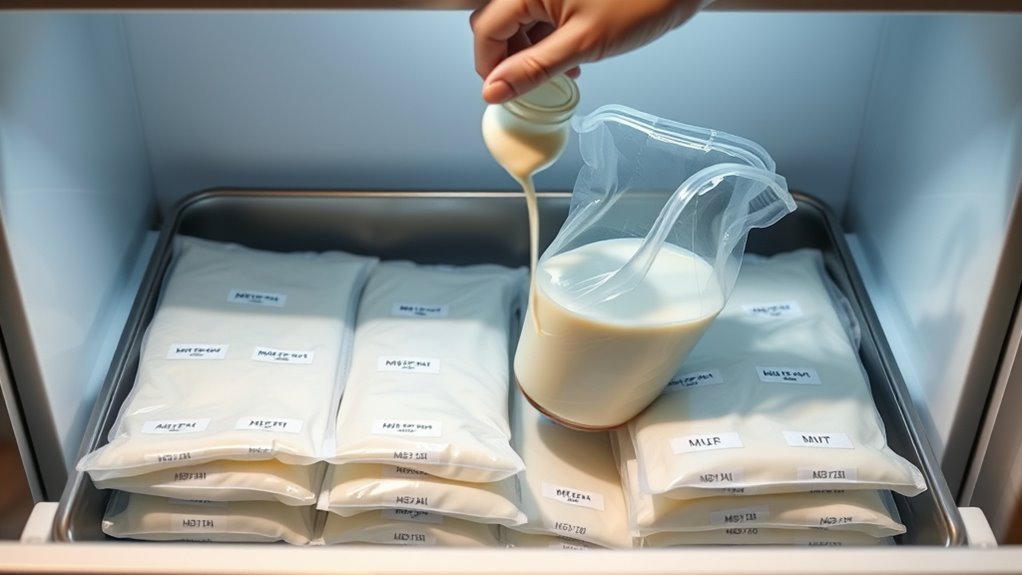
Freshly expressed milk can be added to milk you’ve already stored, but only if you cool the new milk first so it doesn’t warm up and thaw the older milk. You can protect your milk supply with simple steps:
- Chill freshly expressed milk before pouring.
- Keep stored refrigerated or frozen milk in separate containers.
- Label each bag with the date and use first in, first out.
That FIFO habit helps you move through your stash with confidence and supports safe storage.
For maximum safety, avoid combining different pumping sessions unless both are chilled and the older milk is still fully frozen or refrigerated. If the older milk is already thawed, don’t mix it back in, and never refreeze thawed milk.
You deserve a system that feels doable, not stressful. Keeping batches separate lets you track what you have, use the oldest milk first, and stay in control of every ounce you’ve worked hard to express.
How Do You Thaw Breast Milk Safely?
You can thaw frozen breast milk in the refrigerator overnight for the gentlest, most milk safe method. If you need it sooner, place the bag under lukewarm running water or set it in a bowl of warm water.
Avoid microwaving, since it can create hot spots and damage nutrients. Keep in mind that you should thaw breast milk with care, then swirl it gently to blend separated fat; don’t shake hard.
Use a first in first out routine so the oldest milk gets used first and nothing goes to waste.
Once thawed, your thawed breast milk should be used within 24 hours, and you can’t refreeze it.
That simple rhythm helps you thawing breast milk confidently, protect its quality, and feed your baby with ease and freedom.
How Long Does Thawed Breast Milk Last?
Once breast milk has thawed, timing matters: keep it in the refrigerator and use it within 24 hours, or discard it if it’s not needed by then. You’ve got options, but safety comes first, and you don’t have to guess.
Once thawed, refrigerate breast milk and use it within 24 hours for safe feeding.
- Store thawed breast milk in the refrigerator right away.
- Keep it there and use within 24 hours for best safety.
- If it sits at room temperature, use it within 2 hours or let it go.
Don’t refreeze thawed milk; once it’s thawed, refrigeration is the only safe path.
Before feeding, trust your senses and check for a sour smell or unusual texture. If anything seems off, discard it.
You deserve a feeding routine that feels steady, not stressful, and knowing these limits helps you protect your baby with confidence.
When Should You Throw Out Frozen Breast Milk?
You should throw out frozen breast milk if it smells sour, looks discolored, or has an unusual texture, since those are signs it’s gone bad.
You can usually keep it safely in a deep freezer for up to 12 months, but using it within 6 months helps you get the best quality.
If you thaw it, don’t refreeze it—use it within 24 hours, and label each container with the date so you can track it easily.
Signs Milk Should Go
When should frozen breast milk be tossed? You can trust your senses and your date label. If your breast milk has been frozen over 12 months, it’s time to discard it; for best quality, use it within 6 months.
After thawed, check for:
- an off smell
- an unusual texture
- discoloration
If you notice any of these, throw it out right away.
Partially frozen milk with ice crystals can still be refrozen, but fully thawed milk shouldn’t be refrozen, so use it within a day.
Label every bag with the pumping date so you can track storage duration without guesswork. You deserve simple, clear choices that protect your baby and honor your time.
Safe Time To Discard
Frozen breast milk doesn’t last forever, but a clear timeline makes it easy to know when to let it go. You can keep breast milk frozen in a deep freezer at 0°F or below for up to 12 months, but quality is best if you use within 6 months.
In a separate-door freezer, use within 6 months; in a freezer attached to a refrigerator, use within 2 weeks. Once thawed, you need to use it within 24 hours and you can’t refreeze it.
Trust your senses too: if the milk smells odd, looks discolored, or has a strange texture, discard it. Label each bag with the pumping date so your storage stays simple, safe, and freeing.
Can You Refreeze Thawed Breast Milk?
Can thawed breast milk go back in the freezer? Usually, no. Once thawed breast milk is fully liquid, refreezing isn’t safe, and you should use it or have it discarded within 24 hours. That protects safety and helps preserve nutritional quality.
Usually, no—once breast milk is fully thawed, don’t refreeze it; use it within 24 hours.
If you’re thawing milk, do it in the refrigerator overnight or with warm water, not the microwave, since hot spots can happen. If a bag still has ice crystals, you can refreeze it, but only if it hasn’t fully thawed.
To stay free and organized, label thawed milk with the date and follow proper guidelines.
- Thaw overnight in the fridge.
- Warm with running water if needed.
- Use fully thawed milk within a day.
You’re not failing by tossing milk; you’re choosing care. Trust your system, keep records, and let each bag serve your baby safely.
What Should You Look for in Breast Milk Storage Bags?
Choosing the right breast milk storage bags can make pumping and storing feel a lot less stressful.
Look for breast milk storage bags that are pre-sterilized, BPA-free, and made for freezing, so you can protect milk quality from the start. A strong double-zipper helps prevent leaks and keeps contamination out.
You’ll also want clear measurement markings, which let you portion milk accurately and track how much you’ve saved. Choose bags that feel thick and durable, because flimsy ones can crack or split in the freezer.
Easy labeling matters too: write the date and your baby’s name right on the bag for organized storage and faster use later.
When you pick bags with these features, you give yourself more freedom, less waste, and more confidence every time you store milk. That small choice can support your routine and help you stay prepared without extra stress.
Frequently Asked Questions
How Long Can a Thawed Bag of Breast Milk Stay in the Fridge?
A thawed bag of breast milk can stay in your fridge for 24 hours. Use gentle thawing techniques, organized storage containers, and safety guidelines to protect milk temperature, nutrient preservation, feeding tips, and milk expiration.
Can I Use 3 Year Old Frozen Breast Milk?
You can, but caution matters: breast milk safety may still hold, yet milk quality and nutritional value can drop. Check freezer storage, bag sealing, odor changes, and follow thawing methods; use storing tips if uncertain.
How Long Is Frozen Milk Good for Breastmilk?
Frozen breastmilk stays safe up to 12 months in a deep freezer, though you’ll get best quality within 6 months. Use storage tips, freezing techniques, thawing methods, and storage containers to protect milk safety and nutritional value.
How Can You Tell if Frozen Breast Milk Has Gone Bad?
You can tell frozen breast milk’s gone bad if you notice frozen milk signs: odor changes, color variations, separation issues, or freezer burn. Trust your senses, follow storage practices, thawing methods, and safety guidelines.
Conclusion
Storing breast milk can feel like juggling tiny lifesavers, but once you know the basics, it gets easier. Keep your bags labeled, frozen at the right temperature, and used within safe time frames so every drop stays as nourishing as possible. When in doubt, trust your senses and the storage guidelines. With a little care, you can build a freezer stash that gives you peace of mind and keeps feeding time running smoothly.
