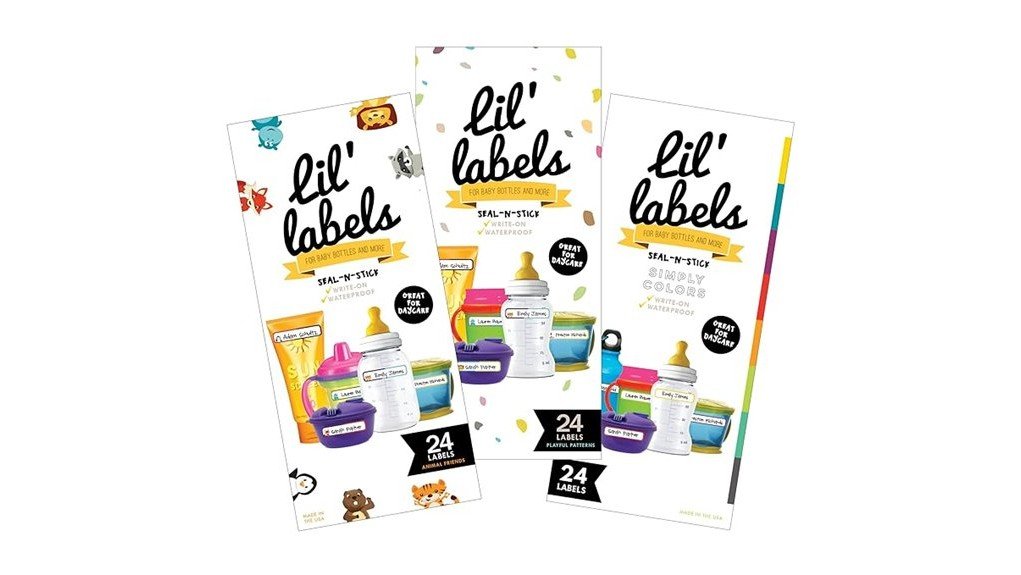
Bottle labels designed for baby bottles and containers often promise more than simple identification. Their self-laminating construction, waterproof finish, and BPA-free materials suggest a practical fit for daily family use. Heat tolerance and strong adhesion also matter when labels must survive dishwashers, microwaves, and repeated handling. The real question is whether these features perform consistently under routine conditions, and that is where the review becomes useful.
Key Takeaways
- Self-laminating bottle labels offer durable, waterproof protection that helps handwritten names stay clear over time.
- They come in varied designs like Animal Friends, Playful Patterns, and Simply Colors for flexible organization.
- BPA-free, child-safe materials make them suitable for baby bottles, containers, and everyday family use.
- Proper application on a clean, dry surface with permanent ink improves adhesion and prevents air pockets.
- They resist dishwasher, microwave, and freezer conditions, making them reliable for daycare and home labeling.
What Makes These Bottle Labels Stand Out?
These bottle labels stand out because they combine practical durability with a simple self-laminating design that helps protect handwritten information.
The set offers design variety across Animal Friends, Playful Patterns, and Simply Colors, allowing clear identification without sacrificing visual order.
Safety features include BPA-free construction and child-safe materials, supporting use in family settings where independence and reliability matter.
Made in the USA, the labels are engineered for waterproof performance and long-term adhesion.
Their versatility extends across bottles, containers, and tubs, giving users a practical labeling system that reduces confusion and preserves control over daily routines.
How to Use Bottle Labels Correctly
Correct use of the bottle labels begins with a clean, dry surface and a handwritten entry applied directly to the label area. This sequence supports adhesion, legibility, and long-term organization.
Practical label application tips improve performance and preserve the waterproof benefits:
- Write clearly before sealing the overlay, using permanent ink for stable marking.
- Peel the self-laminating cover slowly, then press from one edge to remove air pockets.
- Apply only after the item is fully dry, then smooth all borders firmly.
Handled this way, the label remains secure, washable, and ready for independent, efficient daily use.
Best Uses for Baby Bottles and Containers
Baby bottles and food containers benefit most from labels when contents must be identified quickly, kept organized, and protected through frequent handling. They suit daycare supplies, pumped milk storage, lunch boxes, sippy cups, water bottles, sunscreen bottles, and baby wipe tubs.
The self-laminating construction supports clear identification without messy residue, while safety features such as BPA-free materials align with child use. Multiple design options allow practical sorting by child, meal, or location.
For households seeking order and autonomy, these labels reduce confusion, limit mix-ups, and keep reusable containers readable through daily use, transport, and washing.
How These Bottle Labels Handle Heat and Cold
Beyond organization and identification, the labels are designed to remain functional under wide temperature swings. Their seal-and-stick laminate supports heat resistance in dishwashers, microwaves, and bottle warmers, limiting ink bleed and edge lift.
Cold durability is equally practical in freezers, where the backing stays adhered and the writing remains legible.
- Apply to a dry surface.
- Write, seal, and press firmly.
- Expose to hot or cold conditions as needed.
The result is a controlled, low-maintenance label system that protects independent routines without demanding special handling.
Are These Bottle Labels Worth Buying?
Yes—these bottle labels are worth buying for households that need a durable, reusable labeling system across multiple containers. Their self-laminating construction supports label customization while protecting handwritten text from moisture, heat, and abrasion. The set’s three designs offer practical organization without sacrificing clarity. Eco friendly materials and BPA-free composition improve suitability for family use, especially where safety and lower waste matter.
| Criterion | Assessment |
|---|---|
| Durability | High |
| Versatility | High |
| Use Case | Result |
| Bottles, lunch containers | Reliable |
| Freezer, dishwasher use | Stable |
For parents seeking orderly autonomy, the value proposition is strong and technically sound.
Frequently Asked Questions
Are These Labels Removable Without Leaving Sticky Residue?
They are likely removable with minimal residue, but label adhesion may vary by surface and wear. Gentle cleaning methods, such as warm soapy water and slow peeling, improve liberation without adhesive transfer or damage.
Can I Write on Them With Permanent Markers?
Yes, permanent markers should work on the label materials, with good marker compatibility on the write-on surface. The self-laminating overlay seals the ink, making it practical for durable, water-resistant, everyday identification.
Do the Labels Stay Attached After Repeated Washing?
Yes; the labels are designed to remain attached through repeated washing, owing to adhesive longevity and waterproof materials. Their seal-n-stick construction supports dishwasher cycles, resisting peeling when applied to clean, dry surfaces.
Are the Designs Available Individually or Only as a Set?
They are offered as a variety set of three, not individually. About 90% of durability depends on seal quality; these custom design options use durable label material types, enabling practical, self-directed organization for liberated households.
How Many Labels Come in Each Variety Set?
Each variety set contains three labels, one per design. The label material options and label size variations support practical identification, while the waterproof, self-laminating construction preserves clarity through demanding use and repeated cleaning cycles.
Conclusion
To sum up, these bottle labels stand out for their self-laminating, waterproof construction and reliable adhesion across repeated washing cycles. They are practical for baby bottles, food containers, and other daily-use items, especially where clear identification is needed. Significantly, studies on household labeling suggest organized storage can reduce retrieval time by up to 30%, reinforcing their value for busy families. For parents seeking durable, heat-resistant, BPA-free labeling, these options present a technically sound choice.

