Disclosure: As an Amazon Associate, we earn from qualifying purchases. If you buy through links on this page, we may earn a small commission at no extra cost to you.
By Editorial Team | Updated October 9, 2026
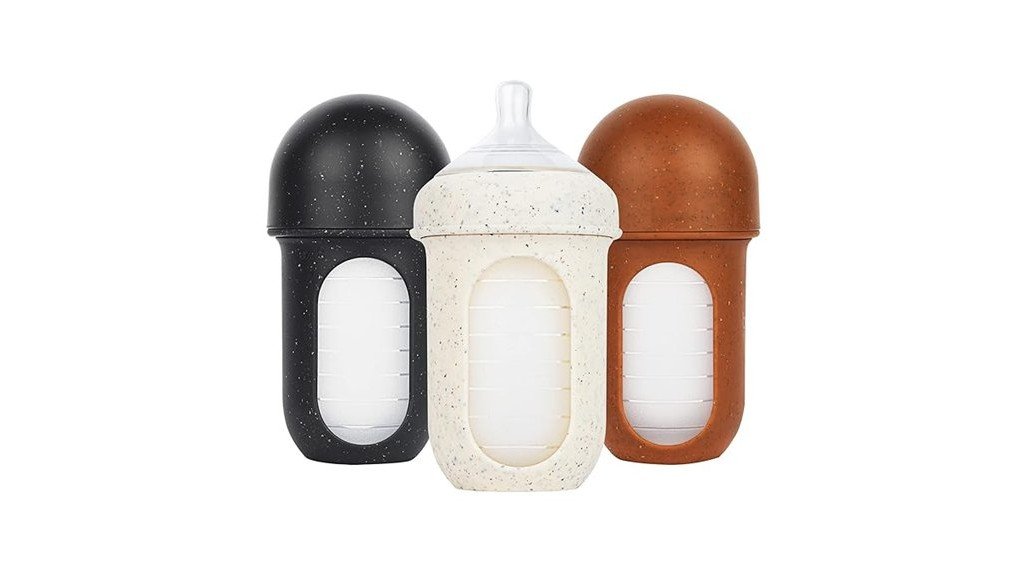
The Boon Nursh bottle uses a collapsible silicone pouch instead of a traditional vent system to help limit the air a baby swallows during feeding. The linked Speckle version includes three 8 oz bottles with medium-flow nipples. Each bottle combines a reusable silicone pouch with a protective plastic outer shell.
Its simple design is appealing if you want fewer small parts to wash. However, the pouch must be seated correctly to prevent leaks, the measurement markings can be difficult to read, and no bottle can guarantee relief from colic. Here is what makes the Nursh worth considering and where other bottles may work better.
Quick Verdict: Boon Nursh Bottle
8.0/10 Editorial assessment based on specifications and published feedback
3-pack
Medium flow
Silicone pouch
BPA/PVC-free materials
Top-rack dishwasher safe
Best for: Families who want a reusable silicone milk-contact system without small internal vent parts.
Skip it if: You need highly visible volume markings, a narrow bottle for a particular warmer, or a traditional rigid bottle.
Bottom line: The Nursh has a useful air-management design and flexible accessories. Proper assembly and matching the nipple flow to your baby are essential.
Check the selected color, pack size, and nipple flow before ordering.
Before You Buy
- Check nipple flow: The linked 8 oz set has medium-flow nipples. A younger baby or slower feeder may need a different flow.
- Check bottle-warmer fit: The relatively wide body may not fit every warmer or insulated holder.
- Expect careful assembly: An uneven pouch rim or poorly seated nipple can cause leaks.
- Do not expect a colic cure: Reduced air intake may help some babies, but colic and reflux can have other causes.
Jump to Review Sections
Key Takeaways
- The Boon Nursh system uses a flexible silicone pouch that collapses as milk leaves the bottle, limiting the air needed to maintain milk flow.
- Boon markets the design as a way to reduce gas, spit-up, and colic symptoms, but individual feeding results vary.
- During normal use, milk contacts the silicone pouch and nipple rather than the polypropylene outer shell.
- The linked Speckle three-pack contains 8 oz bottles with medium-flow nipples.
- Reusable pouches and replacement nipples support continued use, but compatible accessories are purchased separately.
- Correct assembly, careful cleaning, and selecting the right nipple flow matter more than the bottle’s marketing claims.
Boon Nursh Bottle Specifications
The linked version is an 8 oz, three-bottle Speckle set. Its key difference from a standard bottle is the collapsible inner pouch. Boon uses polypropylene for the supporting shell and silicone for the milk-contact components.
| Product | Boon Nursh Silicone Pouch Bottle |
|---|---|
| Linked variation | Speckle, three-pack |
| Capacity per bottle | 8 fl oz |
| Included nipple flow | Stage 2, medium flow |
| Milk-contact material | Platinum food-safe silicone |
| Outer shell | Polypropylene |
| Air-management design | Collapsible inner pouch; no separate vent assembly |
| Cleaning | Top-rack dishwasher or hand washing |
| Other bottle size | 4 fl oz version available separately |
| Replacement parts | Compatible pouches, nipples, and storage accessories |
The specifications are based on Boon’s 8 oz product information and the linked Amazon variation. Confirm the selected variation before purchasing because colors and configurations may differ.
What’s in the Box?
The linked product is listed as a three-pack of 8 oz Nursh bottles. Each bottle uses a silicone pouch, nipple, collar, and outer shell as part of its feeding assembly. Protective travel caps may be included with the bottle configuration.
Separate replacement pouches, alternative nipple flows, storage lids, bottle buns, and straw conversion accessories should not be assumed to be included. Check the exact package contents shown by the seller.
Who Should Buy the Boon Nursh Bottle?
Boon Nursh is most appealing if you value a simple air-management system and want milk to touch silicone rather than the outer plastic shell.
- Families concerned about swallowed air: The collapsing pouch offers an alternative to internal vent tubes.
- Parents who dislike many small washing parts: There is no separate anti-colic straw or vent insert.
- Caregivers who want reusable accessories: Compatible storage lids and cup-conversion parts can extend the system’s usefulness.
- Families combining breast milk and formula feeds: The bottle can hold either, provided feeding and preparation guidelines are followed.
Who Should Skip It?
Consider another bottle if you rely on easily visible measurement markings, want a narrow profile, or prefer not to manage a flexible liner. It may also be less suitable if your baby needs a very specific nipple shape that the Nursh options do not provide.
If your baby has ongoing feeding difficulties, frequent choking, poor weight gain, or persistent vomiting, speak with your pediatrician rather than relying on a bottle change alone.
Boon Nursh Bottle Pros and Cons
The strongest advantages are the silicone milk-contact surfaces, collapsible design, and relatively simple component system. The main drawbacks are linked to visibility, fit, and the need for accurate assembly.
Pros
- Collapsible pouch reduces the need for separate vent parts
- Silicone milk-contact components
- Reusable pouches and optional accessories
- Top-rack dishwasher-safe parts
Cons
- Measurement markings can be difficult to read
- Incorrect pouch seating may cause leaks
- Wide shape may not fit some bottle warmers
- Medium-flow nipples may not suit every baby
Why Boon Nursh Bottles Are Air-Free
Boon Nursh bottles use an air-free feeding design based on a soft silicone pouch. As the baby drinks, the pouch contracts, reducing the need to replace the removed milk with air inside the feeding chamber.
Most traditional bottles rely on an air inlet or vent to keep milk moving. The Nursh instead changes the shape of its milk container as the volume decreases.
This difference matters because it reduces the opportunity for air to enter and mix with the milk during normal feeding. It also avoids separate valve and vent components that must be cleaned.
How the Collapsible Silicone Pouch Works
- The pouch sits inside a rigid outer shell.
- Milk or prepared formula fills the silicone pouch.
- As the baby draws milk through the nipple, the flexible pouch contracts.
- The smaller pouch volume allows feeding without a separate internal air-vent system.
Proper pouch placement is essential. If the rim is uneven or the nipple is not seated correctly, the bottle may leak or behave differently from the intended design.
How Boon Nursh Bottles May Help Reduce Colic
Boon markets its collapsible pouch as a way to reduce swallowed air and symptoms such as gas and spit-up. The mechanism is reasonable, but it does not prove that the bottle will prevent or treat colic in every baby.
Colic has several possible contributing factors, and not all crying or feeding discomfort comes from swallowed air. Some families may notice more comfortable feeds with an anti-colic bottle, while others may see little change.
What the Design Can and Cannot Do
- It can reduce the need for air to enter the milk chamber as milk is removed.
- It may help babies whose feeding discomfort is worsened by swallowed air.
- It cannot guarantee freedom from spit-up, reflux, crying, or colic.
- It does not replace appropriate feeding position, pacing, burping, or medical assessment when symptoms persist.
The NHS guidance on colic and bottle feeding suggests keeping the baby comfortably upright, preventing air pockets around the nipple, and trying an anti-colic bottle if appropriate.
A change in feeding technique may help even when the bottle itself stays the same. If your baby struggles with ongoing discomfort, review the feeding pattern with a qualified health professional.
Important: The air-reduction mechanism is a product feature, not proof of clinical treatment. Babies with persistent vomiting, feeding refusal, or poor growth need medical advice.
Is the Boon Nursh Bottle Safe for Babies?
The Boon Nursh bottle uses food-safe silicone for the nipple and inner pouch, with a polypropylene outer shell. Boon states that the milk contacts the silicone components during intended use and that the product is made without BPA or PVC.
The silicone is flexible and heat-resistant. Boon also states that the silicone components can be boiled, sterilized, and frozen when used according to its care instructions.
These material features make the bottle a reasonable option for families who prefer silicone milk-contact surfaces. However, material composition alone does not guarantee safe feeding. Proper preparation, cleaning, inspection, and adult supervision remain essential.
Important Feeding Safety Rules
- Inspect the nipple, pouch, and other components for damage before each use.
- Replace damaged, weakened, cracked, or torn silicone parts immediately.
- Never leave an infant unattended while bottle feeding.
- Do not prop the bottle in a baby’s mouth or leave a baby in bed with a bottle.
- Check milk temperature before feeding.
- Do not microwave a filled feeding bottle because heating can be uneven.
For hygiene, use the CDC guidance for cleaning and sanitizing infant feeding items. This is especially important for very young, premature, or medically vulnerable babies.
How the Boon Nursh Nipple Supports Feeding
The Nursh nipple is designed to support a comfortable latch and natural tongue positioning. Its rounded shape and gradual transition toward the wider base aim to help babies seal their mouths around the nipple.
Boon offers different nipple flows. The linked 8 oz Speckle version includes medium-flow nipples, while slower-flow options are available separately.
A nipple shape that works well for one baby may not suit another. Some published owner reviews describe a comfortable latch, while others report difficulty maintaining a deep latch or controlling the flow.
Choosing the Right Nipple Flow
Choose the slowest flow that allows your baby to drink comfortably and effectively. Rather than relying only on age labels, watch how your baby feeds.
- Possible slow-flow problem: Your baby becomes frustrated, works hard to get milk, or repeatedly stops without finishing enough.
- Possible fast-flow problem: Milk spills from the mouth, the baby gulps, coughs, or struggles to coordinate sucking and swallowing.
- Possible good fit: The baby feeds comfortably, takes natural pauses, and appears satisfied without excessive dribbling.
Boon offers replacement nipples in extra-slow, slow, medium, and fast options, although available styles may differ. Its official nipple information explains compatibility and care.
If your baby has trouble latching or repeatedly coughs during feeds, consult a pediatrician or feeding specialist before changing flows repeatedly.
How to Clean and Use Boon Nursh Accessories
Boon Nursh components are relatively simple to clean because the bottle does not use a separate internal vent tube. You still need to separate the pouch, nipple, collar, and other parts after feeding.
Boon permits top-rack dishwasher cleaning or hand washing in warm, soapy water. The silicone pouch can also be turned inside out for hand washing, helping you reach the surface that contacted milk.
Daily Cleaning Routine
- Wash your hands before handling the feeding equipment.
- Separate the nipple, collar, silicone pouch, shell, and cap.
- Rinse the parts under running water.
- Wash them in a clean basin reserved for feeding items, using warm water, soap, and an appropriate bottle brush, or use the top rack of a dishwasher.
- Clean the nipple carefully, including the opening, without damaging or enlarging it.
- Rinse the components thoroughly when washing by hand.
- Allow all parts to air-dry completely in a clean area before reassembly or storage.
Do not assume that ordinary washing alone provides the level of sanitation every baby needs. The CDC recommends daily sanitizing for babies younger than two months, those born prematurely, and those with weakened immune systems. A dishwasher with an appropriate hot-water and heated-drying or sanitizing cycle can make separate sanitizing unnecessary.
Storage Lids and Replacement Pouches
Compatible storage lids can turn Nursh pouches into containers for breast milk or prepared formula. Boon also offers replacement pouches and other accessories to extend the system’s usefulness.
Replacement pouches are reusable, not disposable liners. Boon’s replacement pouch instructions confirm that the silicone can be turned inside out for washing.
When storing milk, follow the applicable breast milk or formula storage rules. The presence of a sealed lid does not extend the safe storage period of prepared milk.
Best Uses for Boon Nursh Bottles
The Nursh system suits everyday bottle feeding, but its accessories can also make it useful for milk storage and later transitions. Each use depends on having the correct components.
Everyday Breast Milk Feeding
You can use Nursh bottles for expressed breast milk. The soft pouch and nipple system provide an alternative to conventional rigid bottles, but success depends on your baby’s latch and feeding preference.
Formula Feeding
Nursh bottles can also hold correctly prepared infant formula. Measure water accurately, follow the formula container’s mixing instructions, and observe safe storage times.
The CDC states that prepared formula should be used within two hours of preparation and within one hour after feeding begins. If prepared formula is refrigerated promptly before feeding begins, it should be used within 24 hours. Discard formula left after a feeding.
See the CDC formula preparation and storage guidelines for the full instructions.
Travel and Milk Storage
Compatible storage lids and bottle accessories can help when packing milk for a trip. Make sure the bottle is assembled and sealed correctly, and keep perishable milk at a safe temperature.
If you’re planning to use a bottle warmer while traveling, check that its opening can accommodate the Nursh’s relatively wide shell.
Transitioning Toward a Straw Cup
Boon sells a compatible straw-lid accessory that allows the bottle system to serve another purpose as a child grows. This can extend the useful life of the outer shell, but the straw lid is a separate purchase.
How to Assemble a Boon Nursh Bottle Correctly
Correct assembly helps prevent leaks and allows the pouch to collapse as intended. Pay special attention to the seal where the silicone pouch sits against the shell.
- Insert the pouch: Place the cleaned silicone pouch inside the outer shell.
- Seat the rim: Press evenly around the pouch lip so it sits properly against the shell’s opening.
- Fit the nipple: Pull the silicone nipple through its collar until it is securely seated.
- Fill the pouch: Add breast milk or correctly prepared formula without exceeding the intended capacity.
- Secure the collar: Attach the assembled nipple and collar to the bottle and check the seal.
- Inspect before feeding: Check for leaks, confirm the nipple is in good condition, and test the milk temperature.
What If the Bottle Leaks?
First, check the pouch rim and nipple position. A leak near the collar can occur if either silicone component is not seated evenly.
- Stop feeding and hold the bottle upright.
- Disassemble the bottle carefully.
- Inspect the pouch rim and nipple for damage or trapped residue.
- Re-seat the pouch and nipple evenly.
- Reassemble and check for leaks before feeding again.
If the bottle continues leaking after careful assembly, inspect the parts for wear and consider replacing damaged components. Do not keep using a bottle with a compromised seal.
What If the Pouch or Nipple Stops Working Properly?
If your baby suddenly struggles to draw milk, check the nipple opening and make sure the pouch is not twisted or incorrectly installed. Some owners report that suction can affect feeding near the end of a bottle.
Stop the feeding briefly and inspect the assembly. Never enlarge a nipple hole or force a damaged component to work.
What Parents Report About Boon Nursh Bottles
Published owner feedback shows both practical strengths and recurring frustrations. These are individual experiences, not controlled test results or guarantees of what your baby will experience.
Common Positive Experiences
- Convenient cleaning: Some parents like having fewer small vent parts and find the bottles straightforward to wash.
- Comfortable feeding: Several reviewers say their babies accepted the nipple and appeared comfortable during feeding.
- Long-term flexibility: Some families continue using the Nursh system with replacement parts or cup-conversion accessories.
- Material preference: Parents who prefer silicone milk-contact surfaces appreciate the reusable pouch design.
Common Complaints and Watch-Outs
- Leaks: Some owners describe leakage around the collar or pouch seal, particularly when the components are not seated correctly.
- Hard-to-read markings: Low-contrast volume markings make it difficult for some parents to measure milk accurately, especially at night.
- Flow differences: Some babies do not manage the included nipple flow comfortably.
- Warmer compatibility: The wider bottle shape may create problems with some bottle warmers.
- No improvement in reflux: Some reviewers say the bottle did not resolve their baby’s reflux or feeding discomfort.
These themes appear in Babylist’s assessment of Nursh bottles and published retailer reviews. Individual reports should not be treated as medical evidence.
Boon Nursh vs. Other Anti-Colic Baby Bottles
Boon Nursh is not the only bottle designed to manage air during feeding. Dr. Brown’s, Philips Avent, and MAM use different mechanisms that may suit different families.
| Bottle | Air-management design | Main advantage | Trade-off |
|---|---|---|---|
| Boon Nursh | Collapsible silicone pouch | No separate internal vent assembly | Flexible pouch needs careful seating |
| Dr. Brown’s Options+ | Removable internal vent system | Vent-assisted feeding with consistent flow | Additional internal components to clean |
| Philips Avent Natural Response | Nipple releases milk during active drinking; anti-colic valve | Designed to follow baby’s sucking rhythm | Finding the correct flow may take adjustment |
| MAM Easy Start Anti-Colic | Vented base | Self-sterilizing design for compatible microwave use | Multiple base components require cleaning |
Boon Nursh vs. Dr. Brown’s Options+
Dr. Brown’s Options+ uses an internal vent assembly intended to provide vacuum-free feeding and consistent milk flow. Unlike Nursh, the vent system can be removed as a baby’s feeding develops.
Choose Nursh if you prefer a collapsible silicone pouch without internal vent tubes. Consider Dr. Brown’s if you prefer a traditional bottle design with a dedicated venting system.
Boon Nursh vs. Philips Avent Natural Response
Philips Avent Natural Response nipples are designed to release milk when the baby actively drinks. They also pause milk flow when the baby stops sucking.
This differs from Nursh’s collapsing pouch mechanism. Avent may be worth considering when matching milk release to active sucking is your main priority.
Boon Nursh vs. MAM Easy Start Anti-Colic
MAM Easy Start uses a vented base instead of a collapsible silicone pouch. The bottle also offers a self-sterilizing function under specified microwave instructions.
Consider MAM if its vented-base design and sterilizing convenience appeal to you. Nursh may suit you better if you prefer fewer internal vent components.
Is the Boon Nursh Bottle Worth the Price?
The Boon Nursh bottle is worth considering if you specifically want silicone milk-contact surfaces and an air-management system without separate internal vents. Its reusable pouches and accessory range add flexibility.
Its value depends on more than the initial bottle purchase. You may need alternative nipple flows, extra pouches, or storage lids as your baby’s needs change.
For families who have trouble reading the volume markings or repeatedly experience seal leaks, a simpler rigid bottle may offer better day-to-day value.
Because retailer prices and configurations change, compare the full package and accessory requirements rather than relying on the bottle price alone.
How We Evaluated the Boon Nursh Bottle
This review is based on published product specifications, manufacturer documentation, feeding-safety guidance, and publicly available owner feedback. We did not conduct hands-on bottle testing or a clinical feeding study.
We considered five areas: feeding mechanism, materials, nipple design, cleaning requirements, and reported usability problems. We also compared the Nursh with other established bottle designs.
The editorial rating of 8.0/10 reflects the documented product features and trade-offs. It is not an Amazon customer rating, laboratory result, or clinical effectiveness score.
We treated manufacturer statements about colic relief as product claims and separated them from independent guidance and individual owner experiences.
Frequently Asked Questions
Are Boon Nursh Bottles Compatible With Breast Milk Storage Bags?
Boon Nursh bottles are not designed to accept ordinary disposable breast milk storage bags as their feeding liners. They use their own reusable silicone pouches. Compatible Nursh storage lids can help store expressed milk in the pouch, but you should follow safe milk-storage guidance and check accessory compatibility before purchasing.
What Bottle Sizes Are Available for Boon Nursh?
Boon offers Nursh bottles in 4 oz and 8 oz sizes. The smaller bottles are commonly supplied with slow-flow nipples, while the linked 8 oz Speckle three-pack includes medium-flow nipples. Check the exact listing because bottle colors, package counts, and nipple configurations can vary between versions.
Can Boon Nursh Bottles Be Used for Formula Feeding?
Yes, Boon Nursh bottles can be used for correctly prepared infant formula. Follow the formula manufacturer’s mixing directions and measure water accurately before adding powder. Prepared formula should be used within the recommended storage period, and any formula remaining after a feeding should be discarded rather than saved for another feed.
How Long Do Boon Nursh Silicone Pouches Last?
Boon Nursh silicone pouches are designed for repeated use, but a universal service life cannot be guaranteed. Inspect each pouch regularly for tears, cracks, weakened areas, and sealing problems. Replace a pouch immediately if you find damage. Proper cleaning and storage can help maintain its condition, but they do not make damaged silicone safe.
Are Replacement Nipples Sold Separately?
Yes, Boon sells replacement Nursh nipples separately. Available flow options include extra-slow, slow, medium, and fast, with compatible designs intended for different feeding needs. Select nipple flow by observing your baby’s feeding behavior rather than age alone, and replace a nipple if it becomes damaged or no longer functions properly.
Do Boon Nursh Bottles Really Prevent Colic?
Boon Nursh bottles are designed to reduce the need for air to enter the milk chamber as a baby drinks. That may help reduce swallowed air during feeding, but it does not guarantee prevention or treatment of colic. If your baby remains distressed or has persistent feeding symptoms, consult a healthcare professional.
Can Boon Nursh Bottles Go in the Dishwasher?
Yes, Boon states that Nursh bottle components are top-rack dishwasher safe. Separate the pouch, nipple, collar, and other components before cleaning. Small items should be secured so they cannot fall into the dishwasher filter. Allow everything to dry completely before storage, and sanitize when appropriate for your baby’s age and health.
Why Does My Boon Nursh Bottle Leak?
Leaks often occur when the silicone pouch rim is not seated evenly or the nipple is incorrectly fitted into its collar. Disassemble the bottle, inspect the silicone parts, and reassemble them carefully. If leaking continues, check for damage or wear. Do not continue feeding with a bottle that cannot maintain a proper seal.
Can You Microwave Milk in a Boon Nursh Bottle?
Do not microwave milk or formula in a Boon Nursh bottle. Microwaves can heat liquids unevenly and create hot spots that may burn a baby. Although certain silicone components can be sterilized using manufacturer-approved microwave methods, sterilizing equipment is different from heating milk. Always check the liquid temperature before feeding.
Conclusion: Is Boon Nursh a Good Baby Bottle?
The Boon Nursh bottle offers a distinctive collapsible silicone pouch, reusable components, and a practical alternative to traditional anti-colic vent systems. Its design can limit air entering the milk chamber, but it cannot guarantee a reduction in colic, reflux, or feeding discomfort.
The most important trade-offs are the sometimes difficult-to-read measurements, wide bottle shape, and the need to assemble the pouch seal carefully. If those limitations are acceptable and your baby feeds comfortably with the nipple, the Nursh is a reasonable option to consider.
Boon Nursh Silicone Pouch Bottle
Best suited to families who value silicone milk-contact surfaces and a reusable, collapsible pouch design.
Confirm bottle size, nipple flow, and package contents before purchasing.
Sources and References
- Boon: Nursh 8 oz Bottle – Manufacturer specifications, materials, cleaning, and feeding design.
- Boon: Nursh Replacement Nipples – Nipple styles, flow options, and care.
- Boon: Silicone Replacement Pouches – Reuse, compatibility, and washing guidance.
- CDC: Clean, Sanitize, and Store Infant Feeding Items – Bottle hygiene and sanitizing recommendations.
- CDC: Infant Formula Preparation and Storage – Formula preparation and safe storage.
- NHS: Colic and Bottle Feeding – Feeding techniques and colic guidance.
- Babylist: Best Baby Bottles – Expert assessment and user feedback.
- Target: Boon Nursh Speckle – Published owner reviews and product questions.
- Dr. Brown’s: Options+ Bottle – Internal vent design.
- Philips Avent: Natural Response – Active-drinking nipple design.
- MAM: Anti-Colic Bottles – Vented-base and sterilizing features.