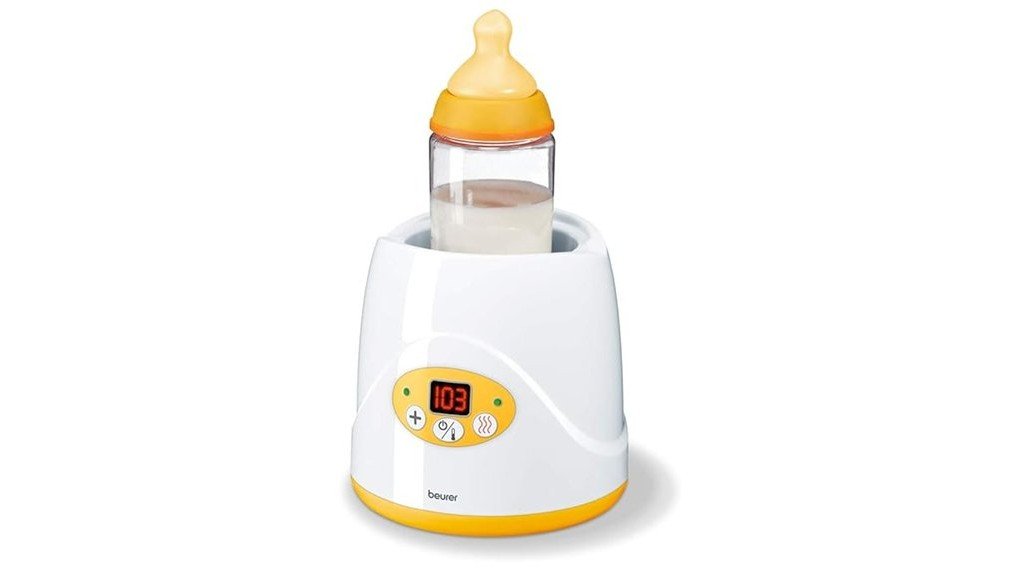
The Beurer Baby Bottle Warmer BY52 is a compact 2-in-1 unit made for warming milk, formula, and baby food. It claims broad compatibility with many bottle shapes and standard jars, plus gentle heating that helps protect nutrients. Heating times vary from about 3 to 18 minutes, depending on volume and starting temperature. Safety and cleaning features also matter here, but the real question is how well it performs in daily use.
Key Takeaways
- The Beurer BY52 is a portable 2-in-1 warmer for baby bottles and food, including breast milk, formula, and jars.
- It heats gently with water and steam, helping preserve nutrients while avoiding overheating.
- Heating times vary from about 3 to 18 minutes, offering a balance between speed and controlled warming.
- It fits wide, narrow, and angled bottles, plus commercially available and homemade baby food containers.
- Safety and convenience features include an automatic shut-off, illuminated panel, and easy daily cleaning.
What Is the Beurer BY52?
The Beurer BY52 is a portable 2-in-1 baby bottle and food warmer designed for breast milk, formula, and baby food.
The Beurer BY52 is a portable 2-in-1 warmer for breast milk, formula, and baby food.
It serves as a compact tool among baby essentials, supporting caregivers who seek efficient, controlled feeding routines. Its design suits wide, narrow, and angled bottles, plus commercially available jars and homemade meals.
An illuminated panel and LED display improve visibility during nighttime use.
The unit follows a simple three-step process: place the container, add water, and choose a setting.
For practical feeding tips, it offers a straightforward, adaptable option that supports autonomy in daily infant care.
How Fast Does the BY52 Heat Milk and Food?
Heating speed is a central advantage of the BY52, which uses water and steam to warm breast milk, formula, and food with controlled efficiency.
Reported heating times range from 3 to 18 minutes, depending on volume, starting temperature, and container contents. This range supports flexible use without forcing a rigid pace on feeding routines.
The method favors warming efficiency over harsh heat, helping preserve nutrients while avoiding unnecessary waiting. For caregivers seeking practical autonomy, the unit offers a predictable balance between speed and gentleness.
Its performance is best understood as measured, not rushed, yet still remarkably responsive.
Which Bottles and Jars Fit the BY52?
Compatibility is one of the BY52’s practical strengths, since it is designed to accommodate wide, narrow, and angled baby bottles as well as commercially available food jars. That range supports strong bottle compatibility across common feeding systems, reducing dependence on a single brand.
Its chamber also accepts modest jar dimensions, making it suitable for standard baby-food containers and small homemade portions. The fit is functional rather than restrictive, allowing users to select containers with less concern about shape.
For households seeking flexible, uncomplicated warming, this broad compatibility improves access and lowers friction in daily feeding routines.
What Safety Features Does the BY52 Include?
Safety is supported through an integrated shut-off feature that helps reduce the risk of overheating during use. This is the central control among the BY52’s safety mechanisms, giving the unit a more autonomous profile.
The illuminated panel and LED display also support clear monitoring, which can reduce uncertainty in low-light settings. For user experiences, the design appears aimed at predictable operation rather than unnecessary complication. Its compact form further supports stable placement in varied environments.
How to Clean and Use the BY52 Daily
Daily use of the BY52 centers on a simple three-step routine: place the bottle or jar with the lifter, add water to the container, and select the desired temperature on the control panel.
After each cycle, daily maintenance should include emptying residual water and wiping the chamber dry to reduce buildup and preserve performance. Removable accessories can be washed separately, and dishwasher-safe parts simplify cleaning.
Practical user tips include checking water levels before heating and matching the setting to milk or food type. This routine supports reliable warming, safe handling, and efficient, independent care.
Frequently Asked Questions
Does the BY52 Work With Frozen Breast Milk?
The BY52 can gently warm frozen milk if thawed first, though warming efficiency may vary. Its water-and-steam method supports careful heating, but users should avoid direct frozen-to-hot changes to protect milk quality and safety.
Can the BY52 Be Used While Traveling?
Yes, it can be used while traveling. What better portable options exist? Its compact design and simple three-step operation support travel convenience, while the integrated shut-off and removable parts make on-the-go use practical, objective, and efficient.
Does It Show When the Water Level Is Too Low?
Yes, it shows a low indicator when the water level is too low. This allows the user to refill promptly, supporting efficient warming and safer operation without unnecessary interruption or guesswork.
Is the BY52 Noisy During Operation?
Operational noise appears modest, not intrusive; like a whisper rather than a racket. That generally supports a calmer user experience. Reports suggest the BY52 heats quietly enough for nighttime use, though some steam sounds are normal.
Can It Warm Milk From Refrigerator Temperature?
Yes, it can warm milk from refrigerator temperature. Its milk warming efficiency and refrigerator compatibility allow chilled breast milk or formula to be heated quickly and evenly, typically within minutes, while preserving nutrients and supporting convenient feeding.
Conclusion
In the end, the Beurer Baby Bottle Warmer BY52 stands as a quiet utility, waiting on the counter like a small promise of speed and care. It warms milk and baby food gently, adapts to different containers, and adds safety with an automatic shut-off. Yet its real value emerges in daily routines, where simple cleaning and reliable function matter most. The question is not whether it performs, but how often it will be needed.