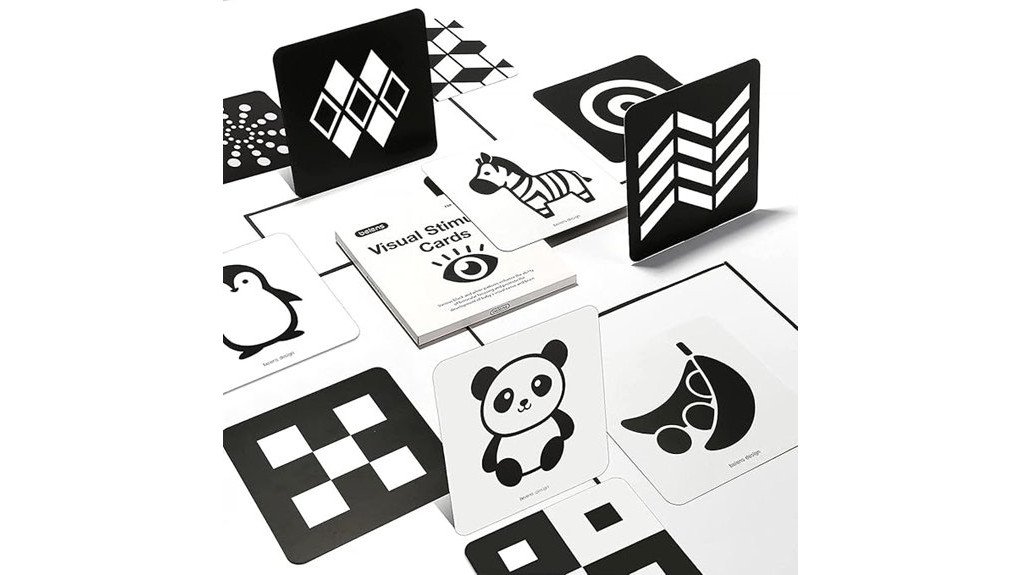
Beiens High Contrast Baby Flashcards present a simple but purposeful approach to early visual stimulation. The 20-card set uses bold imagery, a matte anti-glare finish, and age-based progression to support infants from newborn stage through toddlerhood. They appear thoughtfully made with safe, eco-conscious materials, though their real value depends on how consistently they hold a baby’s attention. What stands out most is not just the design, but what it may reveal about early learning.
Key Takeaways
- Beiens High Contrast Baby Flashcards are designed for newborns to 36 months, with age-based visuals that match early developmental stages.
- The bold, high-contrast images help support infant attention, visual tracking, recognition, and early memory development.
- The set includes 20 cards and 40 pages, offering structured variety without overwhelming very young babies.
- A matte, anti-glare finish and odor-free, soy-ink materials make the cards safer and gentler for supervised infant use.
- They are a practical choice for parents and caregivers seeking simple, guided sensory stimulation and early learning support.
What Are Beiens High Contrast Baby Flashcards?
Beiens High Contrast Baby Flashcards are an early-learning card set designed for newborns and infants from 0 to 36 months, with 20 cards and 40 pages arranged for different developmental stages.
They present bold images intended to support flashcard benefits such as attention, recognition, and early memory practice. Their age-based structure aligns with developmental milestones, allowing caregivers to choose material suited to a child’s stage rather than forcing premature learning.
The set appears practical, orderly, and purpose-driven, though its value depends on consistent use. For families seeking simple, emancipatory learning tools, it offers a measured, accessible option without excess complexity.
How Do These Flashcards Support Visual Development?
High-contrast imagery is the core mechanism through which these flashcards support visual development. By presenting bold shapes and distinct tonal separation, the cards offer visual stimulation that newborn eyes can more easily register than softer, busier visuals.
This can encourage attention, tracking, and early pattern recognition, all of which are associated with cognitive growth. The matte, anti-glare finish further supports comfortable viewing, reducing unnecessary strain.
While the cards cannot guarantee developmental gains on their own, they appear well aligned with early sensory needs, giving infants a clear, manageable way to engage with visual form and contrast.
What’s Included in the 20-Card Set?
The 20-card set is organized as a compact, stage-based collection rather than a random assortment of images, with 40 pages in total designed to match different developmental windows from newborn through toddlerhood.
Each card design emphasizes bold, high-contrast visuals that suit early attention spans and encourage focused looking. The progression across developmental stages feels intentional, giving caregivers a clearer path instead of guesswork.
This structure is practical and liberating for those seeking simple, purposeful tools. While the set is limited in quantity, its curated layout offers a balanced mix of visual variety and developmental relevance without unnecessary clutter.
Are These Baby Flashcards Safe for Newborns?
Yes—when used as intended, these flashcards appear well suited for newborns. Their high-contrast visuals can support early attention without overwhelming delicate eyes, and the matte, anti-glare finish helps reduce harsh reflections.
From a newborn safety standpoint, the use of environmentally friendly soy ink and odor-free flashcard materials is reassuring, since it lowers concerns about unwanted chemical exposure. The cards are also sturdy enough for supervised handling, which matters when tiny hands begin exploring.
Still, they are safest as a visual aid, not a chew toy, and adult oversight remains essential for truly liberated, low-risk use.
Who Are These Flashcards Best For?
These flashcards are best suited for parents, caregivers, and early-education enthusiasts who want a simple visual tool for newborns through toddlers, especially during the first 36 months of rapid sensory development.
They fit households seeking guided sensory stimulation without complicated setups and may also support children moving through early developmental milestones.
- Families introducing visual contrast at home
- Caregivers wanting age-based learning support
- Gift-givers choosing practical educational items
Their value is strongest for infants needing focused eye engagement, though older toddlers may outgrow the basic imagery sooner.
Frequently Asked Questions
How Durable Are the Flashcards With Frequent Use?
The flashcards appear fairly durable for frequent use, with solid flashcard longevity and respectable wear resistance. Their double-sided film and matte finish should tolerate handling well, though repeated bending, chewing, or moisture may eventually cause damage.
Can They Be Cleaned Without Damaging the Cards?
Yes; gentle cleaning methods like wiping with a slightly damp cloth should usually avoid damage, since the card materials are double-sided film with matte protection. Harsh scrubbing, soaking, or chemicals would likely compromise longevity and safety.
Do the Cards Come With Storage or a Carrying Case?
They do not appear to include a carrying case, so storage options are limited unless separately provided. That omission may feel practical yet minimal; a compact pouch or box would better support portable, liberated use.
Are There Any Bilingual or Language-Learning Features?
No bilingual or language-learning features appear included; the cards seem focused on visual contrast rather than speech. Like a quiet lantern for the developing mind, they offer limited bilingual benefits and little direct language acquisition support.
What Age Milestones Are Each Card Set Designed For?
Each card set is designed for developmental stages from 0–3 months, 3–6 months, and beyond through 36 months, offering age-appropriate sensory stimulation. The progression appears thoughtfully structured, though practical engagement may vary by infant.
Conclusion
In the small gallery of early life, Beiens High Contrast Baby Flashcards act like lanterns hung low for tiny eyes, guiding attention toward shape, pattern, and focus. Their 20-card sequence, matte finish, and safe materials make them a thoughtful tool rather than a toy of chance. They seem best suited to parents seeking gentle visual stimulation across infancy, though their value rests in consistent use and realistic expectations.

