Disclosure: As an Amazon Associate, we earn from qualifying purchases. If you buy through links on this page, we may earn a small commission at no extra cost to you.
A baby puree maker can simplify early feeding by turning fruits, vegetables, and grains into smooth, age-appropriate textures. Its compact design suits small kitchens and travel, while easy-clean surfaces support better hygiene. Yet not every model offers the same control, durability, or convenience. Parents considering one may want to look closely at the features that matter most before deciding whether it fits their routine.
Key Takeaways
- A baby puree maker simplifies mashing soft foods into smooth, infant-friendly textures.
- It works well for fruits, vegetables, and cooked grains with controlled pressure.
- The non-slip, ergonomic design makes feeding prep safer and easier for new parents.
- Its compact, portable build suits both home kitchens and travel use.
- Easy-clean polypropylene surfaces help with quick washing, odor resistance, and hygienic storage.
What Is a Baby Puree Maker?
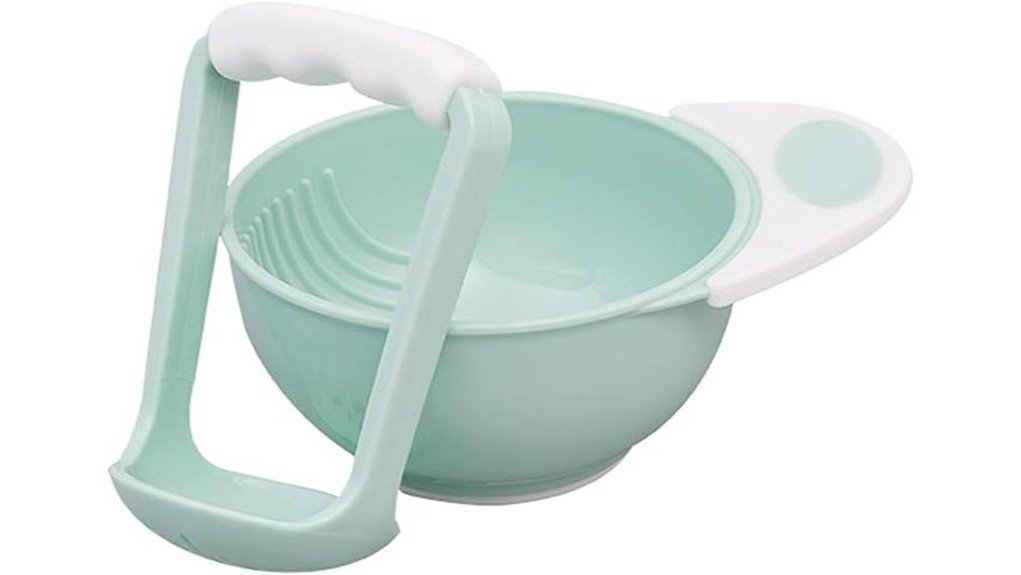
A baby puree maker is a simple feeding tool designed to mash and blend soft foods into infant-friendly textures. It usually includes a masher and bowl, both made for practical baby food preparation.
The set handles fruits, vegetables, and cooked grains with controlled pressure, producing smooth or lightly textured results. Its non-slip grip supports steady use, while the compact form suits home routines or travel.
Heat-resistant plastic allows safe handling of warm ingredients. Basic feeding tips often emphasize clean surfaces, consistent texture, and efficient cleanup, which this tool supports with minimal effort and clear function.
Why Use a Baby Puree Maker?
Baby puree makers are used because they simplify the preparation of infant food while allowing parents to control texture and consistency.
They support baby nutrition by turning fruits, vegetables, and cooked grains into smooth or lightly textured meals suited to different stages of feeding. This helps caregivers build feeding routines that are efficient and adaptable, without relying on processed options.
Their compact design also supports use at home or on the move, giving families more autonomy over what infants eat.
Their compact design supports use at home or on the move, giving families more flexibility in infant feeding.
Clean handling and simple operation make daily meal preparation more direct, practical, and consistent for newborn care.
Key Features to Look For
When evaluating a baby puree maker, several practical features help determine whether it will perform well in daily use. Essential features include a secure grip, compact form, and heat-resistant construction. Safety considerations matter equally, especially stable materials and smooth surfaces that support clean handling.
- Ergonomic handle for controlled mashing
- Portable size for travel or small kitchens
- Durable polypropylene body for repeated use
- Easy-clean design that resists staining and odor
A well-chosen model gives parents efficient, independent meal preparation without unnecessary complexity.
It should support safe, flexible feeding routines while remaining simple to store and maintain.
How to Puree Fruits, Veggies, and Grains
To puree fruits, vegetables, and grains effectively, the food should first be cooked or softened until it can break down easily. Then, it should be placed in the bowl and mashed with steady pressure using the puree maker.
This approach supports consistent baby puree techniques, allowing the user to shape texture with limited effort. Soft fruits yield smooth results, while vegetables and grains benefit from brief steaming or simmering.
Small ingredient combinations can be blended for balanced flavor and nutrition. The masher bowl set gives controlled results, helping parents prepare fresh meals with autonomy, efficiency, and reliable consistency for infants.
How to Clean and Store It
Cleaning the baby puree maker is straightforward because its smooth PP plastic surfaces rinse easily and do not retain odor or stain after use.
For effective cleaning tips, warm water and mild soap remove residue quickly, while a soft brush reaches the bowl’s curves and masher edges.
- Rinse immediately after use.
- Wash with non-abrasive soap.
- Dry fully before reassembly.
- Use compact storage solutions in a clean, dry cabinet or travel pouch.
This routine preserves durability, supports hygienic feeding, and keeps the lightweight set ready for independent, portable meal preparation without unnecessary effort.
Frequently Asked Questions
Is the Masher Bowl Set Safe for Travel and Daycare?
Yes, the masher bowl set appears safe for travel convenience and daycare compatibility, thanks to its compact, lightweight design and heat-resistant polypropylene construction. Its smooth surfaces and non-slip handle also support practical, hygienic handling.
Can This Puree Maker Handle Hot Ingredients Directly?
Yes, it can handle hot ingredients directly. Like a sturdy bridge over simmering waters, the heat-resistant polypropylene bowl supports hot ingredient safety and varied puree texture options, while remaining compact, clean, and reliable for daily use.
Does the Plastic Retain Odors After Repeated Use?
It typically does not retain odors after repeated use; the smooth surfaces and strong material quality help limit odor retention. With proper washing, the plastic stays neutral, clean, and suitable for varied purees and grains.
Is the Handle Comfortable for One-Handed Mashing?
Yes, the handle appears comfortable for one-handed mashing. The ergonomic design likely supports a secure grip, and user feedback would be needed to verify this theory. Its non-slip shape aims to reduce strain and improve control.
How Durable Is It Compared to Electric Baby Food Makers?
It is generally less complex and often more durable than electric baby food makers, thanks to its material quality and simple construction. This durability comparison favors fewer breakdown risks, easier cleaning, and dependable everyday use.
Conclusion
To sum up, a baby puree maker offers new parents a practical way to prepare smooth, nutritious meals with minimal effort. Its compact size, easy cleaning, and simple operation make it especially useful for busy households. For example, a parent introducing carrots and apples to a six-month-old can quickly create fresh, digestible puree at home rather than relying on store-bought options. Overall, it supports healthier feeding habits while saving time, space, and stress.