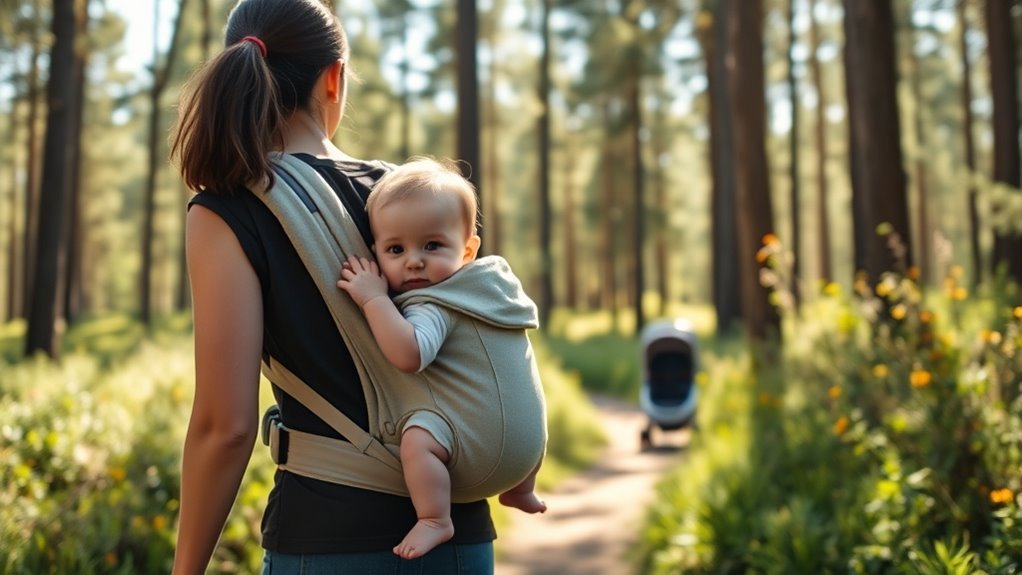
Walking outside with your baby can support muscle strength, balance, coordination, and brain development while giving them rich sensory input from changing sights, sounds, and surfaces. Natural light helps reinforce sleep-wake rhythms, and gentle routines can make naps and rest easier. Short, low-pressure walks also encourage bonding and curiosity. Use safe routes, proper layers, and stroller or carrier support, and you’ll build a simple habit that grows with your baby in ways worth knowing more about.
Why Baby Walks Support Development
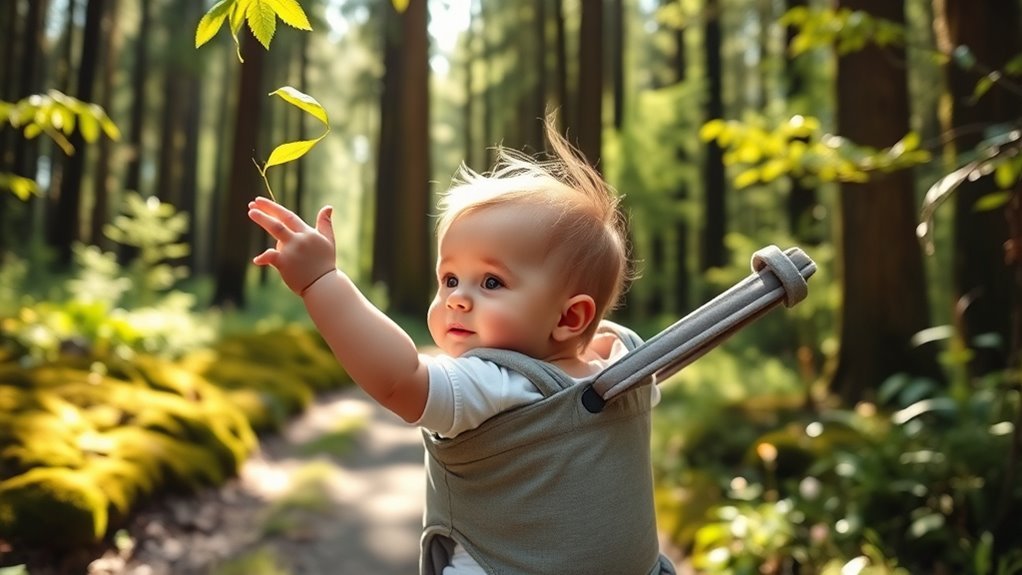
Baby walks support development by giving infants regular opportunities to move, explore, and adapt to their surroundings. When you take your baby outside, you encourage crawling, reaching, and later walking on uneven ground, which strengthens muscles and improves coordination. This movement supports physical health and helps build confidence in the body.
Outdoor exposure also offers changing sounds, textures, and sights that stimulate brain development and curiosity. Natural settings give your baby safe chances to process new information, which supports learning and adaptation.
Outdoor exposure offers changing sounds, textures, and sights that spark brain development, curiosity, and learning.
Regular walks can also expose your infant to diverse microbes, helping train the immune system and increase resilience against common illness. When you choose walks that feel good for you, you may stay out longer, and your baby benefits from more time to move and notice the world.
These shared experiences can support growth without pressure, giving you and your baby space to thrive.
Outdoor Walks and Baby Sleep
Outdoor walks can also support your baby’s sleep by reinforcing day-night rhythms through exposure to natural light and regular routine.
When you spend time outside with your baby, you may help strengthen circadian signaling, which can lead to more settled sleep.
Research shows that outdoor sleep isn’t rare: about 29% of mothers practice it, and infants average roughly four hours each week.
Many families use it one to four times weekly, suggesting this can fit into everyday care.
Younger infants and babies in rural or detached-home settings appear more likely to sleep outdoors, reflecting practical environmental differences.
The benefits of outdoor exposure during rest are biological, not magical.
Natural light helps cue the body’s sleep-wake cycle, and a predictable routine can feel calming for both of you.
If outdoor sleep fits your family, it can be a simple, freeing way to support rest.
How Outdoor Walks Build Physical Skills
Beyond supporting sleep and routine, walks also give your infant practical opportunities to build motor skills. You can use outdoor play to let your baby crawl, reach, shift weight, and later step with support, all of which strengthen gross motor control.
Varied surfaces, like grass, pavement, and gentle slopes, challenge muscles, improve balance, and refine coordination. This kind of physical activity also helps your infant map space, so moving through new settings feels more manageable over time.
Varied surfaces challenge muscles, improve balance, and help your infant map space with growing confidence.
As your baby encounters wind, light, and textures, they practice sensory exploration, which supports healthy development. Regular walks can improve muscle tone and overall physical health, and they may lower the risk of developmental delays.
For young children, these small, repeated experiences add up. You’re not pushing achievement; you’re creating safe, ordinary chances for your baby to build confidence in movement and grow with freedom.
What Babies Learn Outside
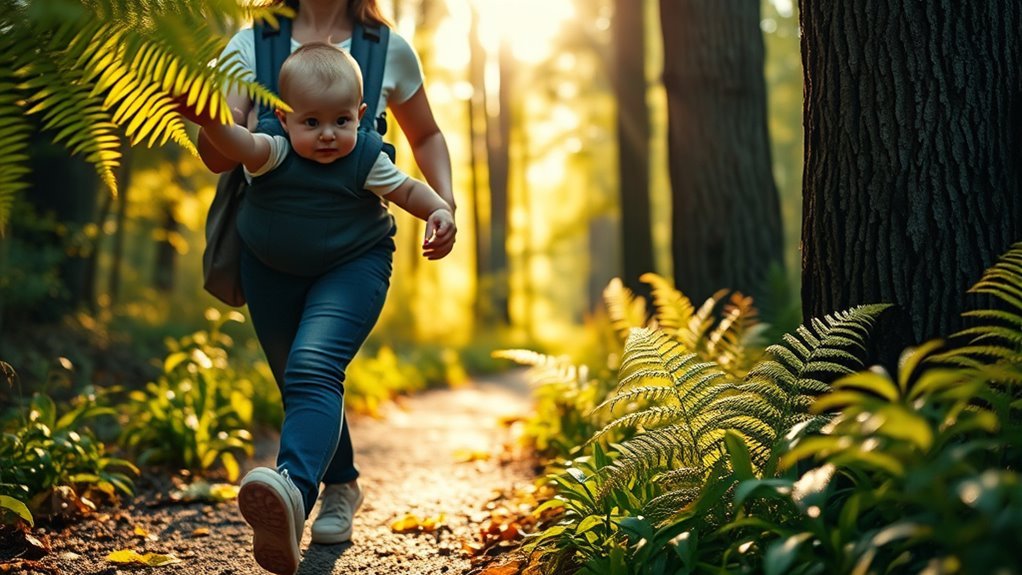
Outside, your baby is learning through every sense at once: the feel of grass, the sound of birds, the shifting light of changing weather, and the movement of leaves all help support cognitive development.
When you spend more time outdoors, you give your baby repeated chances to notice patterns, make simple comparisons, and build early problem-solving skills through active exploration. You can name plants, animals, and weather as you go, and that steady exposure supports language growth.
Outdoors, your baby also practices crawling, reaching, and later walking in a varied setting that challenges gross motor control. Natural light can help regulate circadian rhythms, which supports healthier sleep and overall well-being.
These experiences benefit physical and mental development without overstimulation. They also invite curiosity in a way that feels open and liberating, letting your baby learn at a natural pace while you trust their capacity to discover, adapt, and thrive.
How Outdoor Walks Strengthen Bonding
When you take your baby for regular walks, the calmer pace and natural surroundings can support emotional well-being for both of you, making it easier to feel connected.
Outdoor time gives you a shared setting where you can slow down, notice your baby’s cues, and respond with more ease. The rhythmic sounds of nature often soothe infants, which can reduce fussiness and create a more peaceful exchange between you and your child.
Evidence suggests that mothers who spend time outdoors with their babies often report stronger bonds, likely because these outings reduce daily distractions and increase focused interaction.
Since many mothers want to increase regular walking, this can also reflect how enjoyable the activity feels, which supports more positive parent-child contact.
As you explore the natural world together, your baby’s curiosity grows, and you get repeated chances to share discovery. That shared attention helps you and your children feel secure, engaged, and more closely connected.
How to Keep Baby Walks Safe
You can keep baby walks safer by choosing parks or soft-surface routes, using a stroller or carrier with proper support, and keeping the outing brief.
Check the weather before you leave and avoid walks during extreme heat, cold, or inclement conditions.
For infants under 6 months, use shade from hats or umbrellas and baby-safe sunscreen to help protect sensitive skin.
[Products Worth Considering]

Stroller Net with UPF 50+ Breathable Sunshade: High-strength hexagonal honeycomb mesh effectively blocks insects while allowing maximum airflow to keep baby cool and well-ventilated in summer. UPF 50+ Sunshade for reliable sun protection

SUN PROTECTION: The stroller sunshade is specifically designed for babies. It blocks most of sun rays and harmful UV rays (UPF 50+). With its wide-spread stroller sunshade, your baby will be protected from the sun, dust and wind, helping your baby to rest comfortably. (so much more effective than an umbrella for a stroller)

SIMPLE SET-UP: Easily attaches to strollers or car safety handles above windows
Choosing Safe Walking Routes
Choosing a safe walking route starts with surfaces that support steady footing; smooth, even paths reduce the risk of trips and falls for both you and your baby.
For safer outdoor time, choose safe walking routes with good lighting and little traffic, especially at dawn or dusk. You’ll lower exposure to hazards and protect your physical health by avoiding crowded or uneven areas.
Parks and green spaces are excellent options because they combine safe paths with sensory stimulation for your baby.
Before you leave, check the route for abrupt slopes, loose gravel, or blocked sidewalks. Use a stroller or baby carrier with secure harnesses so your infant stays stable on rougher terrain.
When you plan intentionally, you can move with confidence and enjoy the benefits of walking together.
Weather, Gear, and Shade
Weather can change a baby walk quickly, so check the forecast before you head out and avoid extreme heat, heavy rain, or other unsafe conditions.
Dress your baby in light layers so you can adjust to shifting weather and reduce overheating or chilling. Choose gear with a built-in sunshade, or use a stroller canopy or carrier cover to limit direct sun, especially from 10 a.m. to 4 p.m.
For babies older than six months, apply baby-safe sunscreen to exposed skin, and add a hat and UV-protective clothing.
When possible, walk in shade, such as tree-lined paths or parks, to keep temperatures lower and sun exposure minimal.
These simple steps help you protect your baby while you enjoy outdoor freedom together.
Easy Ways to Start Walking Outside With Baby
You can start with short daily routes, using a stroller or baby carrier so you both get regular outdoor movement without overdoing it.
Aim for 1–3 walks each week at first, and many mothers report benefits from about 201 minutes of outdoor walking per week for physical health.
If you time walks around naps, your baby may settle more easily, and the routine can support better sleep and mood.
[Products Worth Considering]

Plush unicorn rides with baby wherever she goes!
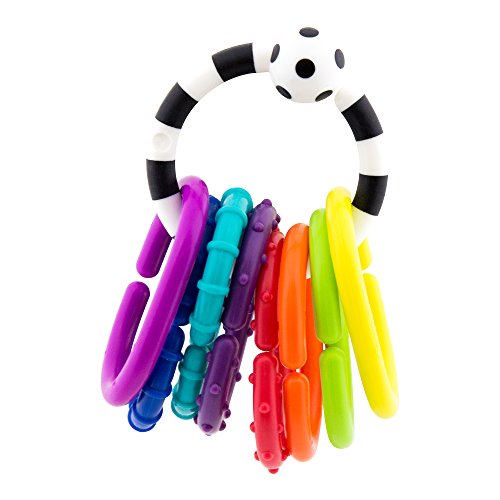
TACTILE STIMULATION: Different materials and surfaces stimulate baby's sense of touch and teach baby to recognize new objects.
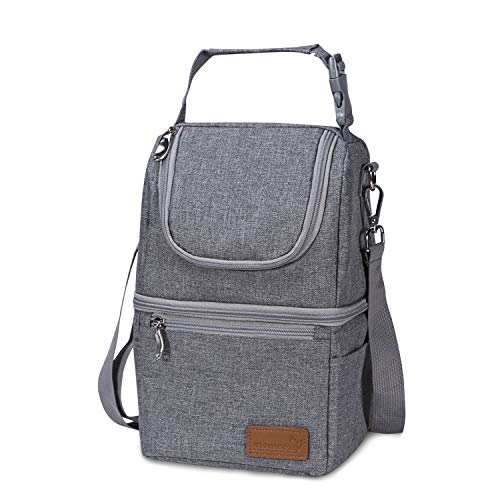
Detachable Insulated Compartment: Change your double baby bottle bag into a wine carrier by removing the insulated compartment. Multi-Uses: They can be used as breastmilk cooler bag or wine carrier, which is ideal for work, picnic, car trip, camping or pumping moms.
Pick Short Daily Routes
Start with 15- to 30-minute routes to ease your baby into outdoor walking while supporting sensory input, early cognitive development, and a calmer routine.
You can build a steady pattern with 1-3 walks per week, which aligns with typical family activity levels and supports your well-being too.
Choose a simple loop near home so you can get outside without pressure and return before your baby gets overstimulated.
Short outings give your baby time outside to notice light, movement, and sound at a manageable pace.
Fresh air and natural light can also support sleep quality and mood.
As you repeat these walks, you’re creating a practical, liberating routine that fits real life while helping your baby adapt confidently to the world beyond home.
Use Stroller Or Carrier
A stroller or baby carrier can make outdoor walking easier to begin and more comfortable to maintain. You can choose the option that fits your body, your baby’s needs, and the time you have available.
A carrier keeps your infant close, and about 22% of mothers use one for at least half of their walks. A stroller can support longer outings and lets you move with less strain while your baby still gets sensory input from the environment.
Regular walks promote physical development, and outdoor light and fresh air may support your baby’s immune system and healthy routines.
You don’t need perfection; you need consistency. When you walk more often, enjoyment usually increases, and many mothers want to do it more.
Time Walks With Naps
When naps and walks line up, outdoor time can become easier to fit into your day and may improve your baby’s sleep quality by supporting relaxation and steadier sleep patterns.
You can spend nap windows on a brief stroll, then let your baby rest in fresh air when safe and weather permits. This routine may help regulate sleep and support calmer evenings.
Walking outside with your baby also lets you spend more time moving, with mother-infant pairs averaging about 201 minutes weekly.
Outdoors provides natural light that can support Vitamin D Levels and healthy circadian cues. Some families also use outdoor napping, which can total about four hours weekly, to reinforce rest.
If weather or time feels limiting, start small; even short walks can improve mood and bonding.
How to Walk Outside With Baby in Any Weather
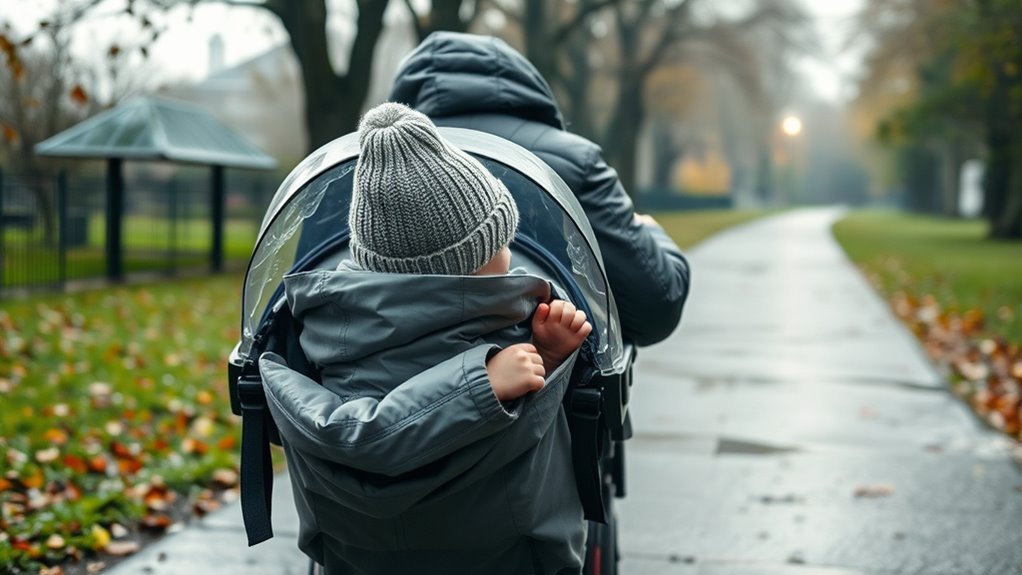
Dressing your baby for the conditions is the foundation of safe, comfortable outdoor walks: use layered clothing, hats, and mittens in colder weather, and switch to lightweight fabrics plus sun protection in warmer months.
When you go outside, you support your baby or toddler outside while also protecting your mental health.
- Check the forecast before you leave.
- Use a stroller or carrier suited to the terrain.
- Aim for short daily walks and build from there.
- Watch for signs of overheating or chill.
- Stay flexible when weather or time gets in the way.
Evidence suggests parents who walk outdoors average 201 minutes weekly, and regular exposure can help infants sleep and settle their circadian rhythm.
If rain, wind, or heat blocks your plan, adapt the route, time, or length instead of canceling.
Even a brief walk can feel liberating, restore routine, and make outdoor time sustainable for both of you.
Frequently Asked Questions
Are Walks Outside Good for Babies?
Yes—walks outside can be good for your baby. You’ll support nature exposure, sensory development, and fresh air, which may improve sleep, activity, and cognition. Keep walks short, safe, and weather-appropriate for reassurance.
What Is the 5 3 3 Rule for Babies?
You can follow the 5 3 3 rule by giving your baby 5 outdoor days, 3 hours total, and 3 environments weekly. Use safe outdoor gear, prioritize baby safety, and support sensory stimulation for healthy development.
What Are the Early Signs of Giftedness in Babies?
Giftedness can bloom like a quiet sunrise: you may notice early motor milestones, intense focus, advanced babbling, and strong curiosity. These signs can reflect early cognitive development, creative problem solving, and sensory exploration; they’re reassuring, not definitive.
What Is the 3 6 9 Rule for Babies?
You follow the 3-6-9 rule by giving your baby 3 hours outdoors weekly at 3 months, 6 at 6 months, and 9 at 9 months, supporting baby development, sensory exploration, and outdoor safety.
Conclusion
Outdoor walks can support your baby’s development in many ways, from sleep and motor skills to early learning and bonding. When you step outside together, you give your baby a gentle, changing environment that helps growth feel natural, like sunlight reaching a young plant. Keep walks safe, simple, and consistent, and you can build a healthy routine that works in almost any season. Your daily strolls don’t need to be long to make a real difference.
