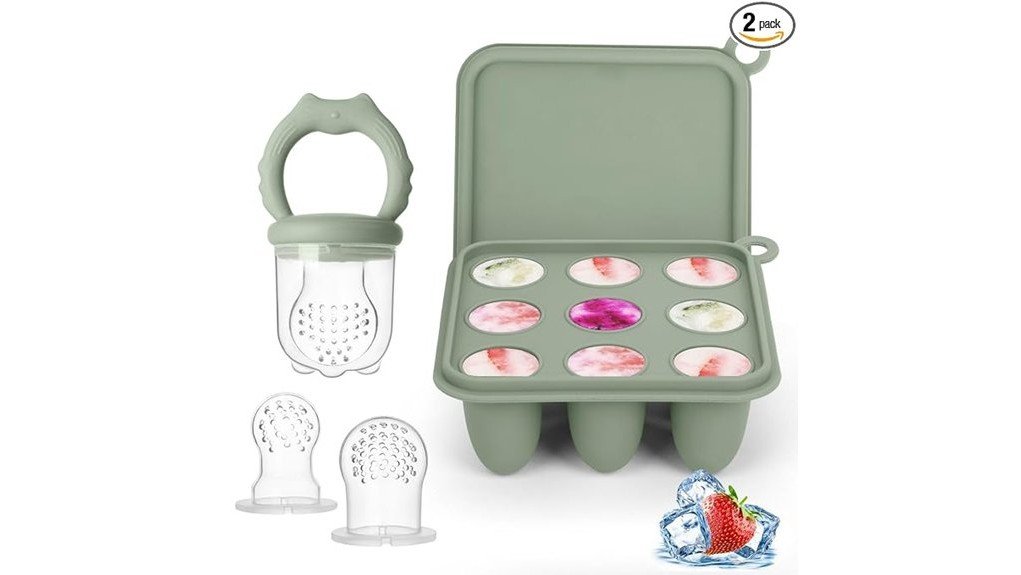
A baby fruit food feeder offers a simple way to introduce soft foods while reducing mess and choking concerns. Its silicone body and small opening are designed for controlled feeding, and the one-piece construction makes cleaning easier. Parents often note its use during teething as well as mealtime. Still, the real question is how well it performs in daily use, especially when compared with other feeding tools.
Key Takeaways
- Baby fruit feeders let infants safely explore soft fruit, puree, or breast milk with controlled 2mm openings.
- Food-grade silicone construction is durable, flexible, odor-free, and easy to clean in the dishwasher.
- One-piece design helps reduce choking risks and avoids loose parts or brittle plastic concerns.
- They soothe teething gums by letting babies chew chilled fruit or puree in a contained, mess-free way.
- Best results come from supervised use, starting with single ingredients before trying gentle fruit combinations.
How a Baby Fruit Feeder Works
A baby fruit feeder works by holding small pieces of soft fruit, puree, breast milk, or other suitable foods inside a food-grade silicone bag or nipple, while a 2mm opening lets out only tiny amounts at a time.
The infant can grasp the handle and mouth the feeder, drawing flavor and texture through controlled access. This supports feeding techniques that reduce large bites while encouraging independent exploration.
Different fruit combinations, such as banana with pear or mango with peach, can be offered after checking developmental readiness.
The design also allows frozen contents, which may soothe gums and extend feeding time during teething.
Baby Fruit Feeder Safety and Materials
Baby fruit feeders are typically made from food-grade silicone, a material chosen for its durability, flexibility, and suitability for contact with infant foods. This construction supports safety standards by reducing concerns associated with brittle plastics or loose parts.
The one-piece handle design helps limit choking risk, while the soft feeding section is intended to release small amounts of food. Material durability also matters, since repeated washing, freezing, and heating can wear lesser products quickly.
A well-made feeder should remain intact, easy to clean, and free from odors, giving caregivers a practical tool without unnecessary compromise.
How to Use the Baby Food Feeder
To use the baby food feeder, a caregiver first opens the silicone nipple or pouch, then places a small amount of soft fruit, puree, or frozen breast milk inside before securing it closed.
The feeder is then handed to the infant for supervised self-feeding, allowing the child to explore textures at an individual pace.
The feeder is then handed to the infant for supervised self-feeding, letting the child explore textures at a comfortable pace.
Practical feeding techniques include starting with single ingredients, then trying gentle fruit combinations such as banana and pear.
After use, the unit is rinsed or placed in the dishwasher.
The caregiver should inspect the opening, confirm it is sealed, and limit each serving to manageable portions.
Baby Fruit Feeder Benefits for Teething
Beyond helping infants explore first foods, the feeder also offers practical relief during teething. Its soft silicone surface can soothe sore gums while supporting self feeding, giving infants a controlled way to mouth chilled fruit or puree. The design keeps small bits contained, which reduces mess and helps caregivers maintain calm routines.
| Feature | Benefit | Note |
|---|---|---|
| Soft silicone | Gum comfort | Gentle contact |
| Small openings | Safer feeding | Limits large pieces |
| Easy grip | More independence | Supports self feeding |
| Chilled contents | Teething relief | Freshens sore gums |
| Food-grade material | Practical use | Simple cleanup |
How the Breastmilk Popsicle Mold Helps
The breastmilk popsicle mold gives caregivers a simple way to freeze breast milk, juice, puree, or other baby-safe foods into chilled portions that can be offered during teething or early feeding stages.
Its silicone design supports clean popsicle preparation, and the included lid helps reduce spills in the freezer.
Because the mold is freezer-safe and easy to release, it streamlines routine use without extra tools.
The resulting frozen treats can soothe sore gums while introducing familiar flavors in a controlled form.
For households seeking flexible feeding options, it provides a practical, low-effort method for preparing infant portions.
Frequently Asked Questions
What Ages Are Best for Using a Baby Fruit Feeder?
Typically, baby fruit feeders suit infants around 4 to 6 months, once signs of readiness appear. They support baby led weaning and fruit safety, offering controlled tasting during teething, under close adult supervision.
How Do I Clean Stubborn Stains From Silicone Feeder Parts?
Soak parts in warm water, baking soda, and mild dish soap; then scrub gently with a soft brush—why let stains linger? For silicone cleaning, sunlight, vinegar, or peroxide can improve stain removal without harsh chemicals.
Can the Feeder Be Used With Frozen Vegetables?
Yes, the feeder can be used with frozen vegetables, provided pieces remain small and softening is monitored. It supports frozen vegetable benefits, but feeder safety concerns require supervision, checking temperature, and ensuring the silicone mesh stays intact.
How Long Do Breastmilk Popsicles Take to Freeze Fully?
Breastmilk popsicles usually freeze fully in about 4 to 6 hours, though overnight is safer—because apparently even milk needs bureaucratic patience. With popsicle molds, breastmilk benefits are preserved best when frozen promptly and evenly.
Are Replacement Silicone Bags Sold Separately?
Replacement silicone bags are sometimes sold separately, but availability varies by seller. He or she should verify listings for silicone bag durability and feeding safety, since replacement options, sizes, and compatibility differ across retailers and regions.
Conclusion
In the end, the baby fruit food feeder stands as a small bridge between milk and first bites, offering infants a safer path toward self-feeding. Its silicone body and tiny opening symbolize a guarded doorway to new textures, while its soft surface eases the troubles of teething. Paired with the breastmilk popsicle mold, it adds another simple tool to a parent’s kit, supporting comfort, exploration, and gradual growth with practical ease.