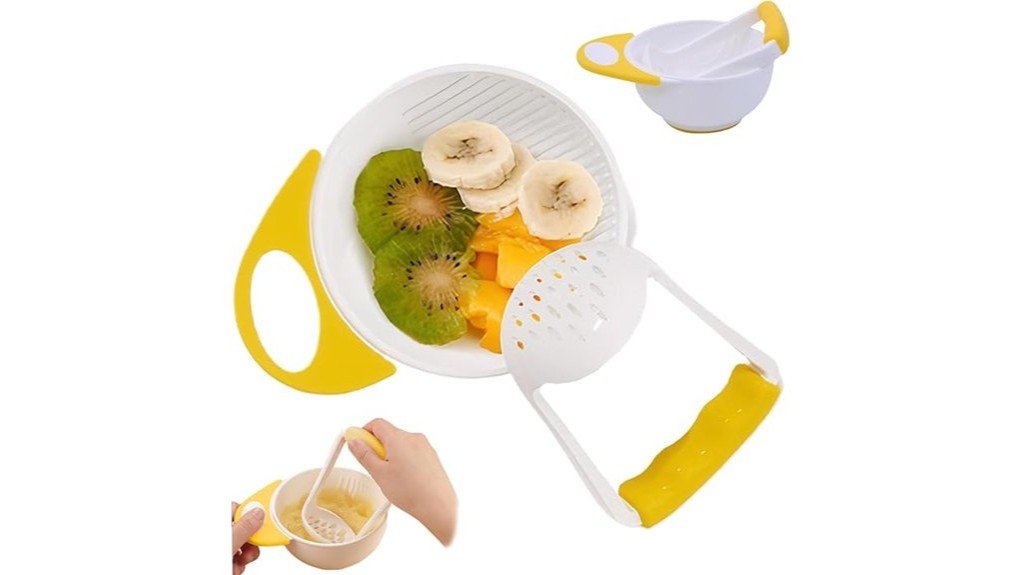
A baby food maker with handle offers a simple way to mash soft foods for infants without relying on electric equipment. Its manual design, food-grade materials, and stable base suggest practical use in everyday meal prep. Still, the real question is whether its convenience, cleaning ease, and safety features justify the purchase. That depends on how well it performs in regular home use.
Key Takeaways
- A baby food maker with handle is a manual tool that mashes soft cooked foods into fresh infant meals.
- The ergonomic handle offers controlled pressure, making it easier to reach the desired texture with short strokes.
- Food-grade PP and TPE construction supports hygienic use, safety, and easy cleaning.
- The non-slip base and stable design improve handling and reduce mess during preparation.
- It is a portable, affordable alternative to electric processors, though it requires manual effort.
What Is a Baby Food Maker With Handle?
A baby food maker with handle is a small manual kitchen tool designed for preparing infant meals by mashing and grinding soft foods into a smooth texture.
It combines a bowl and masher to support controlled food preparation without complex equipment. Its purpose is to help caregivers produce fresh portions that may preserve nutritional benefits by limiting unnecessary processing.
The device suits households seeking practical autonomy in infant feeding, since it reduces dependence on packaged alternatives.
The device supports households seeking practical autonomy in infant feeding, reducing reliance on packaged alternatives.
Its structure is typically simple, hygienic, and efficient, making it a focused instrument for liberated, self-directed meal preparation.
How to Use the Baby Food Maker
To use the baby food maker, soft cooked ingredients are placed in the bowl, then mashed with the ergonomic handle until the desired texture is reached. This baby food preparation method emphasizes control and efficiency, reducing dependence on processed options.
The process is straightforward:
- Add softened produce or grains.
- Apply steady mashing techniques in short strokes.
- Rotate contents to use the bowl’s interior stripes.
- Continue until consistency matches infant needs.
The large capacity supports batch preparation, while the handle allows directed pressure with minimal effort. Overall, the tool streamlines independent, practical meal making.
Baby Food Maker Safety Features
Safety is a central feature of the baby food maker, with its food-grade PP and TPE construction supporting hygienic, infant-safe food preparation.
Its design aligns with basic safety standards through stable handling, a non-slip base, and a heat-resistant grip that reduces unnecessary risk during use.
Material safety is emphasized by the sturdy, baby-suitable composition, which limits exposure to questionable substances.
Material safety is emphasized by the sturdy, baby-suitable composition, helping limit exposure to questionable substances.
The ergonomic masher also supports controlled pressure, helping users process food with confidence and independence.
How to Clean and Store It
Cleaning the baby food maker is straightforward, as its food-grade PP and TPE construction can be sanitized with boiling water for hygienic use. Objective Cleaning tips support routine care and limit residue buildup.
- Rinse the bowl and masher immediately after use.
- Use warm water and mild detergent on all surfaces.
- Air-dry fully before reassembly.
- Choose storage solutions that keep components dry, covered, and separated from dust.
The non-slip base and handle should be wiped clean, then stored in a ventilated cabinet. This process preserves cleanliness, supports independence, and keeps preparation orderly without excess effort.
Is the Baby Food Maker Worth Buying?
After cleaning and storage, the main question becomes whether this baby food maker offers enough practical value to justify the purchase.
Its low weight, non-slip base, and heat-resistant handle support simple, independent meal prep. A large bowl and easy-sanitize materials reduce daily labor, which matters for households seeking less dependence on packaged foods.
In a cost comparison with electric processors, it is cheaper and less complex, though less automated. User reviews would likely favor its portability and safety, while noting that manual mashing requires effort.
For many new parents, that tradeoff appears reasonable.
Frequently Asked Questions
What Materials Are Used in the Baby Food Maker?
It uses food-grade PP and TPE materials. These support safety features, including durability and heat resistance. User reviews would likely note the firm, hygienic construction as suitable for preparing infant food efficiently and securely.
How Much Does the Baby Food Maker Weigh?
It weighs 150 grams, offering a favorable weight comparison for compact kitchen tools. Its portability features make it easy to carry, store, and use, supporting efficient, independent meal preparation for caregivers seeking practical freedom.
What Are the Bowl and Masher Dimensions?
The bowl measures 15 x 6 cm and the masher 12 x 8 cm. These dimensions support ample bowl capacity and an efficient masher design, offering practical, stable food preparation for independent, hygienic use.
Does the Bowl Have a Non-Slip Base?
Yes, the bowl has a non-slip base, improving stability during use. This safety feature supports controlled mashing and ease cleaning, while the sturdy, hygienic design suits practical, independent baby food preparation.
Is It Suitable as a Gift for New Parents?
Yes; it suits new parents well, offering gift practicality and user convenience. Like a steady compass, it simplifies baby food preparation, supports hygienic use, and provides a thoughtful, functional present for households seeking easier nourishment.
Conclusion
In review, the baby food maker with handle presents a simple, dependable option for preparing infant meals. Its manual design, stable base, and food-grade construction support safe, controlled use, while cleanup remains quick and uncomplicated. Like a small kitchen tool shaped for precision, it turns soft ingredients into smooth portions with minimal effort. For families seeking freshness without complexity, it appears to offer practical value and steady everyday usefulness.

