Disclosure: As an Amazon Associate, we earn from qualifying purchases. If you click a link on this page and make a purchase, we may receive a small commission at no extra cost to you.
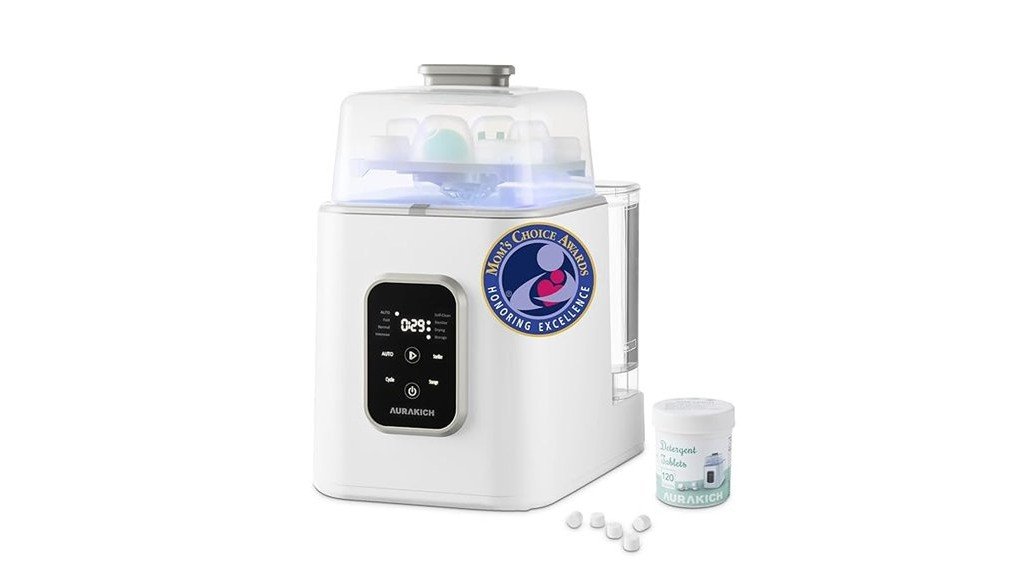
Cleaning baby bottles every day can take more time than many parents expect, especially when you also need to sterilize, dry, and store feeding parts safely. The Baby Bottle Washer, Sterilizer & Dryer is designed to handle those steps in one appliance with washing, heat sterilization, warm-air drying, and HEPA-filtered storage. It looks most useful for parents who want less sink work and a more consistent bottle-care routine. The main tradeoff is that it still needs proper loading, compatible detergent tablets, filter care, and enough counter or cabinet space to make sense in your kitchen.
Quick Verdict
Rating: Recommended with caveats
Best For: Parents who want one machine for washing, sterilizing, drying, and short-term sterile storage.
Bottom Line: This bottle washer is a practical choice if you clean bottles, nipples, pump parts, and pacifiers often and want fewer manual steps. It is less ideal if you have very limited counter space, prefer hand-washing, or need confirmed compatibility for every bottle and pump part you own.
Key Takeaways
- The system combines washing, sterilizing, drying, and sterile storage in one automated unit.
- One-touch AUTO cycles can reduce manual effort when cleaning bottles, nipples, pump parts, and pacifiers.
- High-pressure jets, rinsing, and heat sterilization are designed to help remove milk residue and reduce microbial load.
- Warm-air drying and HEPA-filtered storage help keep items dry and protected for up to 168 hours when used correctly.
- The compact 2.7L design includes self-cleaning support, soft LED lighting, and a 1-year protection plan.
Key Baby Bottle Washer Features
The main appeal of this Baby Bottle Washer, Sterilizer & Dryer is that it combines four common bottle-care steps in one unit: wash, sterilize, dry, and store. Instead of washing bottles at the sink, moving them to a separate sterilizer, then waiting for drying racks to finish the job, you can use one automated cycle for a more hands-off routine.
| Specification | Detail |
|---|---|
| Product type | Baby bottle washer, sterilizer, dryer, and storage system |
| Main functions | Wash, sterilize, dry, and store |
| Cycle style | One-touch AUTO cycle |
| Water tank | 2.7L tank |
| Cleaning method | High-pressure jets, rinsing, and detergent tablet support |
| Sterilizing method | Heat-based sterilization |
| Drying method | Warm-air drying |
| Storage | HEPA-filtered storage, sterile up to 168 hours |
| Compatibility | Bottles, nipples, pump parts, and pacifiers when compatible with the machine |
| Convenience features | Self-cleaning support, soft LED lighting, and direct faucet connection option |
| Support coverage | 1-year protection plan, with free rack and spray arm replacement within two years as stated in the article |
| Best use | Daily bottle-care routines for busy households |
Before You Buy: Check your bottle height, pump-part compatibility, cabinet clearance, and detergent tablet requirements before ordering. A bottle washer works best when your feeding parts fit the rack and can be cleaned safely according to their own care instructions.
What This Bottle Washer Does Best
The Baby Bottle Washer, Sterilizer & Dryer is best suited for parents who want an all-in-one system that handles washing, sterilizing, drying, and sterile storage with less manual effort. Its strongest value is convenience, especially during the newborn and infant stages when bottles and pump parts can pile up quickly.
Its core advantage lies in reducing manual labor while helping you maintain a consistent hygiene routine across bottles, nipples, pump parts, and pacifiers. The AUTO cycle is especially helpful when you want fewer steps and less time standing at the sink.
The user experience is shaped by automation, from wash cycle to storage, so routine cleanup becomes less intrusive and more efficient. For households seeking relief from repetitive sanitizing tasks, the device offers a practical alternative to separate tools, while still requiring correct loading, approved detergent, and routine maintenance.
What Is the Baby Bottle Washer, Sterilizer & Dryer?
The Baby Bottle Washer, Sterilizer & Dryer is a countertop bottle-care appliance made to clean feeding items through a full cycle instead of relying only on hand-washing. It combines water jets, rinsing, heat sterilization, warm-air drying, and filtered storage in a single system.
It is made for parents who clean several feeding items each day and want a more repeatable process. The machine is designed to work with bottles, nipples, pump parts, and pacifiers, but you should still confirm each item is safe for machine washing and heat sterilization before placing it inside.
The biggest selling point is not one single feature. It is the combination of washing, drying, and storage in one place, which can reduce clutter from separate racks, sterilizers, and drying stations.
Who Should Buy It?
Best For
- Parents washing several bottles, nipples, and pacifiers every day.
- Pumping parents who need a more consistent way to clean compatible pump parts.
- Households that want one appliance for washing, sterilizing, drying, and storage.
Skip If
- You have very limited counter space or no practical storage spot for a 2.7L appliance.
- You only wash one bottle occasionally and do not need an automated system.
- Your bottles or pump parts are not approved for machine washing or heat sterilization.
How the Wash, Sterilize, and Dry Cycle Works
Once loaded, the device runs a one-touch AUTO cycle that handles washing, sterilizing, and drying in sequence without constant manual intervention. This can make the routine easier when you need clean feeding items ready for the next bottle or pumping session.
It applies water pressure and detergent to help remove milk film and dried residue. After washing and rinsing, the heat sterilization step reduces microbial load, while warm airflow helps remove leftover moisture that can collect inside bottles and nipples.
- Wash: High-pressure jets target milk film and dried debris.
- Rinse: Residual detergent is cleared for a cleaner finish.
- Sterilize: Heat-based sterilization helps reduce microbial load.
- Dry: Warm airflow removes remaining moisture and helps limit recontamination.
The process is useful because it reduces dependence on sinks, racks, and repeated hand-washing. It still works best when you pre-remove heavy residue, load parts correctly, and avoid overcrowding the rack.
Pro Tip: Place bottle parts so water jets can reach the inside surfaces. Overlapping nipples, caps, or pump pieces can block spray coverage and reduce cleaning consistency.
Everyday Convenience Features
Everyday use is streamlined through features designed to reduce manual effort and improve consistency. One-touch AUTO operation lets the machine handle washing, sterilizing, and drying without constant supervision, which can save time for households managing repeated bottle cycles.
The 2.7L water tank reduces interruptions by supporting a full cycle, while direct faucet connection adds flexibility for kitchens where that setup is practical. A soft LED light improves nighttime usability, helping you see the controls and interior area during late feeding routines.
Self-cleaning support also limits maintenance demands, although it does not remove the need for regular inspection. You should still check the rack, spray arm, detergent area, and HEPA filter so the system stays ready for daily use.
Cleaning Performance and Residue Control
Milk residue can dry quickly inside bottle necks, nipple grooves, and pump-part corners. The high-pressure jet system is designed to reach those areas better than a quick rinse, especially when items are loaded with openings facing the spray path.
The detergent tablet compartment helps with controlled dosing, which may reduce the chance of using too much detergent by hand. That matters because baby feeding items need to be cleaned without leaving a strong residue or smell behind.
For best results, do not treat the machine as a place to dump heavily soiled parts without preparation. Empty leftover milk, separate small pieces, and follow the product instructions for loading and detergent use.
Sterilizing, Drying, and HEPA-Filtered Storage
The sterilizing step uses heat to reduce microbial load after washing and rinsing. This is helpful for parents who want a more complete routine than washing alone, especially during stages when bottles are used many times a day.
Warm-air drying is another important feature because damp bottle parts can stay wet for hours on a basic drying rack. By drying items inside the unit, the system helps reduce lingering moisture before storage.
The HEPA-filtered cabinet is designed to keep cleaned items protected for up to 168 hours. That seven-day storage claim is useful, but it depends on using the appliance correctly, keeping the filter maintained, and avoiding unnecessary opening and handling after the cycle finishes.
Storage, Tablets, and Warranty Coverage
Beyond cycle automation and ease-of-use features, the unit also addresses storage, cleaning inputs, and support coverage. Its HEPA-filtered storage solutions keep bottles sterile for up to seven days, reducing the need to rewash items that are already clean and dry.
The detergent compartment supports tablet efficiency by promoting proper dissolution and consistent residue-free cleaning. Included tablets lower upfront friction for families who want to start using the appliance without immediately buying extra cleaning supplies.
HEPA-filtered storage keeps bottles sterile for up to seven days, while the detergent compartment supports residue-free cleaning when compatible tablets are used correctly.
- Sterile storage extends usable time between cycles.
- Tablets simplify loading and dosing.
- The 1-year protection plan adds baseline security.
- Free rack and spray arm replacement within two years strengthens long-term value.
Baby Safety Notes
Because this appliance is used for baby feeding items, safety depends on correct use. Always follow the washer instructions, detergent guidance, and the care rules for each bottle, nipple, pacifier, or pump part you place inside.
Not every feeding item is safe for every heat cycle. Some parts may warp, degrade, or lose their seal if exposed to heat or machine washing when the manufacturer does not recommend it.
After each cycle, inspect nipples, seals, valves, and pump membranes for wear. If a part becomes cracked, sticky, cloudy, misshapen, or hard to clean, it may need replacement instead of another wash cycle.
Setup Tips Before First Use
Before first use, choose a stable spot with enough clearance to open the lid, remove the rack, and refill or empty the water tank. A location near the sink can make loading and cleanup easier, especially if you plan to use the direct faucet connection.
- Measure your cabinet or counter space before choosing a permanent spot.
- Separate bottles, nipples, caps, pacifiers, and pump parts before loading.
- Use only compatible low-foaming, machine-safe detergent tablets.
- Do not crowd small parts, since blocked spray paths can reduce cleaning performance.
- Let items finish drying before handling them for storage or feeding prep.
How It Performs in Real Use
For Daily Bottle Cleaning
For daily bottle cleaning, this washer can reduce the most repetitive part of the routine. Instead of scrubbing each bottle by hand and moving parts across a drying rack, you can load the machine and let the cycle handle the main steps.
For Pumping Routines
For pumping parents, the ability to clean compatible pump parts can be a major benefit. Valves, flanges, connectors, and bottles can create a lot of small pieces, so an organized wash and dry cycle may help keep the routine more manageable.
For Night Feeds
The soft LED light and stored clean items can help during late feeds. If bottles are already clean, dry, and protected inside the HEPA-filtered cabinet, you may have fewer last-minute washing tasks at night.
For Small Kitchens
In smaller kitchens, the appliance can be both helpful and challenging. It may reduce drying-rack clutter, but it also needs a dedicated counter or storage space, so the value depends on your layout.
Pros and Cons
Pros
- Combines washing, sterilizing, drying, and storage in one unit.
- One-touch AUTO cycle reduces hands-on bottle-cleaning time.
- HEPA-filtered storage helps keep clean items protected for up to 168 hours.
- 2.7L tank and direct faucet connection option support easier daily use.
- Self-cleaning support, soft LED lighting, and replacement coverage add convenience.
Cons
- Not every bottle, nipple, pacifier, or pump part may be compatible.
- Requires correct loading, approved detergent tablets, and filter maintenance.
- May not be worth the space or cost if you only wash bottles occasionally.
Is It Worth the Price?
This bottle washer fits best in the premium convenience category because it replaces several separate tasks instead of solving only one problem. You are paying for automation, filtered storage, warm-air drying, and a more organized bottle-care routine.
It is worth considering if you wash bottles and pump parts daily and want to reduce sink time. Parents who value consistency and convenience will likely get more value from it than families who only clean a few feeding items each week.
The main limitation is space and compatibility. If your kitchen is tight or your feeding parts are not approved for this type of cleaning, a separate sterilizer, drying rack, or hand-washing setup may be more practical.
How It Compares to Alternatives
Compared with a basic bottle brush and drying rack, this machine gives you more automation and a cleaner storage workflow. The tradeoff is that it costs more, uses counter space, and needs compatible detergent and maintenance.
Compared with a standalone steam sterilizer, this unit does more because it also washes and dries. A steam sterilizer may be simpler if you already like hand-washing bottles, while this Baby Bottle Washer makes more sense if you want one device to handle the full routine.
Frequently Asked Questions
Can it clean breast pump parts safely?
Yes, it can clean breast pump parts safely when those parts are compatible with machine washing and heat sterilization. Always check the pump-part instructions first, because some valves, membranes, or small silicone pieces may need gentler care.
How noisy is the washer during operation?
The operation noise is generally moderate. It should be tolerable for most homes, but it will not be silent, so placing it away from sleeping areas may be better during naps or nighttime use.
Does it fit in standard kitchen cabinets?
It may fit some standard kitchen cabinets, but you should measure height, depth, and lid clearance before buying. Storage solutions vary by kitchen layout, and the appliance needs enough space for loading, unloading, and tank access.
What kind of detergent tablets are compatible?
Compatible detergent tablets are typically low-foaming, residue-free, and machine-safe. Use tablets approved for this type of appliance and avoid regular dish soap, which can foam too much and affect performance.
How often should the HEPA filter be replaced?
The HEPA filter should be replaced when the machine indicates replacement or when the instructions recommend it. A clogged or expired filter can reduce storage protection, so regular inspection matters.
Can it replace hand-washing completely?
It can reduce hand-washing for compatible items, but it may not replace every manual step. You may still need to empty bottles, separate parts, remove heavy residue, and hand-clean items that are not machine-safe.
Is the 168-hour sterile storage claim useful?
Yes, it can be useful if you clean several bottles at once and want them protected between uses. The benefit depends on keeping the cabinet closed, maintaining the filter, and handling clean items with clean hands.
Who should skip this baby bottle washer?
Skip it if you only clean bottles occasionally, have very limited counter space, or use feeding parts that are not approved for machine washing or heat sterilization. A simpler brush, drying rack, or standalone sterilizer may be enough for lighter use.
The Bottom Line
The Baby Bottle Washer, Sterilizer & Dryer is a strong option for parents who want one appliance to wash, sterilize, dry, and store feeding items with less manual effort. Its best features are the one-touch AUTO cycle, warm-air drying, and HEPA-filtered storage for up to 168 hours.
You should skip it if your kitchen space is tight, your bottles or pump parts are not compatible, or you prefer a low-cost hand-washing setup. For daily bottle-heavy households, it is a practical and time-saving upgrade with a few important setup and compatibility checks.

