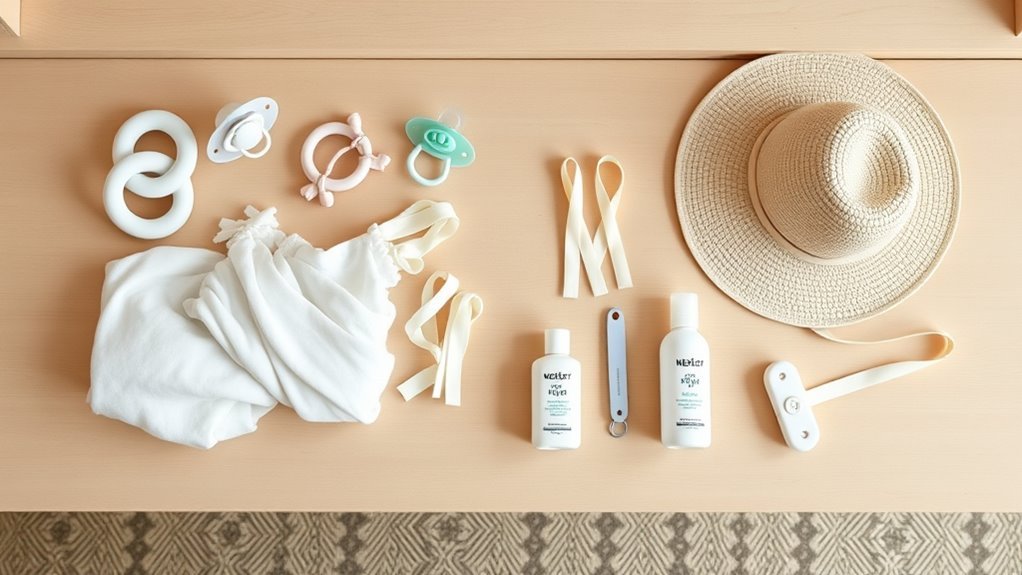
For baby accessories, buy the basics first: soft onesies, footed pajamas, a firm crib or bassinet, a safe infant car seat, diapers, wipes, diaper cream, bottles, burp cloths, and a diaper bag. You can skip extras like wipe warmers, bottle warmers, diaper pails, and fancy food makers. Choose simple, comfy clothing and nursery gear that keeps your baby safe and makes daily care easier, and you’ll soon see which add-ons are truly worth it.
What Baby Accessories to Buy First
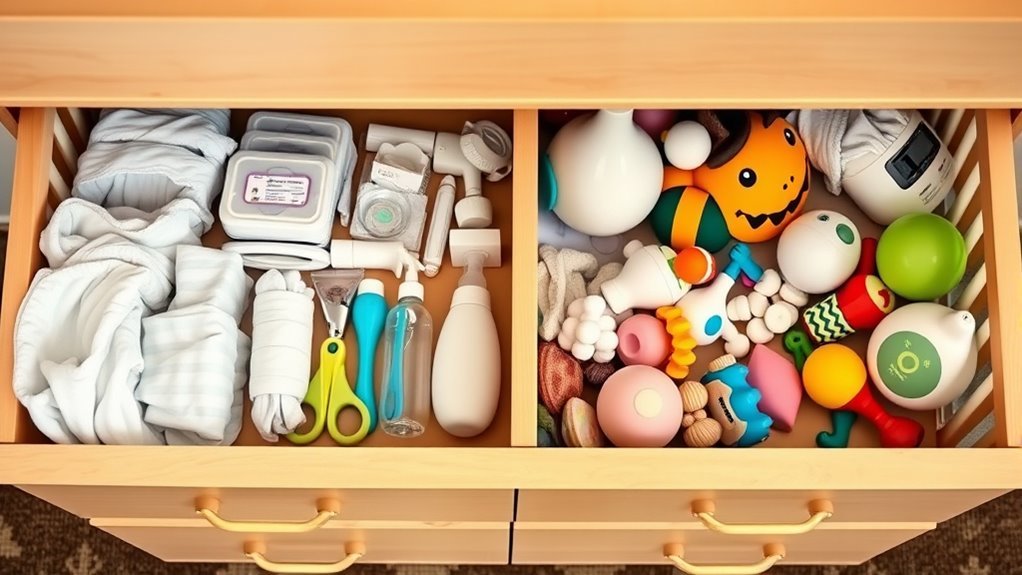
When you’re getting ready for a new baby, it helps to start with the basics: a few soft onesies and pajamas, a safe place for your newborn to sleep, and a reliable infant car seat for those first trips home and beyond.
These baby essentials cover comfort, safety, and mobility without overbuying. Aim for 4-8 onesies, 4-8 pajamas, a crib or bassinet with a firm mattress, and 2-4 fitted sheets for a safe sleeping arrangement.
Add 2-3 large boxes of newborn diapers and 2-3 boxes of unscented baby wipes, since you’ll change often. A roomy diaper bag helps you stay organized on the go, and a simple changing table can make diaper changes easier at home.
You don’t need everything at once; you just need the right tools to care for your newborn with more ease, less stress, and real freedom to focus on bonding.
Baby Accessories You Can Skip
You don’t need every baby gadget to give your little one a good start, and skipping a few items can save you money and space.
Wipe warmers, bottle sterilizers, diaper pails, baby tubs, and piles of toys aren’t essential for most newborns. A regular trash bin, hot soapy water, a sink or tub, and a few soft toys usually do the job just fine.
Unnecessary Baby Gadgets
- Wipe warmers can dry out wipes; room-temperature wipes work fine.
- Bottle warmers aren’t essential—warm water or room temp bottles do the job.
- Diaper pails may seem helpful, but regular trash bins handle diapers just as well.
- Baby food makers and baby bath tubs sound clever, yet a blender or food processor and your sink or tub are enough.
You don’t have to buy your way into confidence.
Keep only what truly serves you, and breathe easier.
Skip-List Essentials
A few baby items sound essential, but you can skip them without making life harder. For new moms, less baby gear means more freedom and less clutter.
You don’t need a diaper changing table; a changing pad on a dresser or sofa works fine for diaper changes. Skip the wipe warmer too—room-temperature wipes do the job, and they won’t dry out.
Newborns don’t need a big shoe collection; soft socks, booties, or a soft cap keep them cozy.
Bottle sterilizers aren’t usually necessary if you wash bottles well with a brush. A separate baby bathtub also isn’t required; your sink or a bowl can handle bath time.
When you build your baby registry, keep only essential baby items, grab burp cloths, and take it easy.
Newborn Clothing Essentials to Prioritize
You’ll want to focus on soft cotton onesies and a few footed pajamas, since they make daily dressing easier and keep your baby comfortable.
Add a small stash of hats, socks, and lightweight layers so you can handle changing temperatures without overbuying.
Since newborns grow fast, choose a few versatile pieces that are easy to put on and off instead of stocking up on tiny sizes.
Onesies And Pajamas
Start with the essentials: 6–10 soft, breathable cotton onesies and 4–8 one-piece pajamas will cover most of your newborn’s daily needs without overbuying.
Choose size 0-3 months, since your newborn baby will outgrow tiny pieces quickly. Look for envelope necks or snaps for easy dressing and diaper changes, and pick footed designs for cozy nights.
Mix short- and long-sleeved onesies and pajamas so you can adjust to the weather without stress.
- You’ll feel calmer with fewer, better choices.
- Your baby stays comfortable, not bundled or fussy.
- You save money and shelf space.
- You keep freedom to adapt with seasonal accessories.
Hats, Socks, And Layers
Newborns lose heat quickly and get fussy fast, so it helps to keep a few simple layers close at hand. You’ll want at least one brimmed hat for sun and one soft cap for warmth, because newborns are sensitive to temperature shifts.
Keep 6-10 pairs of socks or booties nearby; tiny feet lose heat fast. Choose easy-on clothing like onesies with envelope folds, so diaper changes don’t turn into a struggle.
Layering lets you adjust quickly: use breathable fabrics in warmer weather and heavier layers when it’s cold. Make sure every piece is free of tags and rough seams, since sensitive skin can react fast.
With the right hats, socks, and layers, you can keep your baby comfortable and your routine freer.
Nursery and Sleep Gear Worth Buying
When sleep is the goal, a few well-chosen nursery essentials can make those early weeks feel more manageable. Start with a crib that meets safety standards: check the crib slats and choose a firm, flat mattress that fits snugly.
Then add two breathable swaddling blankets, because a calm baby can mean more rest for you.
- Sound machines with adjustable volume can soften household noise and help your baby settle.
- A diaper changing station keeps changes organized, so you’re not scrambling at 3 a.m.
- A baby monitor with video and pan-tilt control lets you watch without hovering.
- Simple extras like large boxes of unscented baby wipes, a breast pump, a rectal thermometer, and cloth diapers can support your peace of mind.
You deserve gear that works for you, not against you. Choose what truly helps, and let the rest go.
Feeding and Diapering Essentials for New Parents
Feeding and diapering can feel nonstop in those early weeks, so it helps to have the basics ready before you need them. For newborns, keep plenty of disposable diapers on hand—about 2 to 3 large boxes—because diaper changes add up fast.
Stock 2 to 3 large boxes of unscented baby wipes, too, so you can clean gently without irritating delicate skin. Reach for diaper cream early and often to help prevent rash.
For feeding supplies, set out 8 to 10 bottles with matching nipples if you’re using formula or expressed breast milk. If you’re nursing, nursing accessories like milk storage bags and breast pads can make things easier and more flexible.
Keep 4 to 8 burp cloths and bibs nearby for spit-up and dribbles. You’re not doing too much; you’re simply making care smoother, so you can focus on your baby and yourself.
Stroller and Car Seat Basics for Outings
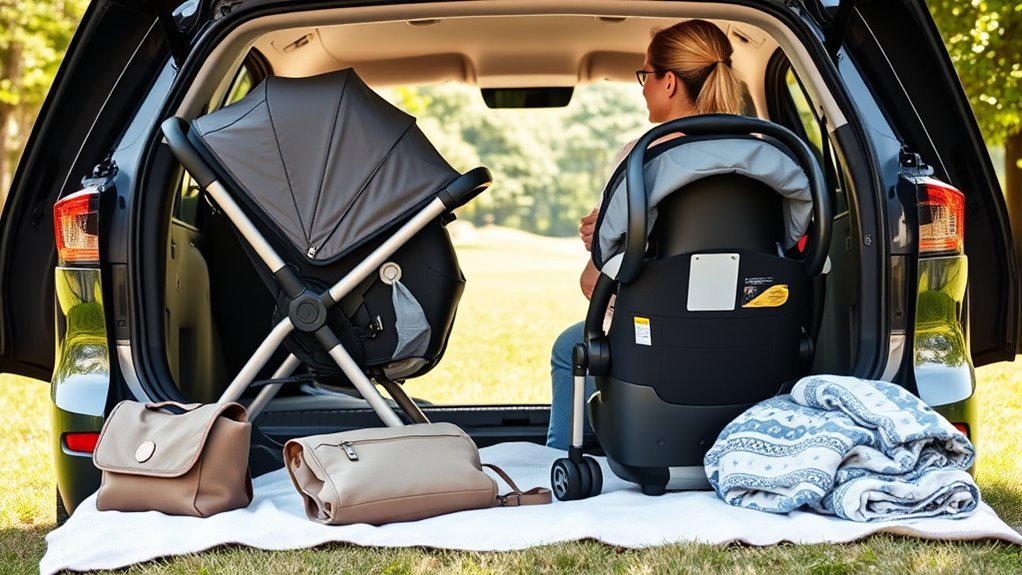
Getting out of the house feels much easier when your stroller and car seat work together safely and simply. Choose a car seat that meets safety standards and keep it rear-facing until your baby is at least 2 or hits the maker’s height or weight limit.
Choose a car seat that fits safely and simply, then keep baby rear-facing until age 2 or the limit.
Check the expiration date, since most seats last 6-10 years. For the stroller, look for a five-point harness and a locking mechanism so it won’t fold during use. Compatibility matters too; when your car seat clicks in easily, you save time and protect your baby’s peace.
- You can leave with less stress.
- Your baby stays secure and calm.
- Your outings feel freer and smoother.
- Larger wheels and suspension give you smooth rides on uneven paths.
Trust these basics, and you’ll move through errands and adventures with more confidence.
Frequently Asked Questions
How Do I Choose Safe Baby Accessories for Travel?
Choose gear that fits travel safety: lightweight gear, compact strollers, portable cribs, baby carriers, and multi functional items. Check car seat safety, airline regulations, easy cleaning, and pack only true travel essentials.
What Materials Are Best for Baby Accessories?
You’ll want organic fabrics, breathable materials, and hypoallergenic options. Choose non toxic finishes, soft textures, durable designs, easy to clean, eco friendly choices, lightweight accessories, and versatile uses so you’re confident and free.
How Can I Store Baby Accessories Efficiently?
Use Baby gear organization with Space saving solutions: choose Multipurpose storage, Baby item bins, Drawer dividers, Closet hangers, and Labeling systems. Add Vertical storage, keep Easy access, and rotate items seasonally so you’re never overwhelmed.
When Should I Replace Worn Baby Accessories?
You should replace worn baby accessories when replacement signs appear: check lifespan expectations, fabric wear, safety indicators, functionality checks, hygiene concerns, color fading, structural integrity, and usage frequency, while honoring your parental preferences and peace.
Are Secondhand Baby Accessories Safe to Use?
Yes, you can use secondhand baby accessories if you prioritize secondhand safety, hygiene practices, quality checks, recall information, trusted sources, expiration dates, usage history, potential risks, cleaning methods, and personal experiences; you’ve got this.
Conclusion
When you’re preparing for a new baby, it’s easy to feel like you need everything right away, but you don’t. Focus on the essentials first, and let the rest wait until you know what truly fits your routine. You’ll save money, space, and stress by keeping it simple. Trust your instincts, start small, and remember—you don’t need to boil the ocean to give your baby a loving, comfortable start.
