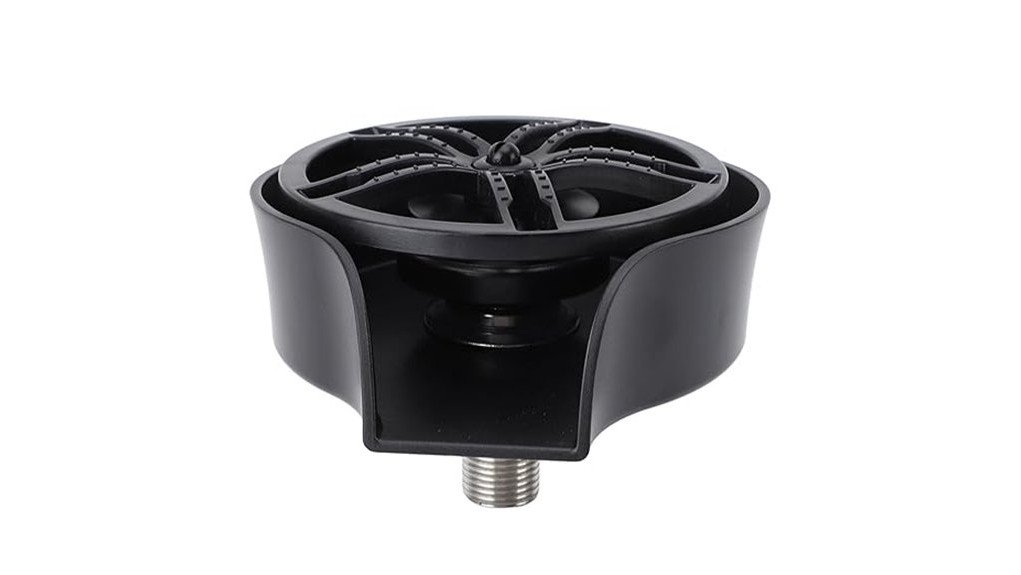
An automatic glass rinser is a compact sink-side tool designed to speed up glass cleaning with pressurized water. It is commonly used in bars, cafes, and busy kitchens where time and consistency matter. Built from stainless steel and ABS, it aims to resist wear and corrosion while reducing manual effort. Its real value, however, depends on installation, placement, and long-term performance, which merit closer examination.
Key Takeaways
- Automatic glass rinsers quickly clean cups and glassware with pressurized water for faster, more consistent rinsing.
- They are typically made from stainless steel and ABS, offering durability and rust-resistant performance.
- Installation requires matching sink openings, securing the body, connecting the water line, and checking fittings.
- They work best in home kitchens, bars, and cafés where speed and compact sink-side access matter.
- Compared with manual rinsing, they improve efficiency, reduce labor, and help remove residue more reliably.
What Is a Glass Rinser?
A glass rinser is a sink-mounted washing accessory designed to quickly clean cups, bottles, and glassware with a targeted spray action.
Built from stainless steel and ABS, it commonly appears in manual and automatic configurations, among the types of glass rinsers used in kitchens, bars, and cafés.
Built from stainless steel and ABS, it comes in manual and automatic forms for kitchens, bars, and cafés.
The device mounts beside a faucet and uses pressurized water to reach narrow containers without extensive handling.
Its compact design supports routine washing with minimal effort, while the benefits of automation include faster turnover, reduced labor, and more consistent rinsing.
It fits practical workflows aimed at efficiency and self-directed service.
Why Use a Glass Rinser?
Used in kitchens, bars, cafés, and other busy service areas, a glass rinser provides a faster and more efficient way to clean cups, bottles, and glassware.
It supports consistent glass cleaning by reaching residue that manual rinsing may miss, helping maintain hygienic drink service. Its swift action improves time efficiency, freeing staff from repetitive washing steps and allowing attention to shift toward other tasks.
Built for daily use, it suits environments where durability and speed matter. For users seeking practical autonomy from slow sink routines, it offers a direct, reliable method for cleaner glassware with less effort and greater control.
How to Install a Glass Rinser
Installing an automatic glass rinser begins with verifying that the sink opening and countertop layout match the unit’s mounting requirements.
Next, the installer positions the stainless steel body, secures the mounting hardware, and connects the water line according to the manufacturer’s diagram.
Next, position the stainless steel body, secure the mounting hardware, and connect the water line per the manufacturer’s diagram.
Installation tips include checking gasket placement, tightening fittings evenly, and flushing the line before use. The unit should sit level to guarantee consistent spray coverage.
If troubleshooting issues arise, such as weak flow or leaks, the connections, valve, and supply pressure should be inspected.
Proper setup supports reliable, independent cleaning with minimal effort.
Best Places to Use a Glass Rinser
Because of its quick, precise rinsing action, an automatic glass rinser is well suited to home kitchens, bars, cafes, and other commercial service areas.
In home kitchens, it supports efficient preparation of bottles, cups, and glasses without extra labor.
In commercial bars, it helps maintain pace during high-volume drink service, keeping glassware ready for immediate reuse.
It also fits café sink stations, beverage counters, and compact prep areas where space and independence from tedious washing matter.
Its practical placement near the sink lets users work with greater ease, reduced effort, and cleaner workflows throughout daily service.
Glass Rinser Performance and Durability
Beyond its practical placement in kitchens, bars, and cafés, the automatic glass rinser is built to deliver consistent performance under regular use.
| Criterion | Observation | Result |
|---|---|---|
| Spray force | Swift, targeted rinse | Efficient residue removal |
| Cycle speed | Immediate response | Reduced waiting time |
| Material | Stainless steel, ABS | Strong daily resilience |
| Wear resistance | Rust-proof surfaces | Stable long-term service |
| Testing | Performance comparison, durability testing | Reliable in busy settings |
Its washing action remains precise, supporting liberation from repetitive scrubbing. In practical terms, the unit favors efficiency, durability, and low-maintenance operation, making it suitable for demanding environments where dependable cleanup matters.
Frequently Asked Questions
Does It Fit Standard Kitchen Sink Holes?
It fits many standard kitchen sink designs, and rinser installation is typically straightforward. Compatibility depends on existing hole size and layout, so measuring the sink opening first remains the most practical step for a reliable fit.
Can It Wash Baby Bottles Safely?
Yes, it can wash baby bottles safely when used appropriately. Its stainless steel, precise spray supports baby bottle safety and rinsing efficiency, though bottles should be checked for heat-sensitive parts and sanitizing needs separately.
Is It Compatible With Low Water Pressure?
Yes, it can function under low water pressure, though performance may weaken slightly; coincidentally, that limitation can remind users to seek freedom through simple installation tips, ensuring steady water pressure and reliable rinsing.
How Do You Clean and Maintain the Rinser?
It should be rinsed regularly, wiped with mild soap, and checked for mineral buildup. Practical cleaning techniques and maintenance tips include inspecting seals, removing debris, and drying parts to preserve performance and lasting freedom from effort.
What Materials Are Used in Its Construction?
It uses stainless steel and ABS, materials with clear material advantages: rust resistance, wear tolerance, and easy cleaning. Despite doubts, durability testing shows it withstands daily friction, supporting practical, liberated use in kitchens and bars.
Conclusion
To summarize, an automatic glass rinser offers a practical upgrade for any setting that handles frequent drink service. By using pressurized water to remove residue quickly, it streamlines cleaning and supports better workflow. One notable statistic is that it can reduce rinsing time by up to 50% compared with manual methods, helping staff stay efficient during peak hours. With durable stainless steel and ABS construction, it delivers dependable performance in compact, high-use environments.

